
 By
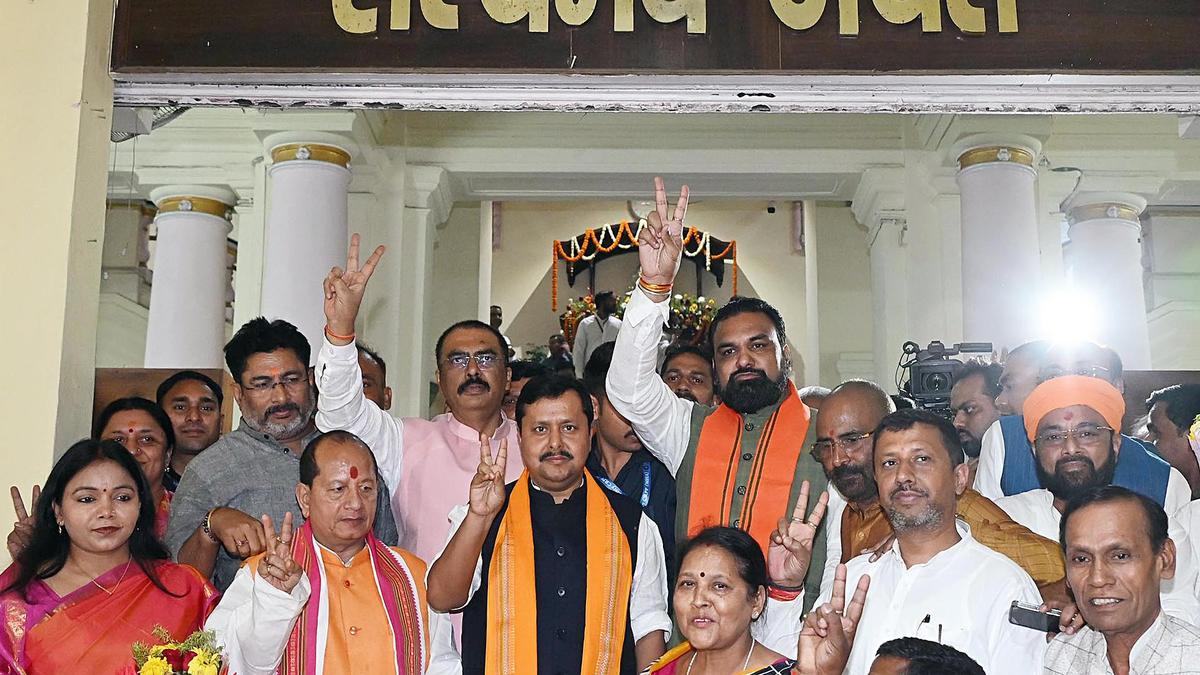
By The ruling National Democratic Alliance (NDA) registered a strong performance in the latest round of Rajya Sabha elections on Monday, with several of its candidates securing victories across states. In Bihar, Chief Minister Nitish Kumar and BJP leader Nitin Nabin were among the prominent winners as the alliance comfortably captured seats in the biennial polls.
The elections, held to fill vacancies created by the retirement of several members in April, saw political activity across multiple states. A total of 37 Rajya Sabha seats from states including Maharashtra, Odisha, Tamil Nadu, West Bengal, Assam, Bihar, Chhattisgarh, Haryana, Himachal Pradesh and Telangana were up for renewal this year.
In Bihar, the NDA entered the contest with a clear numerical advantage in the Assembly, and its candidates appeared set for an easy victory. Along with Nitish Kumar and Nitin Nabin, other alliance nominees also benefited from the ruling coalition’s strength in the state legislature. Leaders within the alliance said nearly all legislators belonging to the NDA participated in the voting process, reinforcing confidence about their candidates’ success.
The NDA coalition in Bihar includes parties such as the Janata Dal (United), the Bharatiya Janata Party, the Lok Janshakti Party (Ram Vilas) led by Chirag Paswan, Hindustani Awam Morcha headed by Jitan Ram Manjhi and the Rashtriya Lok Morcha led by Upendra Kushwaha.
Meanwhile, the opposition Mahagathbandhan struggled to maintain unity during the voting. Reports suggested that several legislators from opposition parties were absent from the polling process, weakening the coalition’s chances. Even smaller parties that are not formally aligned with the opposition bloc participated in the voting, adding another layer of complexity to the contest.
Developments in Odisha also drew attention, where BJP-backed candidates managed to secure key victories. Leaders from the Biju Janata Dal confirmed that some of their party legislators cross-voted in favour of Independent candidate Dilip Ray, highlighting internal political shifts within the state assembly.
In the lead-up to the polling, several candidates across states had already been elected unopposed due to lack of contest. Among the notable leaders who secured Rajya Sabha seats without facing a vote were Sharad Pawar, Abhishek Manu Singhvi, Tiruchi Siva and Vinod Tawde.
Voting also took place in Haryana, where polling continued through the day before concluding in the evening. Political observers noted that the results of these Rajya Sabha elections reflect the shifting equations in state assemblies, which ultimately determine the composition of the Upper House of Parliament.
With the new members set to take office after the retiring MPs complete their terms in April, the outcome is expected to slightly reshape the political balance in the Rajya Sabha while reinforcing the influence of parties that currently dominate several state legislatures.