
 By
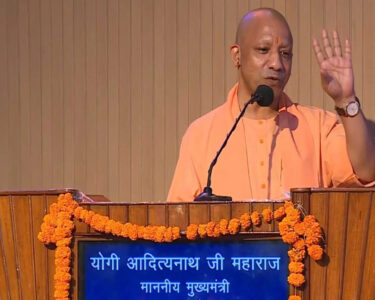
By Uttar Pradesh Chief Minister Yogi Adityanath has questioned the need to formally declare the cow India’s national animal, arguing that its place in Hindu tradition is rooted in a much deeper cultural and religious relationship. Speaking in Lucknow, he said those who regard the cow as a mother do not view it merely through the legal or administrative definition of an animal.
Yogi made the remarks at an event organised to mark the birth centenary of former Vishwa Hindu Parishad (VHP) leader Ashok Singhal. While addressing the gathering, the chief minister said the relationship between Hindus and the cow was based on a belief that extends across generations and lifetimes, and called for greater emphasis on cow protection and rearing rather than seeking an official designation.
“I have been hearing a trend recently. Many are saying that the cow should be declared the national animal. We said the cow is our mother and our relationship with her is one that spans lifetimes,” Yogi said.
The chief minister questioned the description of the cow simply as an animal in the context of Hindu belief. He suggested that people who hold the cow in religious reverence should focus on protecting and caring for it, rather than limiting the discussion to whether it should receive the status of a national animal.
Yogi Targets Congress Over Ram and Krishna Remarks
During the speech, Adityanath also criticised the Congress, alleging that the party had previously filed an affidavit in the Supreme Court stating that Lord Ram and Lord Krishna did not exist. He accused the party of repeatedly hurting Hindu religious sentiments.
These statements were made by the chief minister during his address and were presented in the speech as criticism of the Congress. The remarks themselves do not independently establish the underlying allegation.
Ayodhya Development Also Figures in Yogi’s Speech
Yogi also used the occasion to contrast present-day Ayodhya with the city’s condition in earlier decades. He said the city had previously struggled with inadequate roads, electricity, cleanliness and other basic civic infrastructure.
Referring to Ram Ki Pauri, the chief minister recalled the problem of stagnant water and said the area was subsequently redeveloped, with the flow of the Saryu restored through the site. He also highlighted wider roads and the development of the Maharishi Valmiki International Airport as examples of the changes witnessed in Ayodhya.
His remarks linked the development of Ayodhya with the broader cultural and religious significance of the city, which has remained central to the Ram Janmabhoomi movement and Hindu public discourse.
Who Was Ashok Singhal?
Ashok Singhal was one of the prominent leaders of the Vishwa Hindu Parishad and played a major role in the Ram Janmabhoomi movement. Born on September 27, 1926, Singhal’s birth centenary is being observed in 2026.
Recalling the movement’s history, Yogi referred to the events of 1990, when security forces opened fire on activists involved in the Ram Janmabhoomi movement in Ayodhya. He credited Singhal with continuing to lead the campaign despite the confrontation with the Uttar Pradesh government then headed by Mulayam Singh Yadav.
The VHP has announced year-long programmes in India and abroad to mark Singhal’s centenary. The events are focused on remembering his life, his role in the organisation and his contribution to the Ram Janmabhoomi movement.
For Yogi Adityanath, the centenary programme provided a platform to revisit both Singhal’s political and religious legacy and broader questions surrounding the cultural significance of the cow, Ayodhya and Hindu traditions.