 By
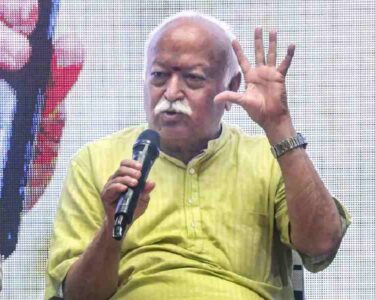
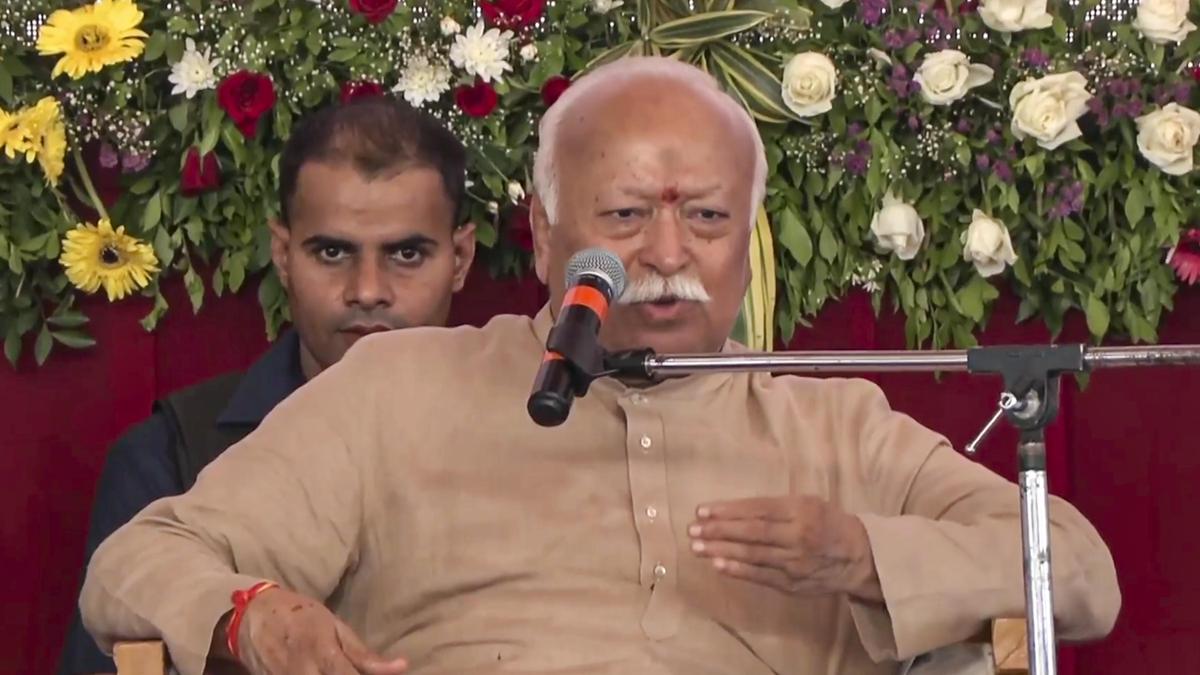
By RSS chief Mohan Bhagwat has said that the idea of the nation and dharma cannot be separated, arguing that each depends on the other for its continuity and purpose. Speaking at the Vihar Seva conference, Bhagwat said the world is currently dealing with a series of competing challenges, including development versus environmental concerns, individual freedom versus family responsibilities, and faith alongside conflict.
Bhagwat said India’s long intellectual and spiritual tradition has a role to play in addressing these challenges. He described the country’s heritage of knowledge as a vast resource that includes the Vedas, Upanishads, Ramayana, Mahabharata, Bhagavad Gita, Jain Agamas, Tripitaka, Guru Granth Sahib and the teachings of saints.
Bhagwat links dharma with the nation’s purpose
Explaining his view of the relationship between the nation and dharma, Bhagwat said the two should not be treated as separate ideas.
“Rashtra and dharma are not separate. The purpose of the nation is dharma, and dharma helps sustain the nation,” he said, adding that the existence and strength of one is connected to the other.
Bhagwat also spoke about what he described as an imbalance in the modern world. He said material aspirations do not necessarily bring complete happiness and that competing loyalties and extreme positions can create further difficulties.
“The world faces trouble,” Bhagwat said, pointing to a lack of balance and the presence of extremism.
His remarks placed the discussion of dharma in a wider social context rather than limiting it to religious practice. He connected it with questions of how individuals, communities and nations maintain balance while dealing with competing priorities.
India’s knowledge tradition highlighted
Bhagwat said India has preserved a diverse knowledge tradition through generations. He referred to a range of texts and traditions, including the Vedas and Upanishads, the Ramayana and Mahabharata, the Gita, Jain Agamas, Tripitaka and Guru Granth Sahib.
According to Bhagwat, India’s historical approach was to share its knowledge with others rather than use it as a tool for conquest or conversion.
“The country has a treasure of knowledge, which the world needs today,” he said.
He added that the world was looking towards India for a path forward and linked devotion with the inner strength needed to develop a closer relationship with the divine.
Protecting knowledge as a service to humanity
Bhagwat also focused on the importance of protecting people who preserve and transmit knowledge and traditions. He argued that safeguarding such individuals is not simply a responsibility towards a particular faith or community, but has implications for humanity more broadly.
He said preserving the lives and traditions of those who carry this knowledge amounts to protecting a part of humanity’s future.
“You do not protect just a life. You protect the safety of the future of humanity,” Bhagwat said.
His address therefore brought together three themes—the relationship between nation and dharma, India’s knowledge heritage and the responsibility to preserve traditions and their custodians. The broader message was that India’s spiritual and intellectual traditions, in his view, can contribute to addressing some of the social and moral challenges facing the world today.