
 By
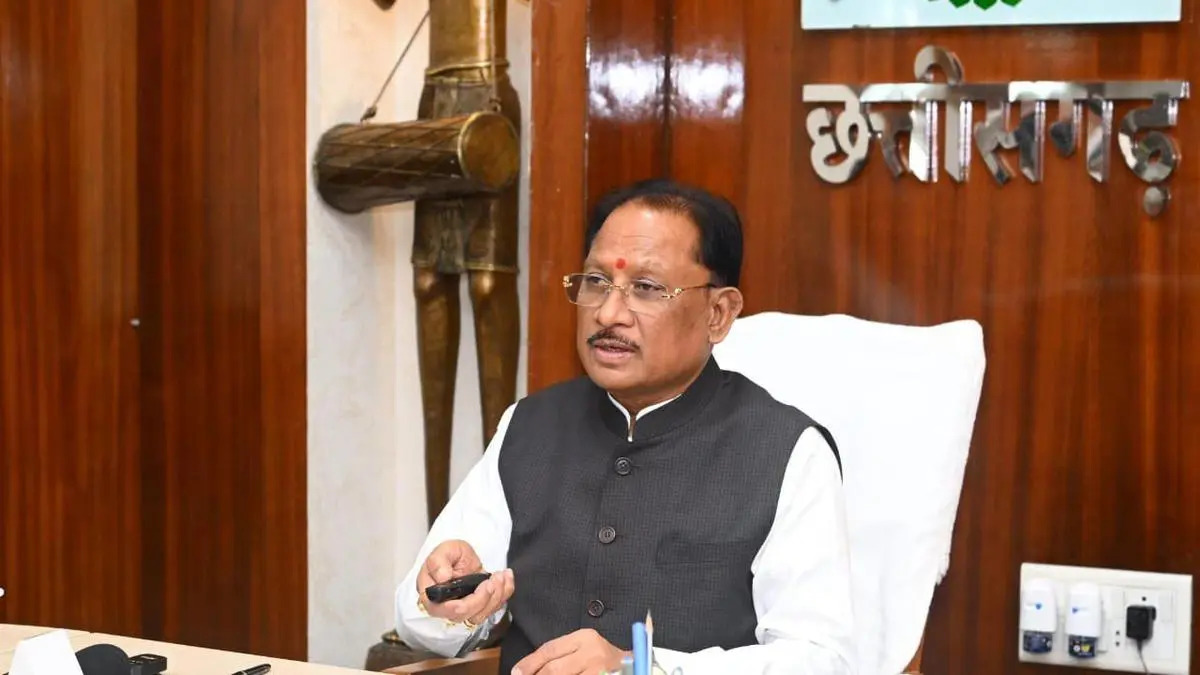
In an email interview with BusinessLine, Sai said Chhattisgarh had become the first state in India to enact such an Act. He also highlighted more than 450 business reforms introduced since December 2023 and investment proposals worth over ₹8 lakh crore under the state’s Industrial Development Policy 2024–30. According to the Chief Minister, these measures are aimed at positioning Chhattisgarh as a destination for manufacturing, technology and emerging industries.
Risk-Based Compliance to Reduce Business Formalities
Explaining the practical changes introduced by the Ease of Doing Business Act, 2026, Sai said the legislation replaces several routine procedures with a transparent, risk-based compliance system.
Under the new framework, low-risk businesses can use self-certification, while medium-risk establishments can obtain certification from authorised third-party professionals. Eligible businesses will no longer have to go through routine annual renewals for certain services. Instead, approvals can remain valid for the lifetime of the business, subject to prescribed compliance requirements and the reporting of relevant changes.
High-risk establishments, however, will continue to undergo technical assessments and inspections.
The Act initially covers 43 services across eight government departments. It also provides for deemed approval in eligible cases where applications are not decided within the prescribed time limit. The government expects more than 15 lakh MSMEs to benefit from the changes.
More Than 450 Reforms Since December 2023
Sai said the state’s approach to improving the business environment goes beyond announcing new policies. The government’s focus, he explained, is on ensuring that investors, entrepreneurs and ordinary citizens experience the benefits of administrative reforms.
Since December 2023, Chhattisgarh has introduced more than 450 reforms to simplify procedures, improve transparency, reduce regulatory barriers and ensure time-bound approvals.
The Chief Minister said the government’s guiding principle was to make administration a facilitator of business activity rather than an obstacle.
Faster Land Allotment and Clearances
Land availability and delays in government approvals are often major concerns for investors. Sai said the state had introduced specific timelines to address these issues.
Under the process outlined by the government, land options and details of available incentives are provided within seven days. Site visits are arranged within 15 days, while digital land allotment is targeted for completion within 45 days. Eligible incentives are processed within 28 days.
The government has also moved several land-related services online. Around 1,548 acres have been allotted digitally, while nearly 2.5 lakh land mutations and 8,948 land-use changes were processed online in six months.
According to Sai, these measures are intended to make land-related procedures quicker and more transparent for businesses.
OneClick Platform Brings 200 Services Together
Digital governance is another major part of the state’s investment strategy. Sai highlighted OneClick, the government’s single-window platform, which provides access to more than 200 services across 25 departments.
Investors can use the platform to submit applications, obtain approvals and access incentive-related services without having to approach multiple departments separately.
The system also includes time-bound service delivery, real-time application tracking, automatic escalation of delayed applications and geo-tagged inspections.
₹8 Lakh Crore in Investment Proposals Under New Policy
The Chief Minister said the response to Chhattisgarh’s Industrial Development Policy 2024–30 had been encouraging since it came into effect in November 2024.
The state has received investment proposals worth more than ₹8 lakh crore, with the potential to generate over 1.6 lakh jobs. Nearly half of the proposed projects are in priority sectors such as electronics, pharmaceuticals, textiles, food processing and tourism.
Sai said this reflected growing interest in high-value manufacturing and emerging industries alongside the state’s traditional mining and mineral-based sectors.
He added that around 55 per cent of the proposed projects had already entered the grounding stage, indicating progress beyond the initial investment proposal phase.
Startup and Skill Development Push for Young People
Sai said the government wanted investment to translate into employment and better opportunities for local communities, particularly young people.
Under the ₹500-crore Mukhyamantri Startup and NIPUN Mission, the state is setting up entrepreneurship centres in all 33 districts. The initiative also includes plans for 100 emerging-technology laboratories and five Centres of Excellence to strengthen industry-oriented skill development.
The focus, he said, is to prepare young people for future employment opportunities in fields such as semiconductors, artificial intelligence and pharmaceuticals. The government also aims to help local entrepreneurs and startups build and expand their businesses.
Bastar to Get Focused Industrial Support
On industrial development in Bastar, Sai said the region had considerable potential because of its natural resources, cultural heritage and workforce. He said improvements in security and connectivity were helping open the region to investment and development.
The government is looking to promote mineral-based industries, improve industrial infrastructure and support local businesses. The Industrial Development Policy 2024–30 also provides special incentives for entrepreneurs from groups including women, persons with disabilities, retired Agniveers and people affected by Naxalism. Additional incentives are available for industrial units in the Bastar and Surguja regions.
Sai said the range of incentives available through the OneClick platform had doubled over the past year. He also cited a 102 per cent rise in the number of industrial units from Bastar, Sukma, Kondagaon and Dantewada districts seeking incentives.
The stated objective, he said, is to ensure that industrial expansion in the region creates local employment, improves skills and benefits communities.
Chhattisgarh’s Role in India’s Industrial Growth
Looking ahead, Sai said Chhattisgarh aims to strengthen its presence in manufacturing, electronics, semiconductors, pharmaceuticals, food processing and textiles while continuing to support traditional industries.
He said the state’s development strategy would focus on spreading industrial growth across all regions, including tribal and underserved areas, so that the benefits of investment reach communities throughout Chhattisgarh.