

 By
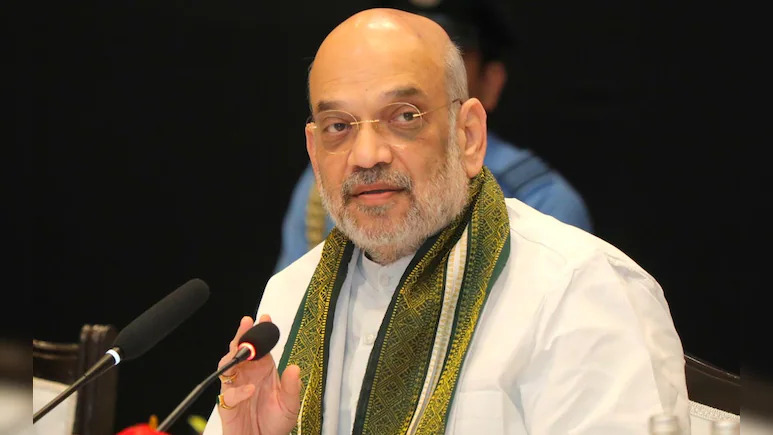
By Union Home Minister Amit Shah has set December 31, 2029, as the target date for India to uproot the drug trade, calling for a major shift in the country’s anti-narcotics strategy from simply recovering illegal substances to dismantling the networks, finances and distribution systems that sustain the trade.
Addressing the third National Conference of Anti-Narcotics Task Force (ANTF) heads from States and Union Territories in New Delhi on Tuesday, September 22, Shah said the fight against narcotics must now move into a more coordinated and results-oriented phase. He said the objective should be to break trafficking chains at every level and ultimately secure convictions in cases against those running the networks.
“For the past five years, we have been taking one step after another” towards a drug-free India, Shah said, adding that the country must now deliver what he described as a decisive blow against narcotics. He set December 31, 2029, as the collective deadline for uprooting the drug trade.
Focus shifts from drug seizures to trafficking networks
Shah said enforcement agencies should move away from a seizure-centric model and concentrate on identifying and dismantling the larger networks behind narcotics trafficking.
According to the Home Minister, action against drug cartels needs to cover three critical stages: the points through which narcotics enter the country, the inter-State routes used to transport them and the local distribution networks operating within districts.
The government will also classify districts according to their role in the drug trade. One category will cover areas where narcotics are produced or enter India, another will identify transportation corridors, while a third will cover districts where consumption is more prevalent.
Shah also called for greater use of the Prevention of Illicit Traffic in Narcotic Drugs and Psychotropic Substances (PITNDPS) Act and stressed the importance of developing a clear path from investigation to prosecution and conviction. He urged anti-narcotics agencies to work closely with public prosecutors so that cases do not lose momentum after arrests and seizures.
Crackdown on foreign traffickers and fugitives
The Home Minister directed agencies to begin a focused campaign against foreign nationals involved in drug trafficking, including their deportation and measures to prevent their return to India.
He also called for fugitive traffickers operating from outside the country to be tracked, apprehended and brought before Indian courts.
Shah stressed that financial investigations and digital intelligence must become central to the fight against organised drug trafficking. Agencies, he said, need to follow the money generated by narcotics networks while also tracing digital connections that can expose wider trafficking operations.
He further directed agencies to identify loopholes along international borders and around drug-production centres. Turning intelligence inputs into actionable information, he said, should become an integral part of policing.
Three-year roadmap for anti-narcotics agencies
The two-day conference, organised by the Narcotics Control Bureau (NCB), is being attended by ANTF heads from 36 States and Union Territories, along with officials from government departments and other stakeholders.
Shah said the Vision Document 2026-2029, prepared after consultations involving more than 35 government departments, would serve as the roadmap for the next phase of the country’s anti-narcotics campaign.
He described the shift as a move “from meeting to mission, from reporting to results, from seizure to dismantling networks, and from case to conviction.”
The conference is aimed at strengthening coordination among central and State agencies under a whole-of-government approach. The broader focus over the next three years will be on disrupting trafficking networks, cutting their financial resources, improving investigations and ensuring that cases ultimately lead to convictions.
With the December 2029 deadline now set by the Home Minister, the government’s anti-drug strategy is being framed around dismantling the infrastructure behind narcotics trafficking rather than measuring progress only by the quantity of drugs seized.