
 By
By Uttar Pradesh Chief Minister Yogi Adityanath on Wednesday launched the 9th National Nutrition Month in Varanasi, placing maternal and child nutrition, early education and stronger Anganwadi services at the centre of the campaign. The month-long programme will run from September 9 to October 8, with this year’s theme, ‘Meri Anganwadi, Meri Zimmedari’, calling for greater community participation in the functioning of Anganwadi centres.
During the launch, Yogi also sharply contrasted the present system with the situation he said existed before 2017. He alleged that supplementary nutrition supplies were once affected by irregularities and that many Anganwadi centres lacked basic facilities such as drinking water, toilets and proper meals. He said his government had since changed the distribution mechanism, introduced technology-based monitoring and begun upgrading centres as hubs for nutrition and early childhood education.
Focus on nutrition, health and early education
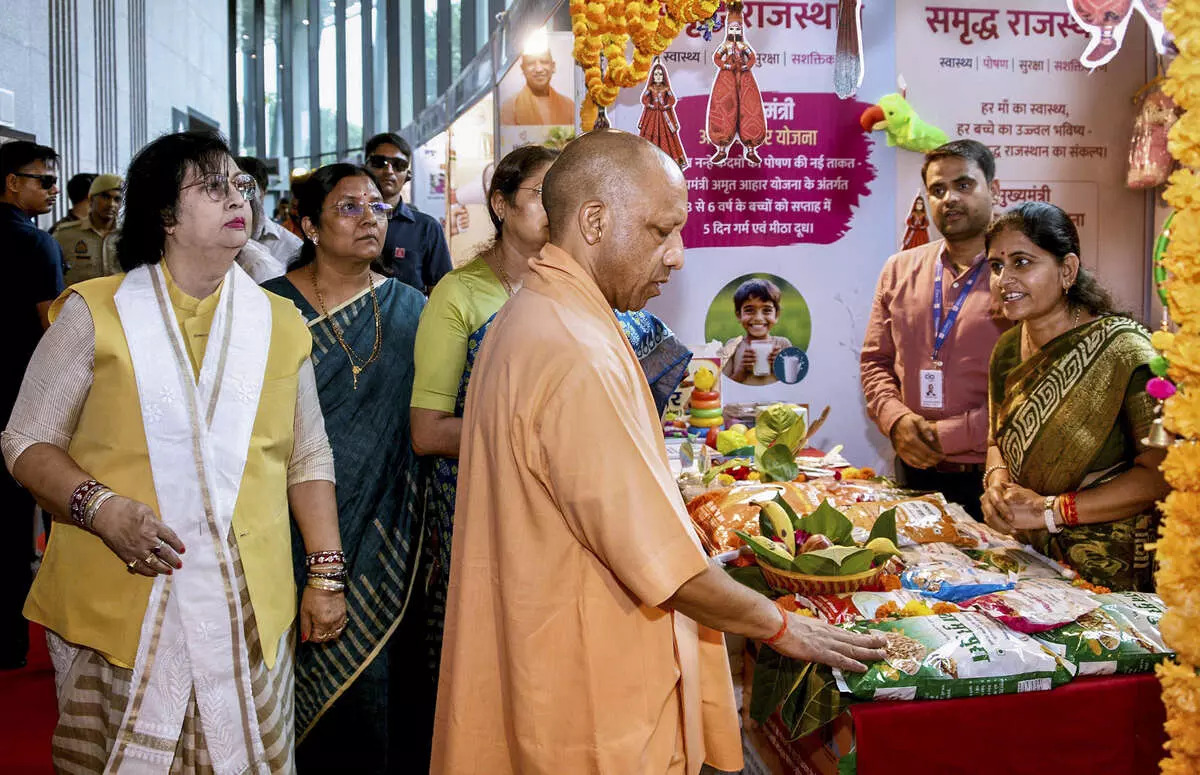
Yogi inspected an exhibition at the event and interacted with Anganwadi workers from Uttar Pradesh and other states. He also spent time with young children and performed an Annaprashan ceremony.
Referring to the idea of Ram Rajya and the verses of Goswami Tulsidas, the Chief Minister said the broader objective of governance should be to ensure that people are not left poor, deprived or helpless. He linked this approach to efforts to improve maternal health, child nutrition, early education and the Anganwadi network.
Yogi said investment in the first years of a child’s life ultimately strengthens the country’s human-resource base. In his view, a well-nourished child can become a capable student, then a skilled young person and eventually contribute to the vision of an Aatmanirbhar Bharat and Viksit Bharat.
More than 70,000 Anganwadi centres upgraded
According to the Chief Minister, the state has sanctioned around 1.90 lakh Anganwadi centres and provides services through 897 Child Development Projects. About 1.56 crore beneficiaries receive nutrition-related services every month.
He said more than 70,000 Anganwadi centres have been renovated or given a new look over the past nine and a half years. New model centres are being developed with child-friendly facilities, including boundary walls, toilets, safe drinking water, nutrition gardens and LED screens. Around ₹30 lakh is being spent on the construction or renovation of an individual centre, he said.
Yogi also highlighted changes in the supplementary nutrition supply chain. The Take-Home Ration system has been made technology-driven, with GPS tracking, real-time monitoring and QR codes designed to improve traceability. The state has established 204 THR plants, with women’s Self-Help Groups playing a role in their operation. More than 20 lakh women are associated with the system, according to the Chief Minister.
‘Meri Anganwadi, Meri Zimmedari’
Yogi said this year’s Nutrition Month should not be viewed solely as a government programme. He called on Anganwadi workers, helpers, Gram Panchayats and local residents to take collective responsibility for their centres.
He identified dietary diversity and adequate protein, fresh hot-cooked meals, community ownership, early education and the Pradhan Mantri Matru Vandana Yojana as key areas of focus.
The Chief Minister stressed that children need nutritious food that is also appealing to them. He cited the example of adding vegetables such as carrots to traditional meals instead of relying on a single preparation, arguing that better taste and variety can encourage children to eat more willingly.
Anganwadi centres to strengthen school readiness
The government is also positioning Anganwadi centres as the starting point for formal education. Under Bal Vatika, children are introduced to letters and numbers through games, songs and age-appropriate activities.
Yogi recalled visiting an Anganwadi centre in Kanpur where a worker was teaching children numbers through songs. He said such methods showed how concepts could be introduced naturally to young children through play rather than conventional classroom instruction.
He linked this early learning process with the NIPUN Bharat Abhiyan, which is aimed at improving foundational literacy and numeracy. According to him, the programme’s focus has now been extended up to Class 5.
School infrastructure and reducing dropouts
The Chief Minister also spoke about efforts to improve facilities in government schools under Operation Kayakalp. He said around 1.36 lakh schools have received improvements in buildings and basic infrastructure, including drinking water, separate toilets for boys and girls and better learning environments.
Yogi recalled an earlier interaction with a schoolgirl who did not have proper footwear or warm clothing. He said the incident drew his attention to unequal access to basic facilities between boys and girls in some families. He subsequently directed that uniforms, shoes, socks and sweaters be provided to children.
The state now provides two sets of uniforms, school bags, books, shoes, socks and sweaters to around 1.60 crore children every year, he said. Similar arrangements are also being extended to children attending Bal Vatika.
The government is simultaneously working on secondary education through Project Alankar. Yogi said about 2,100 old government and government-aided inter colleges have been revived, with facilities such as smart libraries, smart classrooms, improved furniture, Atal Tinkering Labs and exposure to space technology.
Honorarium and health cover for Anganwadi workers
Yogi highlighted measures concerning Anganwadi workers and helpers, saying their honorarium had risen substantially from the pre-2017 level. He said workers who earlier received ₹3,000 now receive ₹12,000, while helpers receive ₹6,000.
The government has also provided a ₹5 lakh health insurance cover for Anganwadi workers, helpers and their families. Around 1.56 lakh workers have already received smartphones, with the remaining workers expected to be covered as well.
These devices are being used to upload real-time information about activities at centres, which the government says will improve monitoring and could support performance-linked incentives.
Nutrition linked to women’s health
The Chief Minister described the Pradhan Mantri Matru Vandana Yojana as another important component of the nutrition campaign, particularly because maternal health has a direct bearing on a child’s development.
He said around five crore mothers across the country have so far received more than ₹21,000 crore under the scheme. Yogi argued that supporting mothers during pregnancy and after childbirth strengthens the health and development of children from the very beginning.
Kashi’s heritage meets modern development
Yogi also connected the Nutrition Month launch with Varanasi’s wider transformation. Describing Kashi as a major spiritual and cultural centre, he said the city represented an example of how traditional identity could be retained while modern infrastructure and facilities were introduced.
He said the same balance was needed in the country’s development approach, including in nutrition and education—modernising systems without losing touch with India’s social and cultural foundations.
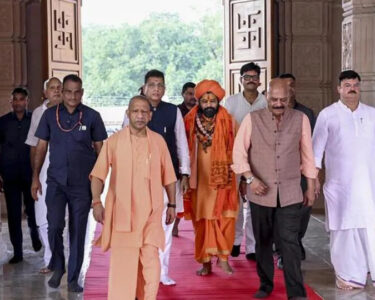
The event was attended by Union Women and Child Development Minister Annapurna Devi, Union Minister of State Savitri Thakur, Uttar Pradesh Women and Child Development Minister Baby Rani Maurya, Ministers Anil Rajbhar, Ravindra Jaiswal and Dayashankar Mishra ‘Dayalu’, Minister of State Pratibha Shukla, Minister of State Hansraj Vishwakarma, Ministry of Women and Child Development Secretary Anil Malik, Additional Chief Secretary Leena Johri and other senior officials.