 By
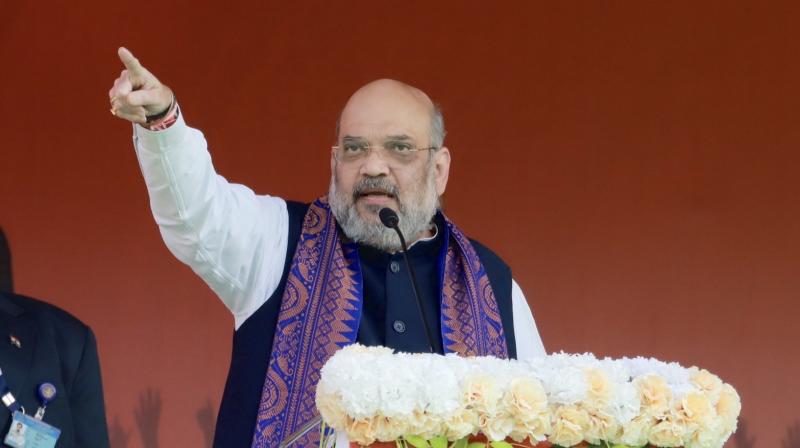
By Union Home Minister Amit Shah’s upcoming three-day visit to Jammu and Kashmir is being closely watched in New Delhi and Srinagar alike, as it comes at a critical juncture for the Union Territory’s security landscape and political process. Scheduled to begin on February 5, the visit is expected to combine an intensive security review with outreach to political stakeholders and the rollout of key development initiatives—underscoring the Centre’s multi-track approach to stabilisation in the region.
Senior officials familiar with the itinerary say the visit is designed not merely as a routine assessment, but as a strategic stock-taking exercise ahead of the next phase of governance and security planning in Jammu and Kashmir. With cross-border threats, counter-terror operations, and grassroots political engagement all in focus, Shah’s engagements are expected to shape policy direction in the months ahead.
Political Consultations Begin in Jammu
The Home Minister is expected to arrive in Jammu on the evening of February 5, where his first engagements will centre on political dialogue. Meetings with leaders across parties are scheduled at Lok Bhavan, with discussions likely to span the prevailing security environment, Centre–UT coordination, and the pace of implementation of centrally sponsored schemes.
Officials indicate that these interactions will also serve as a platform to gauge political sentiment at the regional level, particularly on governance issues and development delivery. The emphasis, sources say, will be on ensuring that administrative initiatives align with local priorities while maintaining a firm security posture.
Border Security Under the Spotlight
On February 6, Shah will travel to the Hiranagar sector along the International Border in Kathua district, a region that has seen heightened vigilance due to its strategic location. The visit will include briefings by senior Border Security Force (BSF) officers, inspections of forward posts, and a review of surveillance and anti-infiltration infrastructure.
According to officials, particular attention will be paid to technological upgrades along the border, including sensor-based monitoring, night surveillance systems, and coordination mechanisms between different security agencies. The visit is also expected to assess preparedness against infiltration attempts and emerging cross-border threats, especially along riverine stretches that pose unique monitoring challenges.
High-Level Security Review Meeting
Later the same day, Shah will return to Jammu to chair a comprehensive security review meeting involving the Lieutenant Governor, senior Home Ministry officials, heads of central armed police forces, intelligence agencies, and top civil and police administrators of the Union Territory.
The closed-door meeting is expected to focus on counter-terror operations, intelligence coordination, force deployment strategies, and protection of critical infrastructure. Officials say discussions will also examine recent operational outcomes, identify gaps in intelligence sharing, and review preparedness for potential security contingencies.
This meeting is likely to result in operational directives aimed at tightening coordination between central and local forces, improving response times, and strengthening civilian protection mechanisms.
Development Push in Srinagar
On February 7, the Home Minister will proceed to Srinagar, shifting focus from security to development. During his engagements in the Kashmir Valley, Shah is expected to inaugurate and lay foundation stones for multiple projects spanning infrastructure, healthcare, education, and tourism.
Planned announcements are likely to include road and bridge projects to improve regional connectivity, upgrades to power and water supply systems, and initiatives aimed at boosting employment and tourism-related infrastructure. Officials view these projects as essential to sustaining economic recovery and reinforcing public confidence in governance.
A Familiar Template, Renewed Emphasis
Shah’s itinerary follows a familiar template from his earlier visits, where security assessments were paired with administrative and development reviews. However, officials suggest that this visit carries added significance, reflecting the Centre’s intent to consolidate security gains while accelerating visible development across both Jammu and the Kashmir Valley.
“The approach is clear—security oversight and development must move in tandem,” a senior official said, adding that the visit is expected to translate into concrete instructions on force posture, intelligence cooperation, and faster execution of flagship projects.
The Home Minister is scheduled to depart for Chhattisgarh later on February 7, concluding a visit that could set the tone for Jammu and Kashmir’s governance and security priorities in the coming months.