
 By
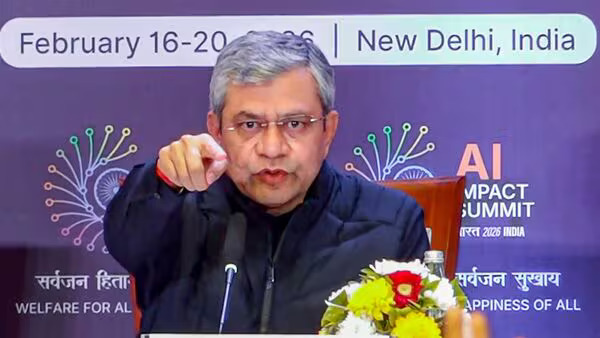
By In a moment heavy with symbolism and administrative transition, the Union Cabinet on Saturday convened for the final time at the historic South Block, closing a chapter that has defined India’s governance since Independence. The meeting, followed by a media briefing from Union Minister Ashwini Vaishnaw, marked the formal shift of the country’s highest executive offices to the newly inaugurated “Seva Teerth” complex.
Calling it “a new milestone in India’s governance journey,” Vaishnaw underscored that the Prime Minister’s Office (PMO), the National Security Council Secretariat and the Cabinet Secretariat will now function from Seva Teerth, a purpose-built complex dedicated to integrated and modern administration. The move, he said, represents more than a change of address — it reflects a conscious effort to align governance infrastructure with the vision of a developed India.
“For decades after Independence, the PMO operated from South Block, a structure built during British rule,” Vaishnaw noted. “Today’s Cabinet meeting is the last to be held in this building. It is a historic transition.” The South and North Blocks, designed by British architects in the early 20th century, have long stood as symbols of colonial authority. While they became the nerve centre of sovereign India after 1947, their architectural origins have remained a reminder of a different era.
Prime Minister Narendra Modi on Friday dedicated Seva Teerth, along with Kartavya Bhavan-1 and Kartavya Bhavan-2, to the nation. At the inauguration ceremony, he described the new structures as embodiments of a governance philosophy centred on service and duty. According to officials, the complex has been designed to bring key departments under one roof, streamlining coordination and improving operational efficiency.
Vaishnaw highlighted that the relocation addresses long-standing logistical challenges. Previously, crucial offices operated from multiple buildings across the capital, often requiring coordination across distances. The consolidation within Seva Teerth, he said, is expected to enhance decision-making speed and inter-departmental communication.
The Prime Minister, speaking at the inauguration, framed the development as part of a broader effort to shed vestiges of a “colonial mindset.” As India advances toward its stated goal of becoming a developed nation — or “Viksit Bharat” — by 2047, he stressed the importance of aligning not only policies but also physical institutions with contemporary aspirations. The choice of timing was also symbolic; the dedication took place on Vijaya Ekadashi, a day considered auspicious in Hindu tradition and associated with resolve and victory.
Government sources indicated that the architectural design of Seva Teerth blends modern functionality with cultural motifs, reflecting an attempt to root contemporary governance in Indian civilisational identity. The complex is also equipped with upgraded digital infrastructure and secure communication systems, in line with the government’s emphasis on technology-driven administration.
Vaishnaw expressed appreciation for the engineers, architects and workers involved in the project, describing their contribution as foundational to the transition. He also extended congratulations to officials from the PMO, Cabinet Secretariat and other departments who will begin operations from the new premises.
While South Block will continue to house other ministries and remain a landmark of national importance, Saturday’s meeting signalled the end of an era for India’s top executive decision-making body. The relocation to Seva Teerth, officials suggest, is as much about symbolism as it is about administrative reform — a visible marker of the government’s attempt to redefine the physical and philosophical contours of governance in a changing India.