
 By
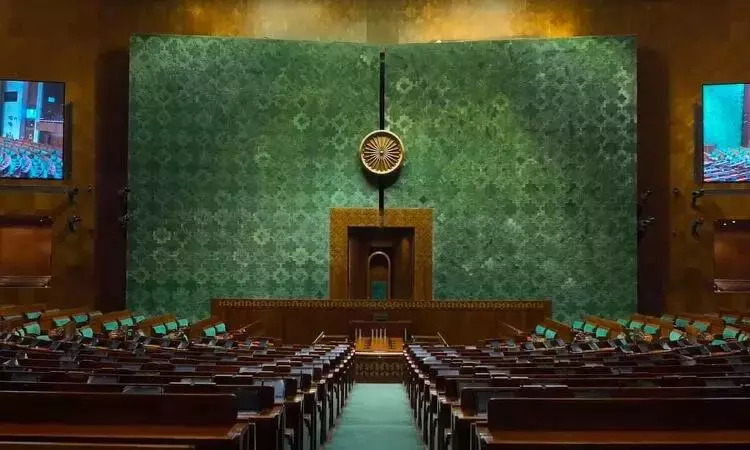
By The Lok Sabha has approved the Public Examinations (Prevention of Unfair Means) Amendment Bill, 2026, paving the way for stricter action against examination-related fraud and organised cheating. Passed by a voice vote, the legislation significantly strengthens the legal framework by increasing punishments, introducing time-bound investigations, and mandating special fast-track courts for speedy disposal of cases.
The amendment comes as the government seeks to reinforce the integrity of public examinations following recent incidents of paper leaks and exam malpractices. The new provisions are aimed at ensuring quicker investigations, stricter accountability, and stronger deterrence against those attempting to manipulate the examination system.
The Bill amends the Public Examinations (Prevention of Unfair Means) Act, 2024, which was originally enacted to prevent the use of unfair means in public examinations and dismantle organised cheating networks. The latest amendments substantially enhance the penalties for offenders.
Under the revised law, the minimum prison sentence for individuals found guilty of using unfair means has been increased from three years to five years, while the maximum punishment has been doubled from five years to ten years. The maximum financial penalty has also been raised from ₹10 lakh to ₹50 lakh.
The legislation imposes tougher consequences on service providers found involved in examination-related offences. The maximum fine for such entities has been increased from ₹1 crore to ₹5 crore, and they can now be barred from conducting public examinations for up to eight years, compared to the earlier four-year limit. Directors and senior management found complicit in such offences will also face a minimum imprisonment of five years along with enhanced financial penalties.
The Bill further tightens provisions against organised examination fraud. The minimum prison term for organised crimes linked to public examinations has been increased from five years to seven years, while the minimum fine has been raised from ₹1 crore to ₹10 crore.
To speed up legal proceedings, the amendment mandates that investigations be completed within two months. It also authorises the Central Government to establish a Special Task Force to investigate offences under the Act, alongside the option of referring cases to a Central Investigating Agency whenever required.
A key feature of the legislation is the creation of Special Fast-Track Courts. Every State Government and Union Territory administration, in consultation with the respective High Courts, will designate a Court of Session to exclusively hear cases under the Act. These courts will conduct day-to-day hearings and are expected to complete trials within three months from the filing of the chargesheet. Pending cases under the law will also be transferred to these designated courts.
The amendment also establishes a dedicated appellate mechanism. Appeals against judgments, sentences, or orders passed by the Special Fast-Track Courts will be heard by a Division Bench of the concerned High Court, with an effort to dispose of such appeals within three months. The Bill also provides for appeals against bail orders.
According to the government’s statement of objects and reasons, the amendments were introduced in response to recent examination irregularities that affected the credibility of public recruitment and entrance examinations. The revised law is intended to strengthen transparency, improve accountability, and ensure that offences related to public examinations are investigated and prosecuted within clearly defined timelines.