
 By
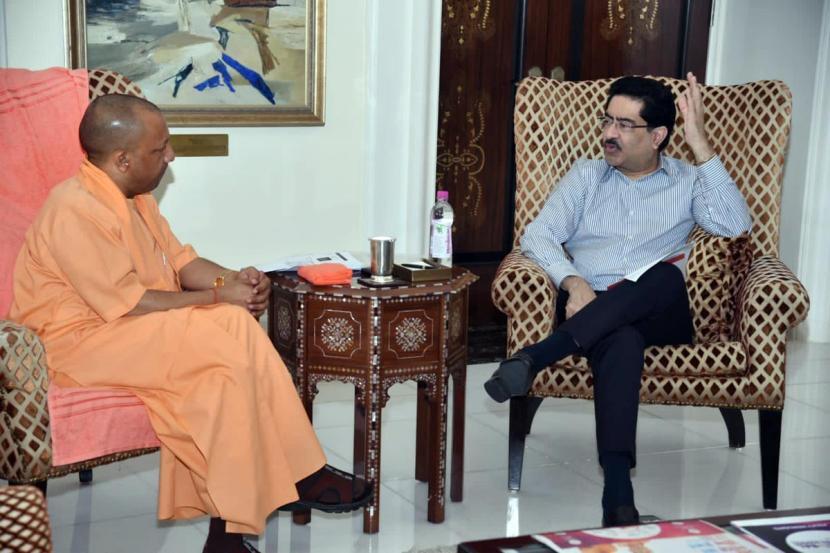
By Uttar Pradesh is targeting a transformation into a $1 trillion economy by 2030, with Chief Minister Yogi Adityanath saying the state has received private investment proposals worth more than ₹50 trillion that could potentially create over 11 million jobs.
Adityanath said the state’s economic strategy is focused on turning investment commitments into operational projects while expanding infrastructure, manufacturing, agriculture, exports and employment opportunities across different regions of Uttar Pradesh. He said balanced development would be crucial to ensuring that young people do not have to leave their home districts in search of work.
Investment push aimed at jobs and industrial growth
According to the Chief Minister, Uttar Pradesh has introduced more than 36 sector-specific policies and strengthened its single-window clearance mechanism through Nivesh Mitra 3.0 and the Nivesh Sarathi portal. The state has also undertaken deregulation measures and removed nearly 99 per cent of minor criminal provisions across 13 state laws to improve the business environment.
Adityanath said the government is increasingly focusing on implementation rather than simply counting memorandums of understanding. Four Ground Breaking Ceremonies have already taken projects worth more than ₹15 trillion into implementation, with these investments expected to generate over six million employment opportunities. Preparations are also underway for GBC 5.0, where projects worth nearly ₹7.5 trillion are proposed to be grounded.
He said investor interest has also expanded into areas such as artificial intelligence, data centres, food processing, renewable energy and defence manufacturing. Investment agreements worth ₹2.94 trillion were signed at the World Economic Forum 2026, while the Pharma Conclave 1.0 and UP Global Growth Dialogue in Bengaluru also attracted significant proposals.
Jewar airport, expressways to strengthen connectivity
The Chief Minister described infrastructure as a major driver of Uttar Pradesh’s economic expansion. The upcoming Noida International Airport at Jewar, along with the Purvanchal, Bundelkhand and Ganga expressways, is being positioned as part of a wider network connecting production centres with markets and logistics facilities.
The Jewar airport is being developed at an estimated cost of ₹29,600 crore and is planned to have an annual capacity of 120 million passengers. The government expects the airport and connected transport infrastructure to support manufacturing, exports, logistics and tourism.
Adityanath said improved road connectivity is also opening up new opportunities for farmers and businesses in less-developed regions. Faster access to mandis, processing units and consumption centres is expected to reduce transportation time and wastage while improving market access.
Focus on Purvanchal and Bundelkhand
The government is seeking to spread industrial growth beyond the National Capital Region by developing manufacturing clusters, logistics parks and industrial hubs in Purvanchal, Bundelkhand and central Uttar Pradesh.
The UP Defence Industrial Corridor, particularly its nodes in Jhansi and Chitrakoot, is being developed as an important manufacturing base. The Purvanchal Expressway is also being used to attract industrial investment and employment to eastern Uttar Pradesh.
Projects such as Gorakhpur Fertilizers, AIIMS Gorakhpur and integrated manufacturing and logistics clusters are part of this broader strategy. The government says ready-built manufacturing spaces and improved connectivity will help MSMEs and larger industries expand outside the NCR.
Agriculture remains central to growth strategy
Adityanath said agriculture would remain one of the foundations of Uttar Pradesh’s economy, while the government is encouraging diversification into dairy, fisheries, horticulture, food processing and allied activities.
Uttar Pradesh has about 11 per cent of India’s cultivated land but produces nearly 21 per cent of the country’s foodgrain, according to the Chief Minister. The government is seeking to increase farmers’ earnings through better irrigation, mechanisation, improved seeds, food processing and stronger market linkages.
The state is also promoting dairy through schemes under the Nand Baba Dugdh Mission, while fisheries and horticulture are being expanded through financial assistance, better infrastructure and post-harvest facilities.
MSMEs and exports seen as key to job creation
Adityanath said Uttar Pradesh has around 9.6 million registered MSME units, making small businesses a major part of the state’s economic base. The government is focusing on technology upgrades, quality certification, branding, export assistance and improved access to finance to help these businesses enter domestic and international supply chains.
The One District One Product programme is also being used to connect traditional artisans, weavers and manufacturers with wider markets, while the One District One Cuisine initiative aims to promote local food products through branding, quality standards and e-commerce.
The broader objective, the Chief Minister said, is to create opportunities closer to people’s homes so that young people are not forced to migrate for employment. He said the success of the state’s investment strategy would ultimately be measured by the number of functioning industries, jobs created and families able to build sustainable livelihoods within Uttar Pradesh.