

 By
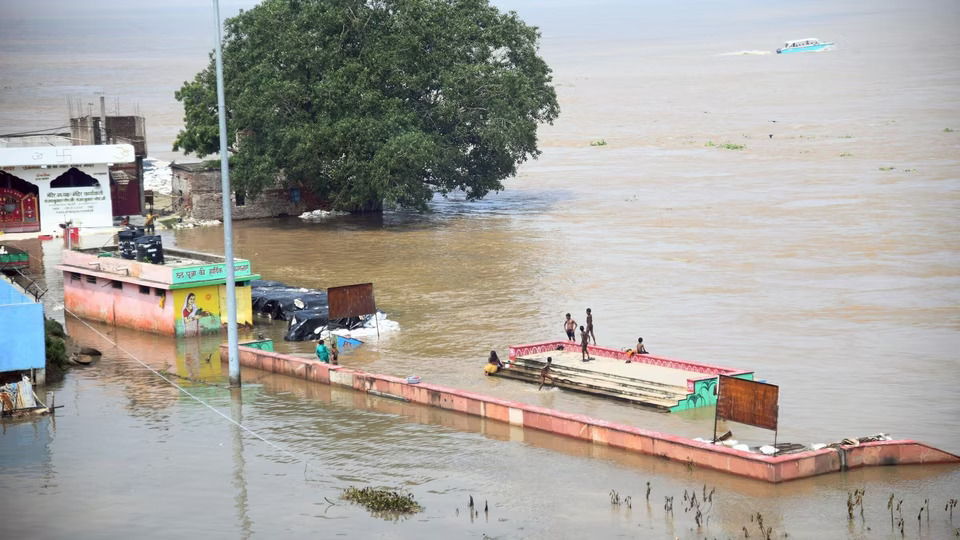
By Floods can test more than a government’s disaster-management system—they can test people’s faith in the administration itself. When rising water enters homes and villages, destroys crops and threatens livestock, families are left facing immediate questions about safety, food and shelter. In Uttar Pradesh, the government’s response to the latest floods has sought to address that fear through advance warnings, rapid rescue operations and direct supervision from the political and administrative leadership.
Chief Minister Yogi Adityanath personally reviewed the situation in several affected areas through aerial and ground inspections, directing officials to treat relief and rescue work as an urgent priority. The most reassuring outcome highlighted by the government is that, despite the severity of the flooding, there have so far been no reported human or animal casualties. The response has combined technology-based alerts, a dedicated helpline, rescue teams and large-scale relief distribution to keep assistance moving to people in affected areas.
From flood warnings to immediate rescue
The government’s approach has been built around the principle that an early warning can save lives before rescue teams are even required. During July and August, the Relief Commissioner’s Office sent more than 591 crore alert messages to people, warning them about weather conditions and the possibility of flooding.
These alerts gave residents time to assess the threat and move towards safer locations where necessary. Information on rising river levels and weather conditions also helped district authorities prepare for the possibility of further flooding.
The 1070 helpline became another important link between affected residents and the administration. When people reported being stranded, their locations were identified and shared with the concerned district administration and NDRF and SDRF teams, allowing rescue personnel to reach them quickly.
CM’s field presence puts administration on alert
Yogi Adityanath’s decision to personally inspect affected areas added another layer of supervision to the relief operation. During his visits, the Chief Minister reviewed the situation on the ground and instructed officials that negligence in rescue or relief work would not be accepted.
The leadership’s involvement also sent a message to the field administration that flood management was being treated as an immediate priority. Senior officials, along with NDRF and SDRF personnel, entered floodwaters wearing life jackets and participated in rescue operations.
For people caught in a disaster, the presence of officials at the site can be as important as the relief material itself. It reassures affected families that their situation is being monitored and that help is being mobilised rather than waiting for the crisis to pass.
Nearly 20,000 people moved to safety
The scale of the rescue effort becomes clearer when the numbers are considered alongside the people behind them. The government says around 20,000 people have so far been shifted to safer locations.
Relief teams have also distributed more than six lakh lunch packets and over one lakh flood relief kits. For families forced to leave their homes or unable to cook because of rising water, access to ready food and essential supplies can make an immediate difference.
The relief operation has therefore extended beyond evacuation. Authorities have continued to focus on the basic needs of people staying in or around flood-affected areas.
Focus shifts to health after flooding
Floodwaters create another danger even after the immediate threat of drowning has passed: contaminated water can increase the risk of water-borne illnesses.
To address this, the government has distributed large quantities of chlorine tablets and ORS packets in affected areas. The measures are aimed at reducing health risks linked to contaminated drinking water and diarrhoeal illnesses.
Ministers responsible for different districts were also deployed to oversee relief operations, including the distribution of essential material and monitoring of the situation. Their involvement created an additional layer of political supervision over the administrative response.
Technology and administration working together
The flood response in Uttar Pradesh has highlighted the importance of connecting different parts of disaster management rather than treating them as separate exercises. Early warnings can move people out of danger, while helplines can identify those who remain stranded. Rescue teams can then be directed to specific locations, followed by food, essential supplies and health measures.
This chain of response reduces the gap between identifying a problem and providing assistance. The experience also underlines the value of real-time information during a rapidly changing disaster.
The broader message emerging from this year’s flood response is that disaster management depends not only on manpower but also on preparation, communication and accountability. When technology, administration and political leadership operate together, the government can respond faster and potentially prevent a natural disaster from turning into a larger humanitarian crisis.
For Uttar Pradesh, the absence of reported human and animal casualties so far has become the most significant measure cited by the government to demonstrate the effectiveness of its preparedness and response system. More importantly, the flood experience shows how timely warnings, quick rescue operations and continuous monitoring can help strengthen public confidence when communities are facing one of their most difficult moments.