

 By
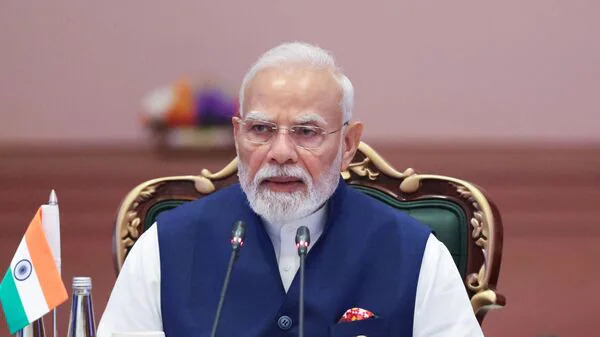
By Prime Minister Narendra Modi will inaugurate the fifth edition of Semicon India 2026 on Thursday, September 17, bringing together global and Indian players from across the semiconductor and electronics industry. The three-day conference and exhibition in New Delhi will focus on investment, technology, innovation and the development of skilled talent as India seeks to expand its presence across the chip manufacturing ecosystem.
The event, being held from September 17 to 19, comes at an important stage in India’s semiconductor push. More than 600 companies are expected to participate, with around 50,000 visitors, representatives from 52 countries, over 400 business executives and more than 150 speakers. The event also coincides with Prime Minister Modi’s 76th birthday on September 17.
What Is Semicon India 2026?
The fifth edition of Semicon India is being organised by the India Semiconductor Mission under the Ministry of Electronics and Information Technology (MeitY) in partnership with SEMI and industry associations.
This year’s theme is “Silicon to Systems: Building the Ecosystem.” The programme is designed to bring together semiconductor manufacturers, electronics companies, policymakers, investors, researchers, start-ups, academic institutions and students.
Rather than focusing only on chip fabrication, the event will present the semiconductor industry as a complete value chain. A new “Sand to Silicon to Systems” Value Chain Experience will demonstrate how raw materials and equipment move through chip design, fabrication and advanced packaging before becoming part of electronics and larger systems.
The conference programme will include discussions on display technologies, investment and collaboration opportunities, six country roundtables aimed at encouraging partnerships and joint ventures, and a dedicated forum on women’s leadership.
International and State Participation
Semicon India 2026 will feature six international country pavilions representing Japan, South Korea, Malaysia, the Netherlands, Singapore and Sweden.
The exhibition will also include 12 state booths, giving Indian states an opportunity to showcase their semiconductor and electronics investment ecosystem. Other attractions will include a start-up pavilion, innovation showcase, student hackathon and a workforce development pavilion.
The wide participation is intended to connect companies and investors with emerging opportunities across India’s growing semiconductor ecosystem.
Why Semiconductors Matter to India’s Economic Push
India’s semiconductor ambitions have gained momentum as countries worldwide seek to strengthen domestic chip supply chains. The growing demand for computing power, particularly because of artificial intelligence, has made semiconductors increasingly important to sectors ranging from automobiles and healthcare to finance and advanced digital services.
The Semicon India platform is therefore being used to showcase India’s progress and attract manufacturers, technology partners, equipment suppliers, investors and potential customers.
According to a Bloomberg report cited in the source material, the government has been seeking to position India as a long-term destination for semiconductor investment. Pranay Kotasthane, deputy director at the Takshashila Institution, told Bloomberg that the event signals India’s long-term commitment to developing its chip industry and sends that message to international investors.
Government Support for Chip and Electronics Manufacturing
India’s semiconductor strategy has been backed by substantial financial incentives. The country recently committed a further ₹1.9 trillion ($19.8 billion) in subsidies aimed at expanding domestic chip and electronics manufacturing, according to the source material.
The earlier production incentives introduced in 2020-21 helped accelerate electronics manufacturing in India, including the expansion of iPhone production. The semiconductor programme subsequently received an initial $10 billion fund intended to support the development of a domestic chip ecosystem.
Some of the early investments are now moving into production. The Tata Group and Murugappa Group have entered semiconductor packaging and assembly, while Micron Technology has also begun production in India, according to the cited report.
Tata is separately developing a semiconductor fabrication facility in Gujarat, which is expected to become operational in early 2028.
India Still Has a Long Road Ahead
Building a competitive semiconductor industry is a complex and capital-intensive process that can take decades. Countries such as Taiwan, South Korea, the United States and Malaysia have spent years developing the infrastructure, skills and supply chains needed to compete at scale.
India’s initial focus has included relatively less advanced, or legacy, semiconductors used in areas such as electronics and power systems. The next challenge is to move further up the technology ladder while simultaneously developing advanced packaging, chip design capabilities and supporting manufacturing infrastructure.
The government is also supporting start-ups developing semiconductor technologies, along with initiatives aimed at strengthening equipment manufacturing, fabrication plants and assembly facilities.
A Wider Semiconductor Ecosystem
The focus of Semicon India 2026 goes beyond attracting individual chip factories. The government is attempting to build a wider ecosystem covering materials, manufacturing equipment, chip design, fabrication, packaging, electronics and finished systems.
With AI driving a surge in demand for computing infrastructure worldwide, the three-day event will provide a platform for India to present its investment opportunities and connect domestic companies with international partners.
For India, the larger objective is to develop capabilities across the semiconductor supply chain rather than remain dependent on imports for critical components.