
 By
By The Uttar Pradesh government and the Centre are working on a coordinated action plan to tackle air pollution across eight Uttar Pradesh districts that fall within or are linked to the National Capital Region (NCR). The proposed measures will target some of the key sources of pollution, including vehicle emissions, industrial activity, road and construction dust, and poor waste management.
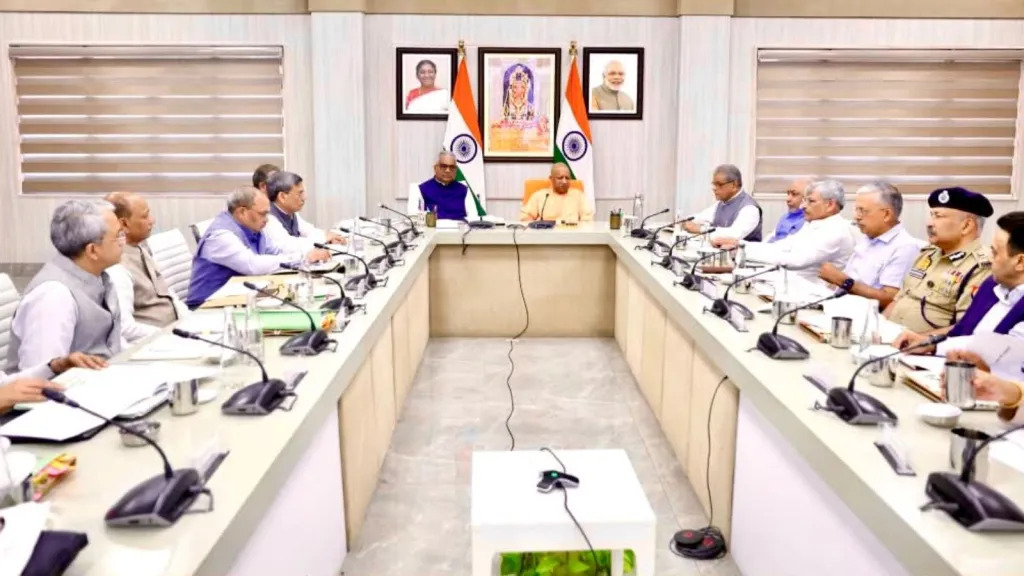
The strategy was discussed during a meeting between Uttar Pradesh Chief Minister Yogi Adityanath and Union Environment Minister Bhupender Yadav at the Chief Minister’s residence in Lucknow on Friday. Officials reviewed ongoing pollution-control measures in the state’s NCR-linked districts, including Noida, Ghaziabad, Hapur, Meerut and Bulandshahr, with an emphasis on strengthening enforcement and coordination.
Focus on Vehicle Emissions
Vehicular pollution emerged as one of the major areas of focus during the meeting. Yadav said several measures were being considered to bring down emissions from vehicles operating across the NCR.
These include action against old and highly polluting vehicles, implementation of Uttar Pradesh’s new Electric Vehicle (EV) Policy, expansion of electric bus services and stricter enforcement of mandatory pollution-under-control certificates.
The government is also looking at regulating vehicles operated by transport and ride-hailing aggregators as part of efforts to control emissions from commercial fleets.
Industrial Pollution Under Review
Industrial emissions are another key component of the proposed action plan. According to officials, around 80% of industries in the relevant areas have already installed Online Continuous Emission Monitoring Systems (OCEMS) and air pollution control equipment.
Yadav said efforts were underway to bring the remaining industries under the monitoring and pollution-control framework. The use of continuous monitoring systems is intended to provide authorities with more consistent information about industrial emissions and help identify cases requiring action.
Mechanised Cleaning to Tackle Dust
Road and construction dust is also being addressed through a dedicated cleaning plan. Officials said a detailed programme has been prepared for mechanised and deep cleaning in an effort to reduce dust levels in pollution-prone areas.
Dust from roads, construction activity and other exposed surfaces is a recurring concern across the NCR, particularly during periods when weather conditions limit the dispersion of pollutants.
Waste Management Rules to Be Strengthened
The meeting also covered implementation of the Solid Waste Management Rules and the Construction and Demolition Waste Management Rules.
The authorities plan to hold consultations with government departments and other stakeholders to improve compliance with the two sets of rules. The focus will be on ensuring that waste handling and disposal practices are implemented more effectively at the local level.
Centre Seeks Coordination Across NCR States
The Centre is also pushing for closer coordination between all states that form part of the wider NCR region. Yadav said he had already held discussions with Haryana Chief Minister Nayab Singh Saini and Delhi Chief Minister Rekha Gupta on pollution-control measures.
Meetings with the chief ministers of Rajasthan and Punjab are also planned, according to the Union Environment Minister.
The wider approach is significant because air pollution does not remain confined to state boundaries, particularly in the NCR, where emissions and weather conditions can affect air quality across neighbouring regions.
Stubble Management Also on the Agenda
The Centre is coordinating with agriculture departments in different states over crop-residue and stubble management, another issue associated with seasonal pollution episodes in the NCR.
Yadav said the government had held more than 30 meetings since December last year to discuss measures for controlling air pollution across the NCR.
The Commission for Air Quality Management (CAQM) has also held consultations with local bodies and elected representatives in 63 smaller cities, according to Yadav. These cities have been directed to appoint nodal officers to oversee pollution-control efforts.
Moving Towards a Coordinated NCR Response
The discussions between Uttar Pradesh and the Centre are part of a broader effort to address pollution through multiple interventions rather than relying on a single measure.
From vehicle emissions and industrial monitoring to road dust, waste disposal and stubble management, the proposed approach brings several pollution sources under one coordinated framework. The involvement of multiple NCR states and local authorities is expected to be important for implementing measures that require action across administrative boundaries.