
 By
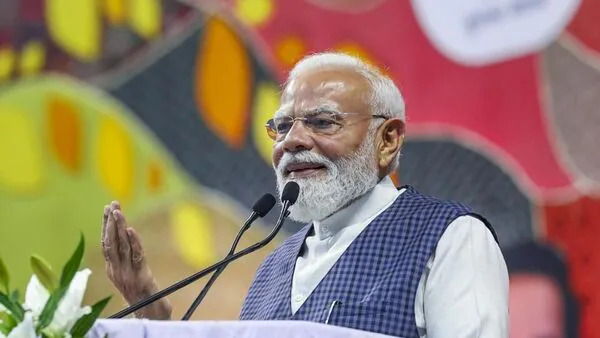
Highlighting the growing international demand for India’s workforce, Modi said workers trained at Industrial Training Institutes (ITIs), along with people possessing specialised skills and craftsmanship, would play a major role in the country’s economic future. He also called for a change in the social perception of vocational education, arguing that working with one’s hands should be seen as a source of pride rather than something less prestigious than a university degree.
PM Modi Calls for Greater Respect for ITI Training
During his address, the Prime Minister said the importance attached to conventional academic qualifications was changing. He argued that employers would increasingly value people who could demonstrate practical abilities and deliver skilled work.
Modi also spoke about the historical decline of India’s traditional craftsmanship. He claimed that successive invasions and British colonial rule weakened the country’s established skill-based learning systems. According to him, the education system introduced under British rule shifted attention away from traditional occupations and towards producing clerical workers to serve the colonial administration.
The Prime Minister said this legacy had contributed to the social stigma surrounding vocational education. He pointed out that some parents still hesitate to tell relatives that their children are studying at ITIs because they consider university education more prestigious.
Modi said he wanted to change this mindset and ensure that technical training and skilled professions receive the recognition they deserve.
Global Demand for India’s Skilled Workforce
Referring to his interactions with leaders in West Asian countries, Modi said Indian workers and artisans had played an important role in building modern cities across the Gulf region.
He mentioned Saudi Arabia, Dubai, Abu Dhabi, Qatar and Kuwait, saying members of royal families had acknowledged the contribution of Indian workers to their infrastructure and urban development.
The Prime Minister argued that international demand for Indian workers was not limited to university graduates. Countries were also looking for technicians, artisans and people trained in specific trades, including those who acquire their expertise through ITIs.
Modi Says AI Cannot Replace Practical Skills
Addressing concerns about artificial intelligence taking away jobs, Modi said people with specialised skills would continue to have an important place in the economy.
He suggested that while AI may change the nature of many professions, practical expertise and craftsmanship would remain difficult to replace. His message to young people was that developing real-world skills could help them remain relevant as technology changes the employment landscape.
Plumber Shortage Highlighted During Gas Supply Disruption
The Prime Minister also recalled a shortage of plumbers during a disruption in gas supplies linked to the West Asia conflict. He said the government had decided to accelerate household piped natural gas (PNG) connections, setting a target of at least one lakh connections every day.
However, Modi said the expansion faced a practical challenge: there were not enough trained plumbers to carry out the work.
He recalled asking officials why daily connection numbers were not rising beyond 15,000 to 20,000. According to him, officials explained that a shortage of plumbers was holding back progress.
Using the example, he said the situation demonstrated the importance of skilled workers and the opportunities available to young people who receive technical training.
PM Highlights Poverty Reduction and Uttar Pradesh’s Industrial Growth
Modi also described poverty reduction as a major achievement in India’s post-Independence journey, claiming that around 50 crore people had moved out of poverty. He said improving the living conditions and opportunities available to poorer sections would remain central to the goal of building a developed India, or Viksit Bharat.
Turning to industrial development in Uttar Pradesh, the Prime Minister referred to the semiconductor chip manufacturing facility being established in the state. He also said BrahMos missiles, which he linked to India’s military response during Operation Sindoor, were now being manufactured in Uttar Pradesh.
His address brought together three themes: the changing demands of the global job market, the need to give vocational education greater social recognition, and the role of industrial growth in creating opportunities for India’s skilled workforce.