
 By
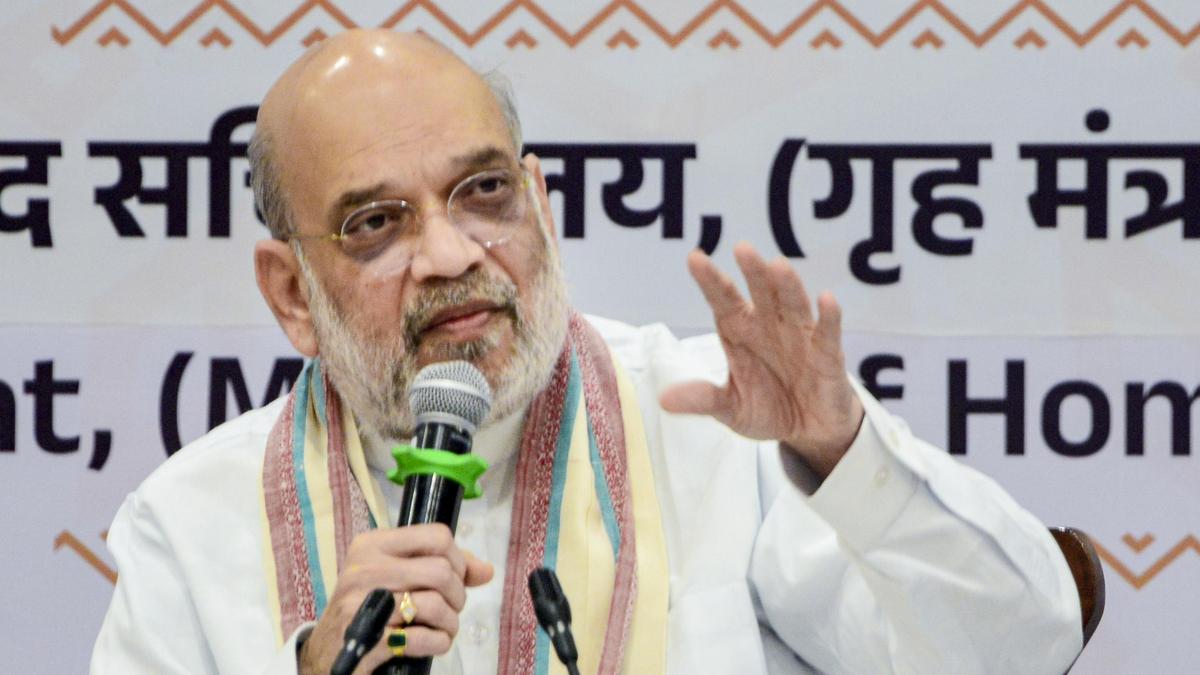
Shah stressed that counter-terrorism efforts must go beyond eliminating individual terrorists. He said agencies need to identify and dismantle the entire network, including its financial, logistical and operational support systems, to prevent attacks before they happen.
Lateef Bhat’s Killing Marks a Milestone, Shah Says
Referring to the encounter in South Kashmir’s Kulgam district on Wednesday, Shah said the elimination of Lateef Bhat had changed the security situation in the Valley. Bhat, who carried a bounty of ₹15 lakh, was wanted in connection with a November 11 attack on a CRPF post that left three paramilitary personnel injured.
Shah described the development as a significant outcome of the government’s approach towards terrorism and said security agencies must continue to act against the wider networks supporting militant activity.
“We will not achieve success unless we strike at the entire terrorist network in a coordinated and comprehensive manner,” he said.
Coordinated Action Against Terror, Crime and Drugs
The Home Minister said terrorism, organised crime and drug trafficking were increasingly interconnected challenges. He stressed that those responsible for such activities, including masterminds operating from abroad, must be brought before Indian courts.
According to Shah, coordinated efforts by the CBI, the Union Home Ministry and intelligence agencies have resulted in the return of 303 fugitives to India from 36 countries since 2019.
He also pointed to the nationwide operation against the banned Popular Front of India (PFI) as an example of effective coordination between central agencies and state police forces. In that operation, police teams from 11 states worked together with central agencies in simultaneous action against the organisation.
Shah said the operation demonstrated how coordinated intelligence and enforcement efforts could disrupt networks operating across state boundaries.
He also referred to action against the Shahzad Bhatti Network, run by Pakistan-based gangster Shahzad Bhatti. The network has been designated a terrorist organisation under the Unlawful Activities (Prevention) Act (UAPA). Shah said more than 40 of its modules had been dismantled, over 100 cases registered and more than 271 people arrested.
Centre and States Asked to Strengthen Intelligence Sharing
Inaugurating the two-day conference organised by the National Investigation Agency (NIA), Shah called for an integrated approach involving central agencies and state police forces.
He said India had faced terrorism for decades, but coordination gaps between state police forces had previously weakened the overall response. He added that efforts were now being made to establish a common counter-terrorism strategy extending from the national level to individual police stations.
Shah urged states to improve the cyber capabilities of their Anti-Terrorism Squads (ATS) and establish stronger systems for passing intelligence collected at police station level to senior officers, including directors general of police.
He also called for a quadrilateral regional security grid in border states and referred to the removal of what he described as illegal religious structures as part of the security measures.
According to the Home Minister, the key to successful counter-terrorism work is to identify threats early and arrest suspects before they can carry out attacks.
NIA Expands Its Reach and Investigation Capabilities
Shah highlighted the expansion of the NIA’s infrastructure and investigative powers. He said the agency had added 16 branch offices, two zonal offices and 70 special courts. Its authority to investigate crimes affecting Indian interests abroad has also been expanded.
He said the Multi-Agency Centre (MAC), which coordinates intelligence sharing, was restructured in 2023 with the use of advanced technology. Its scope now includes areas such as cybersecurity, narcotics, organised crime and radicalisation, alongside the creation of a National Memory Bank.
The Home Minister also said the legal framework for tackling terrorism had been strengthened through changes to the UAPA, while stressing that information-sharing between institutions needed further improvement.
NIA Publications, New Facilities and Awards
During the conference, Shah released an NIA publication titled Fail-Safe Investigation and launched the agency’s ‘Pushti’ portal. He also laid the foundation stone for a new NIA office complex in Chandigarh and inaugurated a residential complex for the agency in Maidangarhi, New Delhi.
Seven NIA officers and personnel were presented with decorations in recognition of their service.
Shah urged participants to make the conference focused on measurable outcomes, saying that counter-terrorism agencies must work towards a common objective with clear responsibility and accountability.
Union Minister of State for Home Affairs Bandi Sanjay Kumar, Home Secretary Govind Mohan, Intelligence Bureau Director Mahesh Dixit and NIA Director General Rakesh Agarwal were among those attending the conference.