
 By
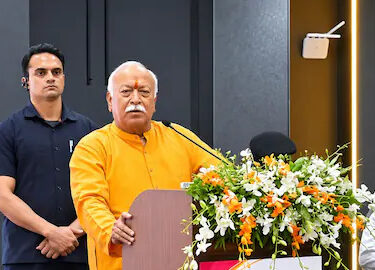
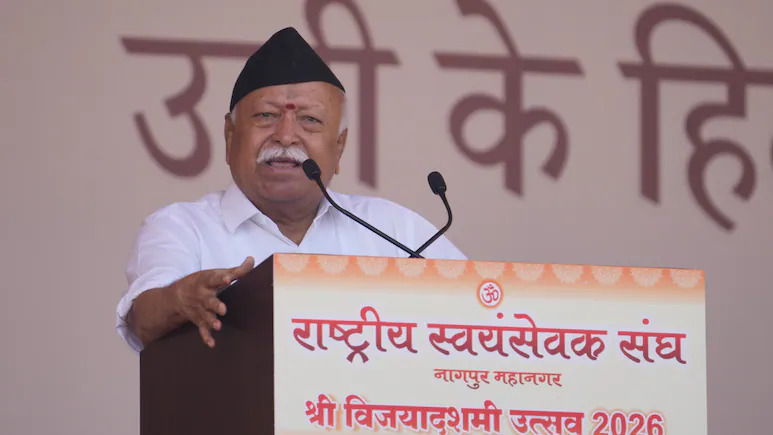
Bhagwat made the remarks on Sunday while addressing ‘Maru Ninad-2026’, an RSS Ghosh Shivir organised by the Jodhpur Prant at Rajaram Ashram in Shikarpura. He called for greater social unity, urging people to rise above personal interests, narrow differences and ego to build an organised society guided by Dharma and national service.
Bhagwat Uses Mahabharata to Highlight the Power of Unity
Explaining the importance of unity, the RSS chief referred to the Mahabharata and the battle between the Kauravas and Pandavas. He pointed out that the Kauravas had a larger army of 11 Akshauhinis and experienced warriors such as Bhishma, Dronacharya, Karna and Ashwatthama, yet they lost because of internal disagreements.
The Pandavas, despite having a smaller force of seven Akshauhinis, emerged victorious because they remained united and worked through their differences, he said.
Bhagwat used the example to underline that strength does not come from numbers alone. Collective purpose, mutual understanding and the ability to put aside personal disagreements are equally important for society to progress.
Calls for Selfless Leadership at the Grassroots
The RSS chief also stressed the need for committed individuals who can guide communities at the village and neighbourhood level. He said every village, street and locality should have 25 to 100 people of good character who are willing to stand with others during difficult as well as happy times and remain dedicated to the nation.
Referring to the connection between actions, habits, nature and character, Bhagwat said a person’s conduct gradually shapes their character, which ultimately becomes their real strength.
He urged people to move beyond selfish interests and contribute to society through disciplined and responsible conduct.
Bhagwat Highlights Indian Roots of RSS Ghosh Tradition
Speaking about the significance of the RSS Ghosh programme, Bhagwat traced the tradition of martial music to India’s ancient cultural and religious texts. He referred to the Bhagavad Gita and the sacred conches Panchajanya and Devadatta, whose sounds are associated with the beginning of the Mahabharata war.
He recalled that early RSS volunteers initially learned musical arrangements from British military bands. However, a desire to develop an indigenous musical tradition led them to compose original martial tunes based on the principles of Indian classical music.
Bhagwat said RSS band performers do not play for individual recognition or applause. Instead, the activity is intended to cultivate discipline, teamwork, selflessness and a spirit of collective progress.
His address connected the musical tradition of the organisation with a broader message about social unity, personal character and service to the nation.