 By
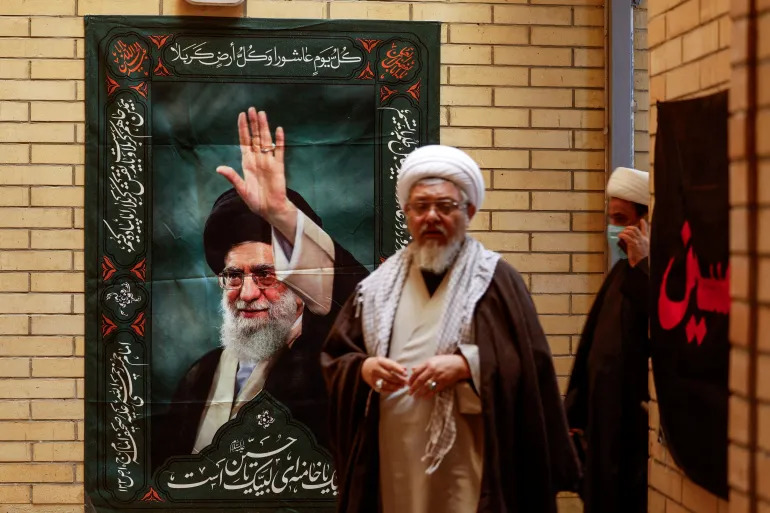
By The reported killing of Ayatollah Ali Khamenei in joint US-Israeli airstrikes has pushed Iran into one of the most consequential political transitions since the 1979 Islamic Revolution. With the country already under military pressure and facing retaliatory escalation in the Gulf, Tehran must now manage a delicate transfer of supreme authority — a process that blends theology, politics, and raw power.
For a system built around the principle of velayat-e faqih — guardianship of the Islamic jurist — the Supreme Leader is not just a political head but the ultimate religious and military authority. Khamenei, who held the post since 1989, shaped Iran’s domestic structure and regional posture for nearly four decades. His sudden death creates both uncertainty and an urgent need for institutional continuity.
How the Next Supreme Leader Is Chosen
Under Iran’s constitution, the successor is selected by the 88-member Assembly of Experts, an elected clerical body. However, candidates for the Assembly itself are vetted by the Guardian Council, whose members are directly or indirectly influenced by the Supreme Leader — making the process deeply embedded within the existing power structure.
When the office falls vacant, the Assembly convenes and selects a successor by simple majority. The constitution mandates that the leader must be a senior Shia jurist with strong religious credentials, political judgement, administrative capability and courage.
Only once before has Iran navigated such a transition — when Ruhollah Khomeini died in 1989 and Khamenei was elevated to the post.
Who Governs in the Interim?
Article 111 of the constitution provides for a temporary three-member council to assume responsibilities until a new leader is appointed. This body includes President Masoud Pezeshkian, judiciary chief Gholam-Hossein Mohseni-Ejei, and a cleric from the Guardian Council, reportedly Alireza Arafi.
The arrangement is designed to prevent a power vacuum, especially critical as Iran confronts external military threats.
Leading Contenders
Mojtaba Khamenei:
The late leader’s son is widely seen as influential within the clerical establishment and the Islamic Revolutionary Guard Corps (IRGC). However, hereditary succession remains controversial in a republic born from overthrowing monarchy. Even Khamenei had reportedly resisted the optics of dynastic transfer.
Alireza Arafi:
A senior cleric with strong religious credentials, Arafi serves as deputy chairman of the Assembly of Experts and is deeply embedded in Iran’s seminary network in Qom. While institutionally well-placed, he is viewed more as a religious administrator than a political heavyweight.
Mohammad Mehdi Mirbagheri:
An ultra-conservative cleric and vocal critic of Western influence, Mirbagheri commands support among hardline factions. His ideological rigidity may appeal to segments seeking a confrontational posture internationally.
Gholam-Hossein Mohseni-Ejei:
Currently heading the judiciary, Mohseni-Ejei has long been associated with Iran’s conservative establishment. His experience in intelligence and legal affairs positions him as a continuity candidate within the ruling elite.
A System Under Stress
Despite the high-stakes environment, analysts note that Iran’s political architecture was built to withstand leadership shocks. Over the years, Khamenei reportedly ensured that institutional lines of succession remained intact.
The real question is not whether Iran can appoint a successor — it will — but what kind of leader emerges. Will the Assembly opt for ideological hardline continuity, a cleric with broader consensus-building skills, or a figure closely aligned with the IRGC’s strategic priorities?
At a time when the United States and Israel signal sustained pressure, the next Supreme Leader will shape not just Iran’s domestic future, but the geopolitical balance across West Asia.