 By
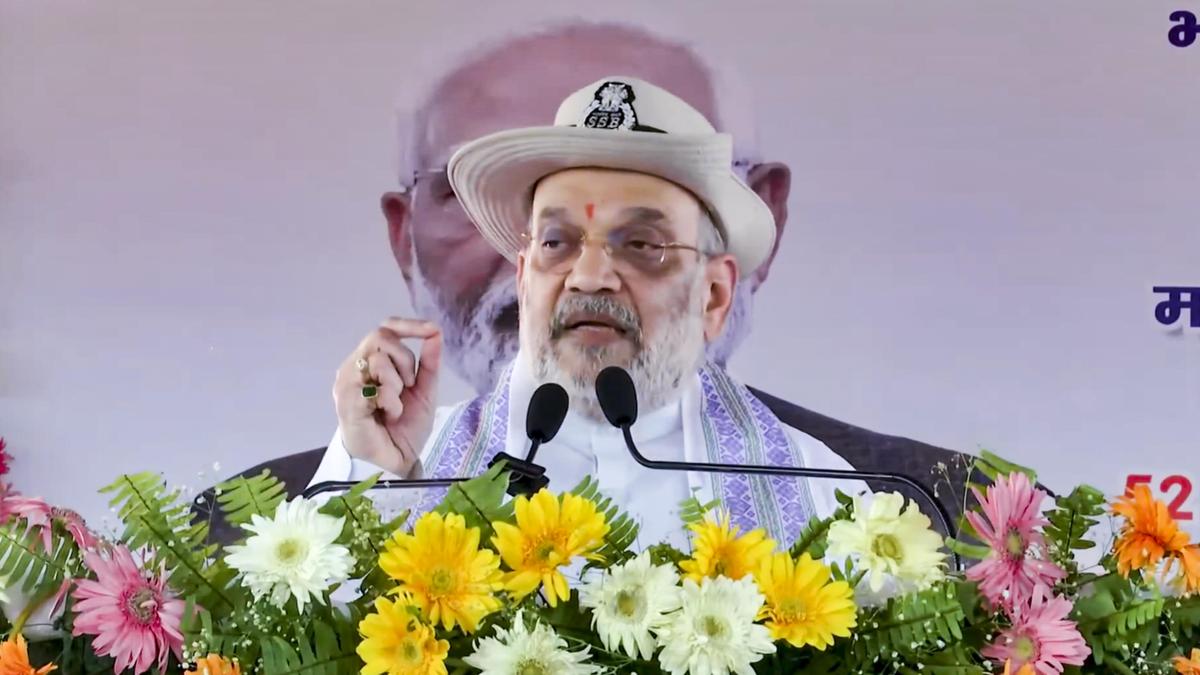
By With West Bengal’s Assembly elections approaching, Union Home Minister Amit Shah has set the tone for the Bharatiya Janata Party’s campaign, declaring that he is “confident” the party will form the next government in the State. Speaking near the India-Nepal border in Bihar, Shah linked electoral prospects in Bengal to a broader national security and demographic agenda.
Addressing a gathering of the Sashastra Seema Bal in Araria district, Shah said regions such as West Bengal, Bihar and Jharkhand have been significantly affected by demographic changes, which he attributed to infiltration and cross-border encroachment. He asserted that if voted to power in Bengal, the BJP’s “primary agenda” would be to complete border fencing and identify and expel illegal infiltrators.
“Elections are round the corner in Bengal, and I am confident that the BJP will form the government there,” Shah said. “We will fence the border and drive out every single infiltrator.” The remarks signal that border security and alleged demographic shifts will feature prominently in the party’s messaging during the campaign.
Also Read – BJP President Nitin Nabin Begins Bengal Push With Closed-Door Strategy Meet in Durgapur
Shah also referred to commitments made during Bihar’s elections, stating that removing infiltrators would go beyond revising electoral rolls. “We are determined to expel them from Indian soil,” he said, adding that infiltration impacts not only voting patterns but also welfare distribution and employment opportunities for local residents.
The Home Minister revealed that the Centre has been coordinating with the Bihar government to develop an action plan targeting illegal encroachments within a 10-kilometre radius of the border. Identification processes, he said, would precede deportation measures, though he did not outline a specific timeline.
In a significant policy announcement, Shah said the government has decided to establish a high-level committee, described as a High Power Demographic Mission. The proposed body would study population structure changes across the country, particularly in border districts, and recommend measures to address what he termed imbalances. According to Shah, demographic shifts caused by infiltration pose long-term risks to cultural and geographic integrity.
The speech also included a tribute to Vinayak Damodar Savarkar on his death anniversary, with Shah crediting him for framing the 1857 uprising as India’s First War of Independence. The reference underscored the ideological framing that often accompanies the BJP’s national security narrative.
Beyond electoral politics, Shah highlighted infrastructure upgrades for border forces. Under the India-Nepal Border Road Project, 554 kilometres of roads have been approved, with most segments nearing completion. Of the sanctioned ₹2,468 crore, ₹2,336 crore has already been spent, he said, adding that improved road connectivity would significantly enhance surveillance capabilities for SSB personnel.
As the Bengal election season gathers momentum, Shah’s remarks suggest a campaign built around border control, demographic concerns and national security — themes the BJP believes resonate strongly in eastern India. Whether that strategy translates into electoral gains will be tested in the months ahead.