 By
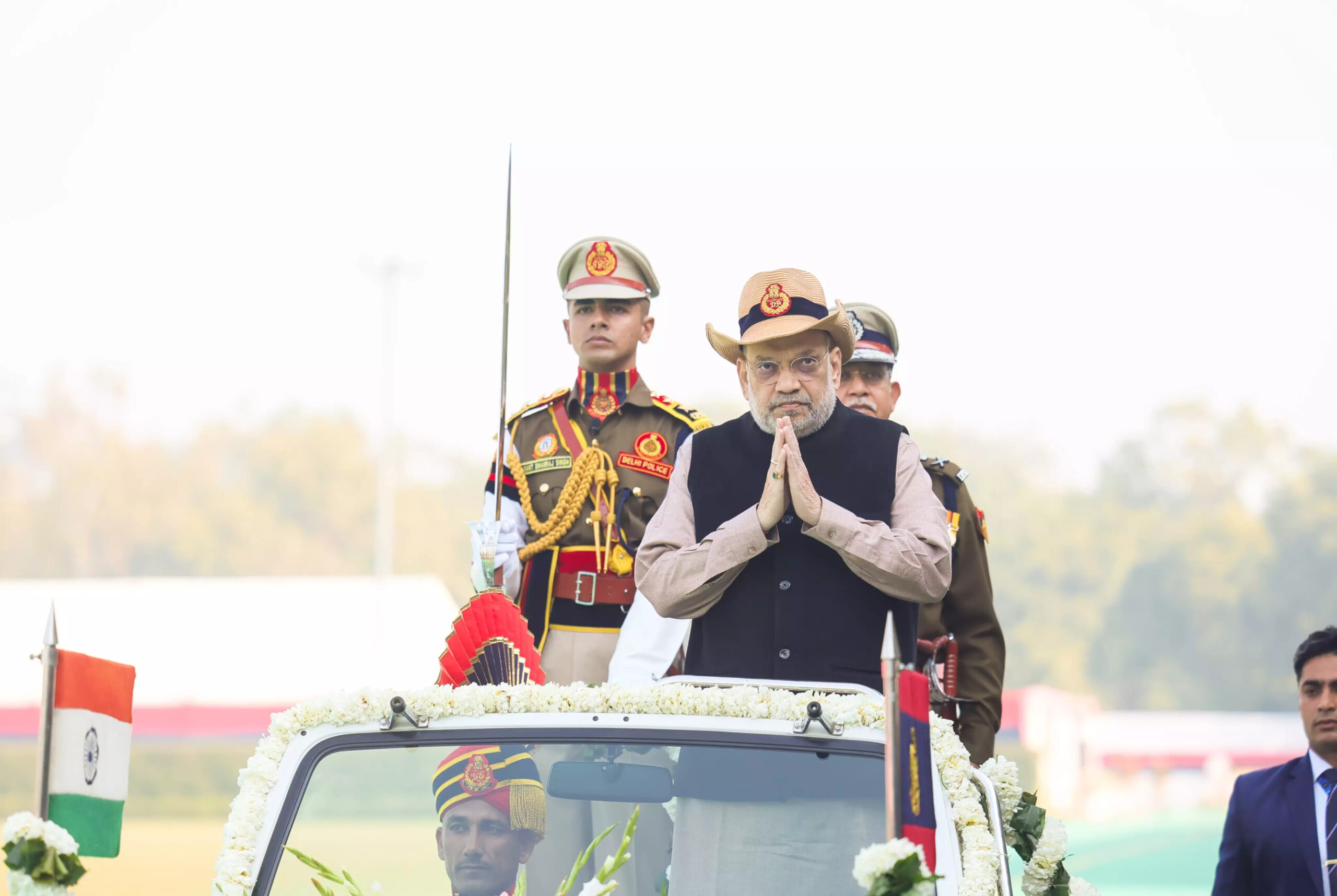
By Declaring that India’s long battle against left-wing extremism is approaching closure, Union Home Minister Amit Shah on Monday asserted that Naxal violence is “breathing its last” and will be wiped out nationwide by March 2026. Speaking at the 79th Raising Day parade of the Delhi Police, Shah coupled the security claim with an ambitious promise: a transformed criminal justice system capable of delivering final court verdicts within three years of an FIR.
The remarks reflect the government’s confidence that a mix of aggressive security operations and targeted development initiatives has fundamentally weakened Maoist networks across central and eastern India. Once active across 11 states in what was often called the “Red Corridor,” Naxal groups now operate in significantly reduced pockets, according to official assessments.
Shah described the current phase as the “endgame” of a decades-old internal security challenge. He credited coordinated action between central forces and state police units for shrinking insurgent influence, while infrastructure expansion and welfare schemes in previously neglected tribal areas helped cut off recruitment pipelines. “We are very close to eliminating Naxalism completely,” he said, setting March 2026 as the deadline for total eradication.
Beyond left-wing extremism, Shah painted a broader picture of internal security consolidation over the past decade under Prime Minister Narendra Modi. He cited improvements in Jammu and Kashmir and multiple peace accords in the Northeast, where more than 10,000 insurgents have reportedly laid down arms in recent years. The focus, he said, will now intensify on border management and surveillance to prevent infiltration.
A major portion of Shah’s address centred on the overhaul of India’s criminal laws, which replaced colonial-era statutes in July 2024. The Bharatiya Nyaya Sanhita, the Bharatiya Nagarik Suraksha Sanhita, and the Bharatiya Sakshya Adhiniyam have restructured substantive criminal law, procedure and evidence rules. Shah called the reforms a “milestone” that will modernise justice delivery and push conviction rates toward 80 per cent.
According to the Home Minister, full implementation of the new laws within two years could ensure that cases — from FIR to Supreme Court verdict — are resolved within three years. He argued that technology integration is central to this vision. The Integrated Criminal Justice System has digitally linked police stations, courts, prosecution departments, forensic labs and prisons, enabling electronic case tracking from start to finish.
Key provisions include mandatory forensic investigations for offences carrying more than seven years’ imprisonment, statutory backing for e-FIR and Zero FIR registration, and clearer definitions of terrorism and organised crime. Community service has been introduced as a punishment for minor offences, while digital and electronic records are now formally recognised as admissible evidence. Authorities have also been empowered to attach properties of proclaimed offenders residing abroad and to conduct trials in absentia for fugitives.
Shah used the Delhi Police parade as a platform to emphasise urban security preparedness. Praising the force for maintaining “global standards” in policing the national capital, he highlighted its efforts against narcotics networks, counterfeit currency operations, cybercrime and organised crime syndicates. He laid the foundation stone for a new integrated headquarters for the force’s Special Cell and inaugurated the first phase of the Safe City project, aimed at expanding CCTV surveillance and rapid-response capabilities.
The twin narrative — of ending insurgency and accelerating justice — underscores the government’s effort to frame internal security as a success story of the past decade. While independent verification of deadlines and conviction targets remains to be seen, Shah’s remarks signal a clear political message: that India’s internal conflicts are narrowing, and its justice system is poised for structural transformation.