 By
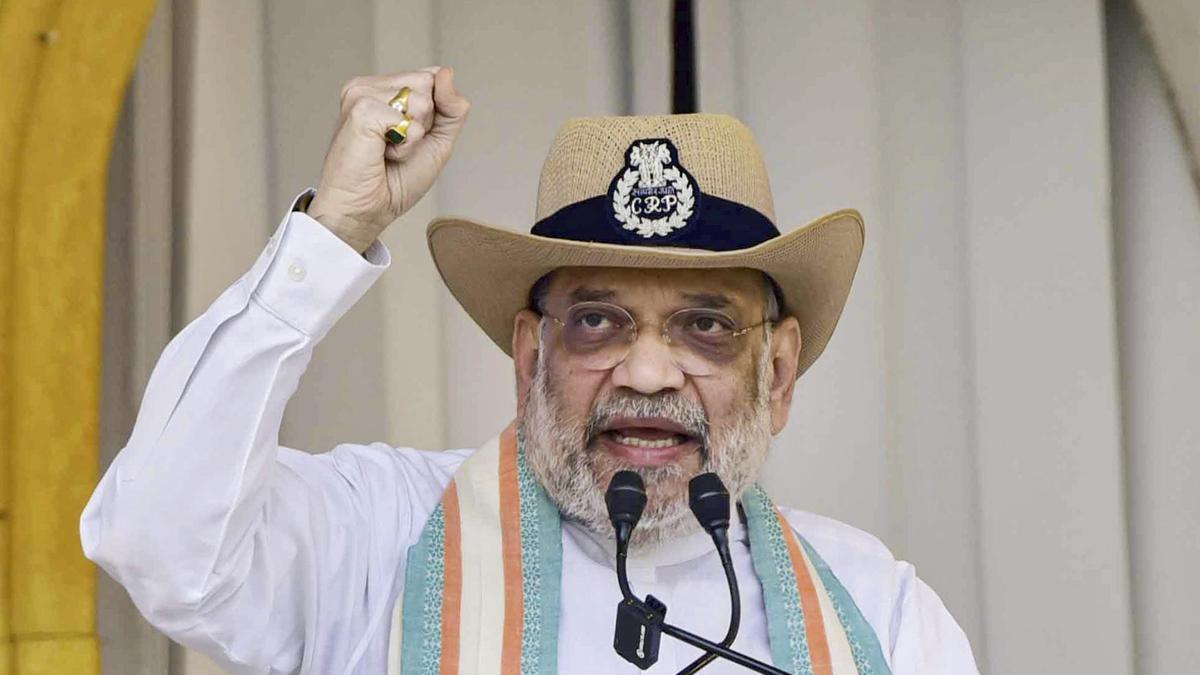
By Standing before thousands of uniformed personnel in Guwahati, Union Home Minister Amit Shah delivered a firm and time-bound message: Left-Wing Extremism will be wiped out from India by March 31. Addressing the 87th Raising Day parade of the Central Reserve Police Force (CRPF), he framed the fight against Maoism as entering its final phase, crediting sustained security operations and coordination among forces for what he described as “decisive progress.”
The declaration was not just rhetorical flourish. It signals the government’s assessment that Maoist influence, once spread across large swathes of central and eastern India, has been sharply reduced to limited pockets. Shah’s confidence, he said, stems from the CRPF’s track record over the past three years in shrinking insurgent strongholds and restoring administrative presence in previously inaccessible regions.
“My confidence in the CRPF makes me reiterate that we will rid the country of the Maoist problem by March 31,” Shah said, addressing personnel at the multi-sports complex venue. He singled out the elite CoBRA (Commando Battalion for Resolute Action) units for their specialised jungle warfare operations in Maoist-affected districts, saying their contribution would be remembered when “red terror ends in the country.”
Security officials point to intensified intelligence-based operations, improved road connectivity in remote areas, and coordinated efforts with state police forces as factors that have weakened Maoist networks. In recent years, several senior Maoist leaders have either surrendered or been neutralised, while recruitment and financing channels have reportedly narrowed.
Beyond the Maoist front, Shah used the occasion to underline the CRPF’s wider role in safeguarding internal security. He referenced historical moments that shaped the force’s legacy, including the 1959 clash with Chinese troops at Hot Springs in Ladakh and the 1965 battle at Sardar Post in Kutch. These events, he noted, form the basis for observing Police Commemoration Day on October 21 and Shaurya Diwas on April 9.
The Home Minister also highlighted the force’s deployment across India’s most sensitive regions. In Jammu and Kashmir, he said, the CRPF worked alongside the Border Security Force (BSF) and the Jammu & Kashmir Police to maintain law and order following the abrogation of Article 370. According to Shah, incidents of large-scale stone-pelting have ceased, creating conditions for increased investment and development in the Union Territory.
In the northeast, particularly in violence-hit Manipur, the CRPF has played a stabilising role, he said, stepping in to contain ethnic unrest when state resources were stretched. “We cannot think of internal security without this force,” Shah remarked, pointing out that what began in 1939 with just two battalions has grown into the world’s largest central armed police force, with over 3.25 lakh personnel in 248 battalions.
The ceremony also carried a solemn tone. Shah paid tribute to 2,270 CRPF personnel who have died in the line of duty since the force’s inception. Of these, 780 lost their lives in Maoist-affected areas, 700 in the northeast, 540 in Jammu & Kashmir, and 250 in other parts of the country. Their sacrifices, he said, underpin the relative peace many regions now experience.
CRPF Director General Gyanendra Pratap Singh, addressing the gathering earlier, said the force has introduced reforms to improve both operational efficiency and troop welfare. These include a transparent system for non-combat postings based on performance, as well as initiatives focused on physical fitness and mental well-being.
Shah concluded on a personal note, saying he sleeps peacefully knowing the CRPF stands ready to respond to any internal security challenge. With the March 31 deadline now publicly set, the coming weeks will test whether the government’s confidence translates into the formal end of one of India’s longest-running insurgencies.