 By
By With a string of crucial Assembly elections on the horizon, the Bharatiya Janata Party has moved into campaign mode, quietly recalibrating its strategy from the ground up. At the centre of this effort is B. L. Santosh, who has been leading a series of back-to-back meetings aimed at tightening coordination and sharpening the party’s electoral messaging.
The upcoming polls in states like West Bengal, Kerala, Assam, Tamil Nadu and Puducherry are being viewed as politically significant, not just for regional outcomes but also for the BJP’s broader national positioning. Party insiders suggest that the focus this time is less on headline announcements and more on strengthening organisational depth.
Santosh’s approach has been methodical. He began with a joint बैठक of various party “Morchas”—the BJP’s specialised wings that engage different sections of society, from youth and women to farmers and professionals. The idea was to bring everyone onto the same page and ensure that each unit works in sync rather than in silos during the campaign.
What followed were smaller, more focused discussions. Santosh met individual Morcha leaders to review their preparedness, identify weak spots and push for more targeted outreach plans. These sessions were not just routine check-ins—they were designed to align local strategies with the party’s national narrative.
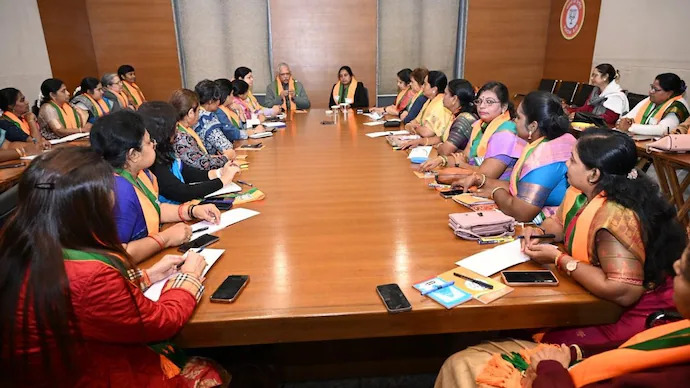
One of the key focus areas to emerge from these meetings is women voters. In a dedicated session with the BJP Mahila Morcha, leaders discussed ways to deepen engagement at the grassroots level. From door-to-door campaigns to community gatherings, the emphasis is on building sustained contact rather than one-off outreach.
There is also a cultural dimension to the strategy. In southern states, for instance, the party is planning to integrate local festivals into its campaign. Initiatives like themed Pongal celebrations are being seen as a way to connect with regional sentiments while reinforcing the BJP’s broader messaging around cultural identity.
At the same time, each Morcha has been assigned clear responsibilities. Whether it is mobilising first-time voters, reaching out to women, or strengthening booth-level presence, the goal is to ensure that every layer of the organisation contributes to the campaign effort.
Party leaders say lessons from previous elections—both wins and setbacks—are shaping the current strategy. There is a conscious attempt to avoid over-reliance on central figures and instead build a more distributed campaign structure that can adapt to local dynamics in each state.
As the election calendar draws closer, the BJP’s internal preparations suggest a campaign that will rely heavily on organisation, coordination and targeted messaging. With Narendra Modi expected to remain the central face of the campaign, the groundwork being laid now could play a decisive role in how the party performs across these diverse political battlegrounds.