 By
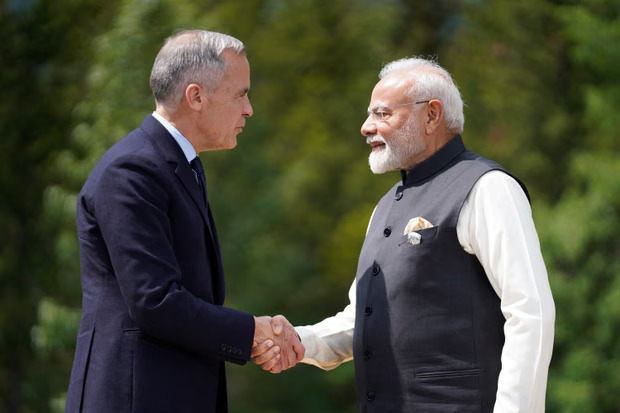
By In a striking diplomatic turn, Canadian Prime Minister Mark Carney is set to meet Prime Minister Narendra Modi in New Delhi on Monday, signaling a determined effort by both governments to move past months of public acrimony and strategic mistrust. The meeting comes against the backdrop of shifting global trade alignments and growing unpredictability in relations with the United States — a factor that has quietly nudged Ottawa and New Delhi closer.
Only months ago, bilateral ties were weighed down by allegations, diplomatic expulsions and sharp rhetoric. Today, the tone is markedly pragmatic. For Carney, the visit underscores a broader push to diversify Canada’s economic partnerships at a time when long-standing assumptions about US trade stability are under strain.
This is Carney’s second major diplomatic outreach in Asia in recent months, following an earlier trip to China. His government has framed these engagements as part of a larger recalibration strategy — reducing reliance on the US market while strengthening links with fast-growing economies. India, now the world’s most populous nation and one of its fastest expanding major economies, sits at the heart of that strategy.
Also Read – PM Modi holds talks with Mark Carney and PM Albanese, launches tri-nation Tech & Innovation Partnership
Current bilateral trade between Canada and India remains modest, hovering under C$15 billion annually. But officials on both sides see significant untapped potential. Energy cooperation, in particular, is emerging as a key pillar. Canada, a major exporter of natural resources, is in discussions over a long-term uranium supply agreement reportedly valued at nearly US$2.8 billion over a decade. Such a deal would deepen energy ties while reinforcing India’s long-term nuclear power ambitions.
Ahead of the Delhi meeting, Carney and his delegation held closed-door sessions with business leaders in Mumbai, emphasizing investment flows, clean energy collaboration, agri-tech and digital innovation. Canadian officials privately acknowledge that while political tensions linger, economic complementarities are too significant to ignore.
The diplomatic thaw contrasts sharply with the chill that followed the 2023 accusations by former Prime Minister Justin Trudeau that India was linked to the killing of a Sikh activist in British Columbia. The fallout saw the expulsion of diplomats and a freeze in high-level dialogue. New Delhi rejected the allegations as baseless and accused Ottawa of tolerating extremist elements.
Now, both sides appear eager to compartmentalize unresolved security disputes from economic engagement. Canadian Public Safety Minister Gary Anandasangaree recently acknowledged that “outstanding” issues remain, but officials insist safeguards are in place to continue dialogue.
For Modi, the outreach offers an opportunity to solidify India’s image as a stable economic partner amid global volatility. For Carney, it sends a message that Canada is serious about diversifying trade corridors beyond its southern neighbor.
Whether this meeting marks a lasting reset or a cautious truce will depend on how both governments manage the delicate balance between commercial opportunity and unresolved political tensions. But for now, trade — not recrimination — is driving the agenda.