 By
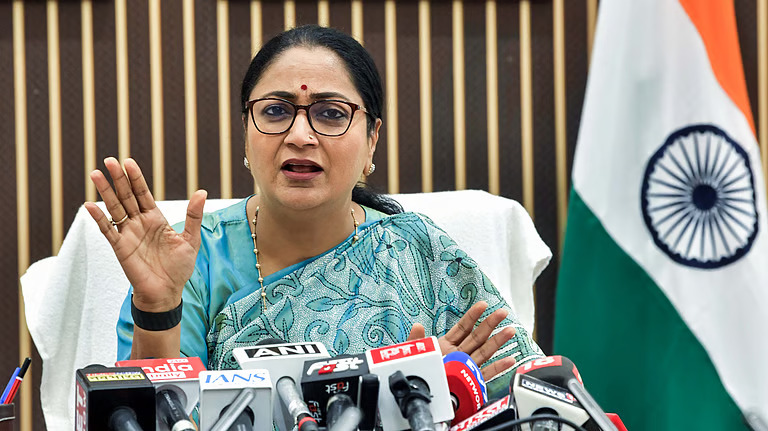
Gupta also expressed concern over an increase in the reported prevalence of child marriage in Delhi. Citing National Family Health Survey figures, she said the rate had risen from 9.9% in NFHS-5 (2019-21) to 11.4% in NFHS-6 (2023-24). She said she would examine the reasons behind the increase and take strict action.
Gupta Warns Families Against Child Marriage
Addressing the gathering in the presence of Union Women and Child Development Minister Annapurna Devi and Minister of State Savitri Thakur, the Chief Minister said families found forcing children into marriage would not receive benefits under government schemes.
She stressed that early marriage could have serious consequences for women’s health and rejected the idea that a woman’s role should be limited to bearing children. Gupta called on citizens to work together to eliminate child marriage from Delhi and the rest of the country.
She also questioned how the practice continued in 2026 despite years of awareness campaigns and government intervention.
CM Calls for Equal Education and Opportunities for Girls
Gupta said girls must have the same opportunities as boys to continue their education and build independent futures. Referring to Union Ministers Annapurna Devi and Savitri Thakur, she said women could reach positions of responsibility when they received equal opportunities.
She also pointed to her own position as Delhi’s Chief Minister, saying such achievements would not have been possible without access to education and opportunities.
According to Gupta, families should support their daughters by ensuring that they are not forced to leave school or marry at an early age. She said girls should receive respect, encouragement and the freedom to shape their own lives.
NFHS-6 Data Shows National Decline, But Regional Gaps Remain
According to NFHS-6 data cited at the event, 20.1% of women aged 20-24 in India were married before turning 18. This marks a decline from 23.3% recorded in NFHS-5.
However, the figures show considerable differences between states. West Bengal reported the highest prevalence at 36.4%, followed by Bihar at 34.6% and Rajasthan at 34%. Jharkhand recorded 28.1%, Assam 25.3% and Andhra Pradesh 25.1%.
At the other end of the list, Kerala reported a prevalence of 2.9%, followed by Goa at 6.8% and Himachal Pradesh at 7.9%.
India has set a target of eliminating child marriage by 2030.
Centre Calls for Community-Led Action
Union Women and Child Development Minister Annapurna Devi said the government’s objective was to ensure every child had a safe childhood and every girl had access to education and the ability to make informed decisions about her life.
She emphasised that ending child marriage required coordinated efforts from government departments, communities and families. Education, skill development and the empowerment of girls, she said, were essential to achieving the vision of Viksit Bharat by 2047.
Minister of State Savitri Thakur highlighted the role of Panchayats, frontline workers and community leaders in identifying and preventing child marriages. She said a child-marriage-free India was not only a target for 2030 but also an important part of the country’s development goals.
Two Years of Bal Vivah Mukt Bharat Abhiyaan
The Ministry of Women and Child Development launched the Bal Vivah Mukt Bharat campaign on November 27, 2024, with the aim of making India free from child marriage.
The campaign focuses on public awareness, community participation, stronger enforcement through Child Marriage Prohibition Officers (CMPOs), timely reporting and intervention. It also seeks to support adolescent girls who have dropped out of school or face the risk of early marriage through education, skill development and empowerment programmes.
According to officials, awareness initiatives under the campaign have reached more than 12 crore citizens over the past two years. More than 42 lakh pledges have also been registered through the Bal Vivah Mukt Bharat Portal, MyGov and MY Bharat platforms.
The campaign portal has become a centralised database of more than 72,000 Child Marriage Prohibition Officers across states and Union Territories.
The latest efforts are also part of the 100-Day Bal Vivah Mukt Bharat Awareness Module 2.0, running from October 21 to December 21. The initiative aims to increase public awareness, strengthen community participation and improve coordination among agencies working to prevent child marriage.