 By
By
At a time when global economic signals are flashing warning signs, India has emerged as a rare pocket of relative stability, according to the Economic Survey 2025–26 tabled in Parliament on Monday. The document presents a cautiously optimistic outlook for India’s growth trajectory, even as it warns that the world economy may be heading toward one of its most uncertain phases since the 2008 financial crisis.
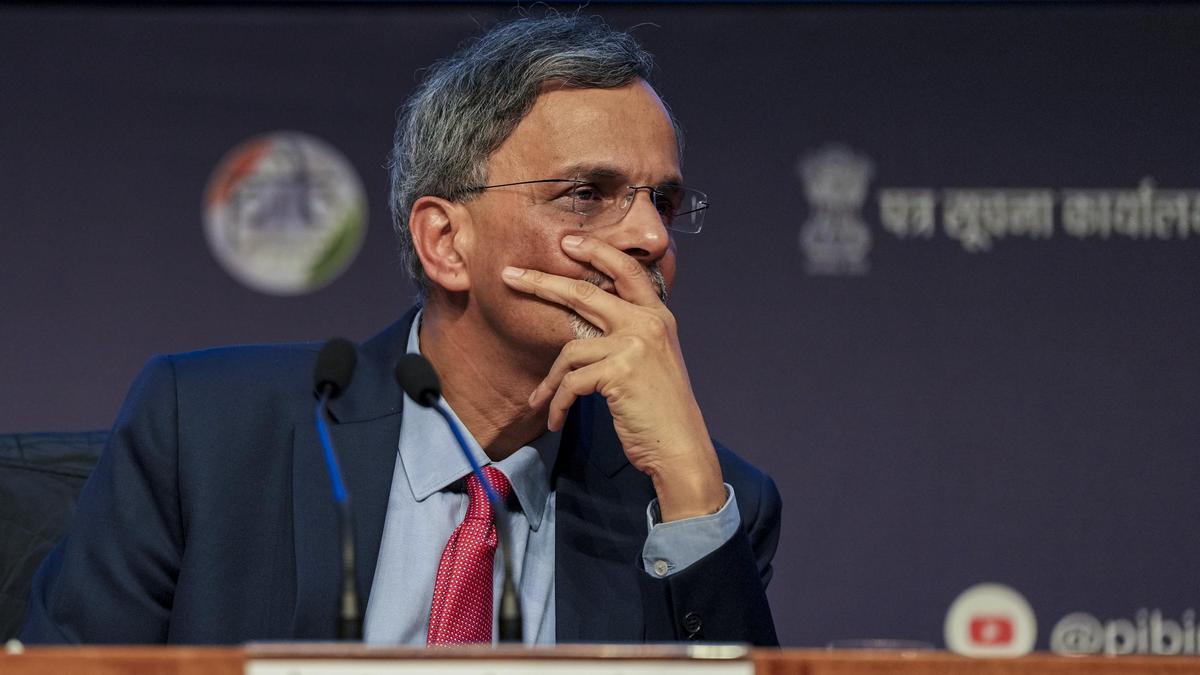
Authored by Chief Economic Advisor V. Anantha Nageswaran, the Survey upgrades India’s medium-term growth potential to around 7%, reflecting structural improvements in investment, labour participation, and productivity. In sharp contrast, it sketches a sobering picture of the global economy, including a non-trivial probability of a crisis that could eclipse the shocks witnessed nearly two decades ago.
For the current financial year 2025–26, the Survey aligns with the government’s projection of 7.4% growth, supported by robust domestic demand and continued public investment. Its internal “nowcast” places growth for the October–December quarter at about 7%, indicating resilience even amid global headwinds. Looking ahead, the Survey estimates India’s growth for 2026–27 to lie between 6.8% and 7.2%, reinforcing confidence in the economy’s medium-term fundamentals.
The upward revision is not accidental. The Survey argues that reform momentum over the last three years has been stronger and broader than in the previous decade. Manufacturing-focused initiatives such as the Production-Linked Incentive (PLI) schemes, liberalisation of foreign direct investment norms, and improvements in logistics infrastructure have helped expand capacity and reduce inefficiencies. These have been complemented by sustained public spending on highways, railways, ports, and digital infrastructure.
Equally important, the Survey highlights improvements in the financial health of corporations and banks, rising formalisation of employment, and more efficient tax administration. Together, these shifts suggest that India’s growth potential has structurally moved higher, rather than benefiting from a temporary post-pandemic rebound.
Yet the optimism is tempered by an unusually candid assessment of global risks. The Survey outlines three possible global scenarios for 2026. The most severe, assigned a 10–20% probability, envisions a convergence of financial instability, technological shocks, and geopolitical escalation. A key vulnerability identified is the surge in highly leveraged investments in artificial intelligence-driven business models, many of which depend on optimistic timelines and concentrated revenue streams.
A sharp correction in this space, the Survey cautions, may not halt technological progress but could tighten global financial conditions, fuel risk aversion, and spill over into broader capital markets. If such a shock coincides with intensified geopolitical conflicts or major trade disruptions, the resulting contraction in global liquidity could be deeper than that seen during the 2008 crisis.
The more likely scenarios, each given a 40–45% probability, are hardly comforting either. One assumes a continuation of 2025-like conditions—already fragile and insecure—while the other foresees a disorderly multipolar world marked by unresolved conflicts, weakened global institutions, and rising strategic rivalries.
For India, the Survey makes it clear that relative insulation does not mean immunity. Across all scenarios, the most significant risk lies in potential disruptions to capital flows and pressure on the rupee. Such shocks may not be short-lived and could have lasting implications for macroeconomic stability.
To mitigate these risks, the Survey stresses the need to sustain investor confidence and boost export earnings in foreign currency. As incomes rise, imports will inevitably grow, regardless of indigenisation efforts. Ensuring adequate foreign exchange inflows, therefore, becomes critical to maintaining external balance in an increasingly volatile global environment.