
 By
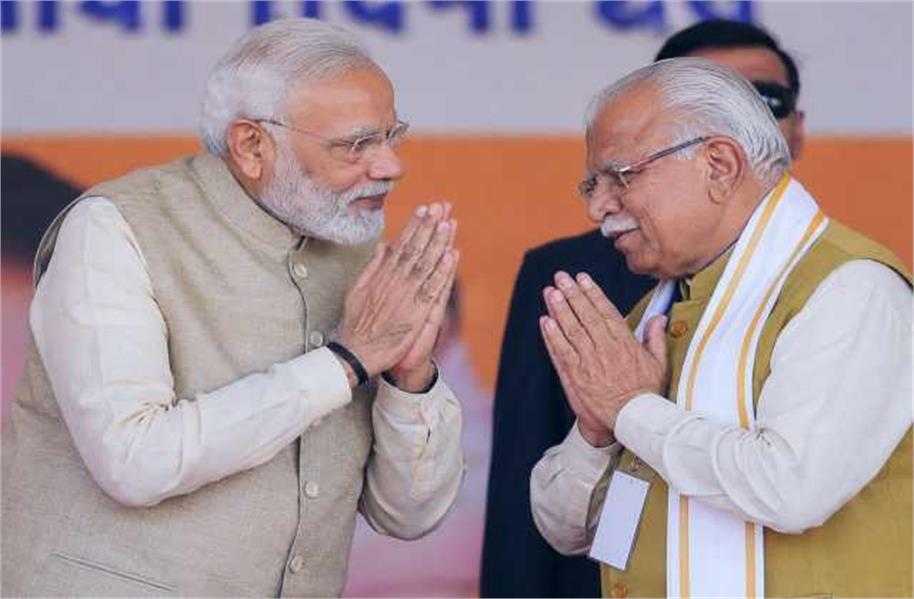
By As the Narendra Modi government completes 12 years in office, Union Minister Manohar Lal Khattar has highlighted the transformation India has witnessed during this period, describing it as an era of development, economic strength, and governance-driven growth. For Khattar himself, the past two years at the Centre have further strengthened his reputation as one of the government’s most dependable administrators.
A former Haryana Chief Minister and currently Union Minister for Power and Housing & Urban Affairs, Khattar is increasingly being viewed as a leader who not only formulates strategies but also ensures their execution. Political observers often describe him as a trusted hand within the BJP leadership, known for delivering results without seeking the spotlight.
Reflecting on the Modi government’s achievements, Khattar recently shared data showcasing progress across key sectors. According to figures highlighted by the minister, India’s power shortage has fallen dramatically over the past decade, while millions of households have gained electricity connections. Welfare initiatives such as housing, sanitation, and basic infrastructure have also expanded significantly, improving living standards across urban and rural India.
Since taking charge of the Power Ministry in June 2024, Khattar has focused heavily on strengthening India’s long-term energy security. With electricity demand rising steadily, the ministry has accelerated efforts to increase generation capacity, modernise transmission networks, and promote renewable energy.
Solar power has emerged as a major area of focus. Under the PM Surya Ghar scheme, rooftop solar installations have expanded rapidly, helping households reduce electricity costs while contributing to India’s clean energy goals. Simultaneously, initiatives such as smart metering and power distribution reforms have aimed at improving efficiency and reducing transmission losses.
In the urban development sector, Khattar has pushed for faster implementation of flagship programmes including Smart Cities Mission, AMRUT 2.0, and Swachh Bharat Mission (Urban). Several cities have witnessed upgrades in traffic management systems, LED street lighting, integrated command centres, waste management infrastructure, and e-governance services.
His approach has often been characterised by regular field visits, project reviews, and strict monitoring of timelines. Rather than remaining confined to ministry offices in Delhi, Khattar has travelled extensively across states and Union Territories to assess progress firsthand and resolve bottlenecks.
Within BJP circles, Khattar is regarded as a leader who combines organisational discipline with administrative experience. Having served as Haryana Chief Minister for more than nine years, he built a reputation for transparency, simplicity, and governance reforms. Many of those qualities continue to define his role at the Centre.
As India advances its goals in energy, urban infrastructure, and sustainable development, Khattar’s supporters argue that his transition from a political strategist to an effective executor has made him one of the government’s key performers—earning him the image of a “taskmaster” trusted with delivering on critical national priorities.