
 By
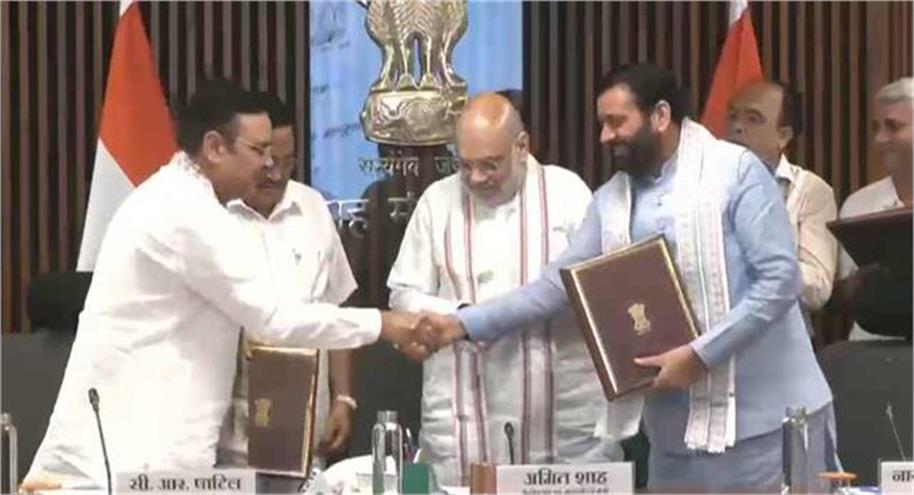
By A decades-old water-sharing issue between Haryana and Rajasthan has moved closer to resolution after both states signed a landmark agreement under the chairmanship of Union Home and Cooperation Minister Amit Shah. The Memorandum of Understanding (MoU), signed in New Delhi, is being seen as a major breakthrough in addressing long-pending concerns related to water management and inter-state cooperation.
The agreement lays the foundation for improved coordination between the two neighbouring states while reaffirming their commitment to equitable use of water resources. Officials believe the decision will not only help resolve historical disputes but also strengthen long-term water security for both regions.
The high-level meeting was attended by Union Jal Shakti Minister C.R. Patil, Haryana Chief Minister Nayab Singh Saini and Rajasthan Chief Minister Bhajan Lal Sharma. During the discussions, the leaders reviewed key issues related to water distribution, infrastructure development and future resource management before arriving at a consensus.
As part of the agreement, Rajasthan will receive its allocated share of water in accordance with the provisions of the 1994 Upper Yamuna River Board Agreement. The states also agreed to accelerate work on the long-pending Renuka, Kishau and Lakhwar dam projects, which are expected to improve water availability for drinking and irrigation in the coming years.
The Centre described the agreement as an important milestone that goes beyond water allocation. It is expected to encourage better conservation practices, improve the scientific management of water resources and foster stronger cooperation between Haryana and Rajasthan on future projects.
Expressing gratitude after the meeting, Haryana Chief Minister Nayab Singh Saini thanked Union Home Minister Amit Shah and Union Jal Shakti Minister C.R. Patil for facilitating the agreement. He said that, under the 1994 arrangement, rainwater available between July and October will be supplied to Rajasthan for drinking water purposes.
Saini further stated that the water will be transported from the Hathnikund Barrage to Rajasthan through a dedicated pipeline network. He described the initiative as a reflection of India’s cultural values, saying that ensuring drinking water for those in need is a shared responsibility rooted in the country’s civilisational ethos.
The agreement is expected to strengthen trust between the two states while paving the way for faster implementation of key water infrastructure projects. Officials believe the move will deliver long-term benefits by improving water availability, promoting conservation and ensuring more efficient management of shared resources.