

 By
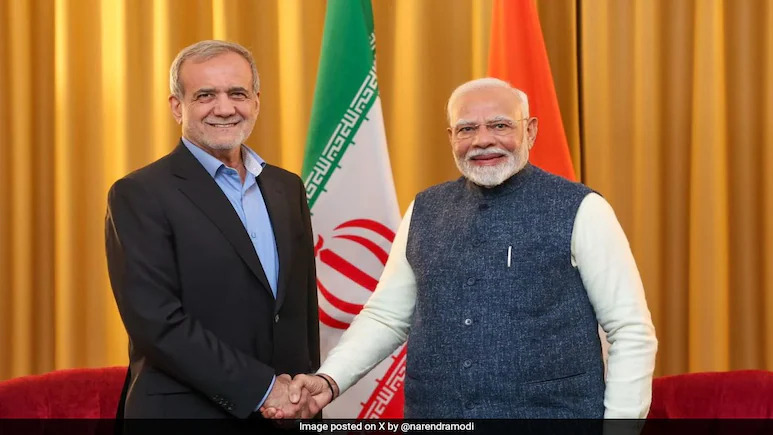
By Prime Minister Narendra Modi on Tuesday held a telephone conversation with Iranian President Dr. Masoud Pezeshkian to discuss the evolving situation in West Asia, with both leaders exchanging views on regional stability and the ongoing diplomatic efforts involving Iran and the United States.
During the conversation, Prime Minister Modi reiterated India’s consistent position that disputes should be resolved through dialogue and diplomacy. He also underscored the importance of maintaining peace in the region, while highlighting that uninterrupted maritime trade through the Strait of Hormuz remains crucial for India as well as the global economy.
President Pezeshkian briefed the Prime Minister on the latest regional developments and the status of diplomatic engagements involving Tehran. Modi welcomed the progress made in negotiations and expressed hope that sustained dialogue would help establish lasting peace and reduce tensions across West Asia.
Spoke with the President of Iran, Dr. Masoud Pezeshkian, on the recent developments in West Asia. Welcomed the progress made in the negotiations and expressed hope that continued efforts will lead to lasting peace in the region. Reiterated the importance of freedom of navigation…
— Narendra Modi (@narendramodi) June 30, 2026
Sharing details of the conversation on social media platform X, the Prime Minister said he had discussed recent developments with the Iranian President and conveyed India’s support for continued diplomatic efforts. He also reaffirmed the significance of ensuring freedom of navigation in the Strait of Hormuz, one of the world’s busiest and most strategically important shipping routes.
The leaders also discussed the need to safeguard international commerce and maritime security, amid growing concerns over instability in the Gulf region. India has consistently advocated peaceful engagement, given its strong energy and trade links with West Asia and its dependence on secure sea routes for global commerce.
The phone call comes at a sensitive time as diplomatic efforts between Tehran and Washington continue amid renewed uncertainty. Earlier this month, both countries had reached a preliminary understanding aimed at easing regional tensions, including commitments related to the Strait of Hormuz, sanctions relief and further negotiations over Iran’s nuclear programme. The process was followed by multilateral talks involving mediators in Switzerland.
However, the diplomatic momentum has since faced challenges after fresh military exchanges in the region. The United States accused Iran of targeting commercial vessels in the Strait of Hormuz and carried out strikes on Iranian military facilities. In response, Iran’s Revolutionary Guard Corps reportedly launched attacks on American military installations in Bahrain and Kuwait.
The renewed escalation has raised concerns about the future of negotiations, with Washington warning of additional military action if hostilities continue, while Iranian officials have indicated that further strikes could jeopardise the diplomatic process.
Meanwhile, Iran is preparing for the funeral ceremonies of its late Supreme Leader, who was killed in recent US-Israeli air strikes. The ceremonies are scheduled to take place from July 5 to July 9, and President Pezeshkian has extended an invitation to Prime Minister Modi to attend.