
 By
By Haryana is positioning itself for a fresh wave of industrial growth with the launch of its ambitious “Make in Haryana Industrial Policy 2026,” a roadmap that aims to attract global companies, generate large-scale employment and strengthen the state’s reputation as one of India’s leading investment destinations.
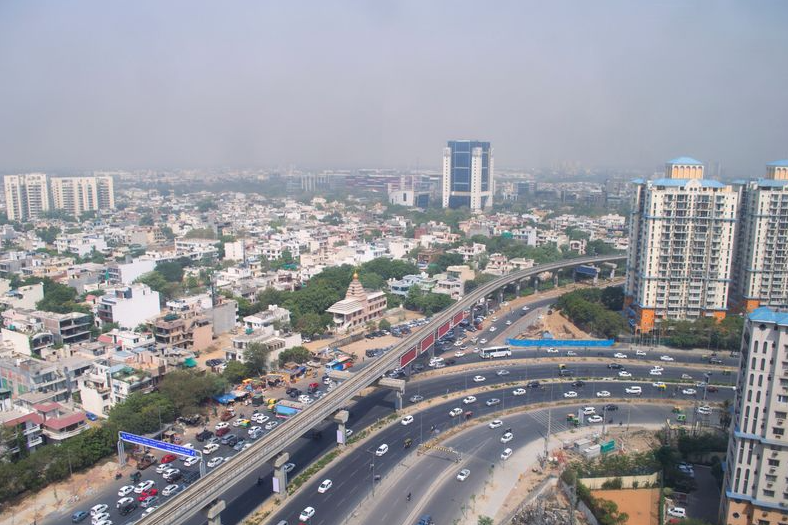
Backed by a strong focus on ease of doing business, technology adoption and infrastructure development, the new policy is being seen as an effort to build on the success story that transformed Gurugram into a major corporate and business hub. State officials believe the next phase of growth could extend beyond Gurugram and create similar opportunities in emerging industrial centres such as Faridabad and Sonipat.
The policy outlines an aggressive target of attracting investments worth ₹5 lakh crore and creating nearly 10 lakh jobs over the next five years. Rather than functioning merely as a regulator, the Haryana government aims to play the role of an active facilitator, helping investors navigate approvals and project execution more efficiently.
According to officials in the Industries and Commerce Department, the policy is designed not only to attract manufacturing units but also to encourage innovation-driven investments. Special emphasis has been placed on research and development centres, Centres of Excellence and next-generation technologies such as artificial intelligence, blockchain, the Internet of Things (IoT) and 5G-based solutions.
Industry experts say this approach could help create a stronger connection between startups, technology firms and multinational corporations. While startups gain access to larger markets and global supply chains, international companies benefit from Haryana’s growing talent pool and expanding innovation ecosystem.
A major highlight of the policy is its focus on reducing delays and simplifying procedures. The government plans to deploy an AI-enabled single-window clearance system aimed at accelerating approvals and minimizing bureaucratic hurdles. This is expected to improve investor confidence and make Haryana more competitive against other industrial states.
To further strengthen its appeal, the state has introduced a performance-linked incentive framework. Investors will have access to multiple fiscal benefits, including capital investment subsidies, SGST reimbursements and dedicated support for large-scale projects. Ultra Mega Projects will receive additional infrastructure assistance extending up to project boundaries, reducing setup costs and execution challenges.
Another notable feature is Haryana’s proposal to provide a 50 percent top-up on several incentives already available under central government schemes, including Production Linked Incentive (PLI) programmes. Officials believe this could significantly enhance the state’s attractiveness for domestic and international investors.
With Gurugram already established as a corporate powerhouse and Faridabad emerging as a major growth corridor, Haryana’s latest industrial strategy reflects a broader vision of creating a diversified and future-ready economy. If implemented effectively, the policy could help the state strengthen its position as a preferred destination for global investment and advanced manufacturing.