 By
By On the second day of the India AI Impact Summit 2026, Prime Minister Narendra Modi articulated an ambitious technological milestone: India should stand among the world’s top three artificial intelligence superpowers by 2047. Framing AI as central to the country’s long-term development blueprint, Modi said the technology must be deployed strategically to accelerate inclusive growth and address structural challenges.
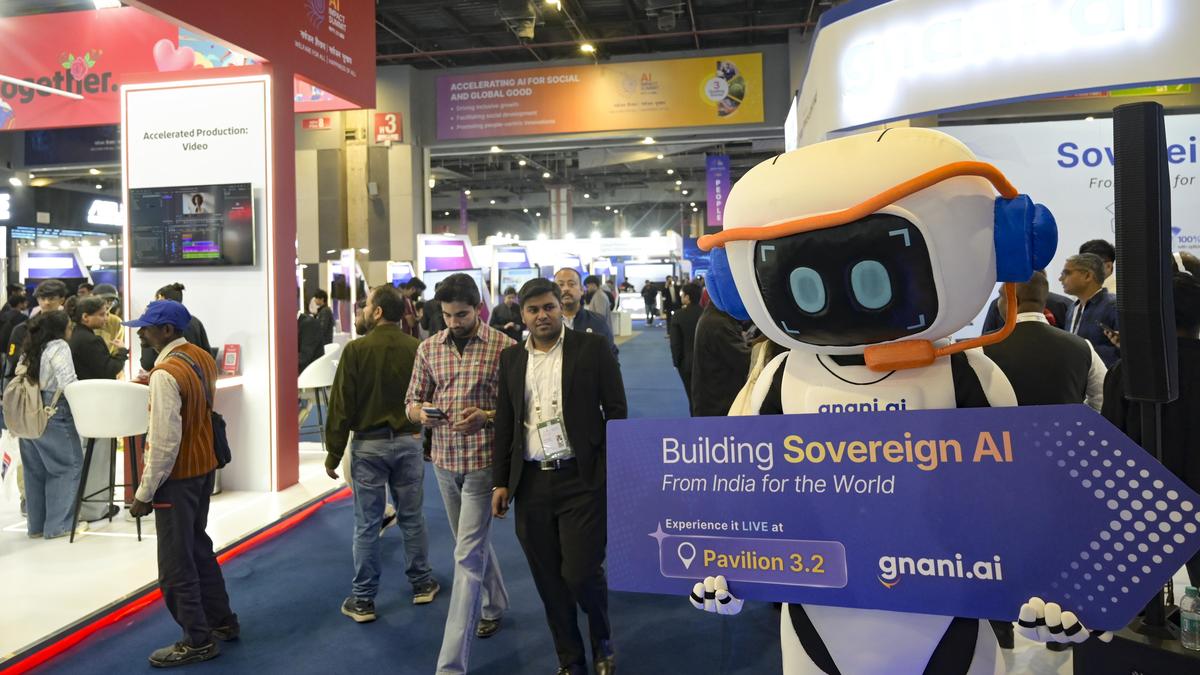
The Prime Minister’s remarks come as New Delhi hosts one of the largest global gatherings on artificial intelligence, drawing policymakers, industry leaders and researchers from around 100 countries. For India, the summit is not merely a showcase of innovation but a statement of geopolitical intent — that the Global South can help shape the norms and architecture of next-generation technologies.
In an interview during the summit, Modi described AI as a “transformative opportunity” in India’s journey towards becoming a developed nation by its centenary of independence in 2047. He emphasised that AI’s potential goes beyond economic acceleration; it can bridge the urban-rural divide, expand access to public services and unlock new avenues for entrepreneurship. However, he cautioned that intelligence and rationality must guide its adoption to ensure that technological progress aligns with societal welfare.
Also Read – India Opens AI Impact Summit 2026 as Safety, Jobs and Regulation Take Centre Stage
The five-day summit, which began on February 16, marks the fourth global AI convening after previous editions in the United Kingdom, South Korea and France. This is the first time the event is being hosted in a developing nation, a detail government officials highlight as significant in shifting the centre of gravity in global tech discourse.
Over 3,250 speakers and more than 500 sessions are scheduled through February 20, covering themes ranging from governance and cybersecurity to public health and sustainable development. Among high-profile attendees are Google CEO Sundar Pichai and OpenAI CEO Sam Altman, alongside leaders from nearly 20 countries, including France and Brazil.
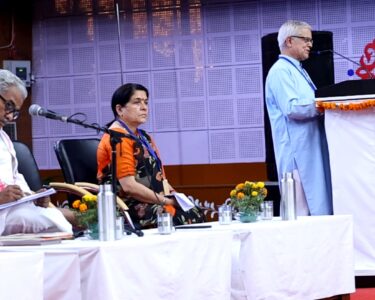
Ethics and accountability have emerged as recurring themes. Minister of State for Science and Technology Jitendra Singh stressed that AI’s role in healthcare would depend heavily on responsible frameworks and safeguards. As AI-powered diagnostics, predictive modelling and health data analytics expand, policymakers face the dual task of encouraging innovation while protecting patient privacy and preventing algorithmic bias.
In a parallel development, Union Health Minister J. P. Nadda unveiled two digital health initiatives aimed at strengthening India’s AI ecosystem in medicine. The Secure AI for Health Initiative (SAHI) is designed to ensure that AI applications in healthcare adhere to safety and security standards, while the Benchmarking Open Data Platform for Health AI (BODH) will create structured datasets to improve transparency and model validation.
“AI today is no longer futuristic; it is foundational,” Nadda said, underscoring the need for robust digital infrastructure and high-quality data to unlock its full potential. His remarks reflect the government’s broader strategy of integrating AI into flagship sectors such as healthcare, agriculture, education and governance.
Analysts note that India’s AI push is closely tied to its expanding digital public infrastructure — from Aadhaar to Unified Payments Interface — which provides a vast data backbone. Yet challenges remain, including skill gaps, regulatory clarity and balancing innovation with safeguards against misuse.
As the summit progresses, India’s message is clear: artificial intelligence will not be treated as a peripheral technology but as a cornerstone of national transformation. Whether the aspiration to rank among the top three AI powers by 2047 materialises will depend on sustained investment, regulatory maturity and global collaboration. For now, the Delhi summit has positioned India firmly in the global AI conversation — not as a bystander, but as a contender.