 By
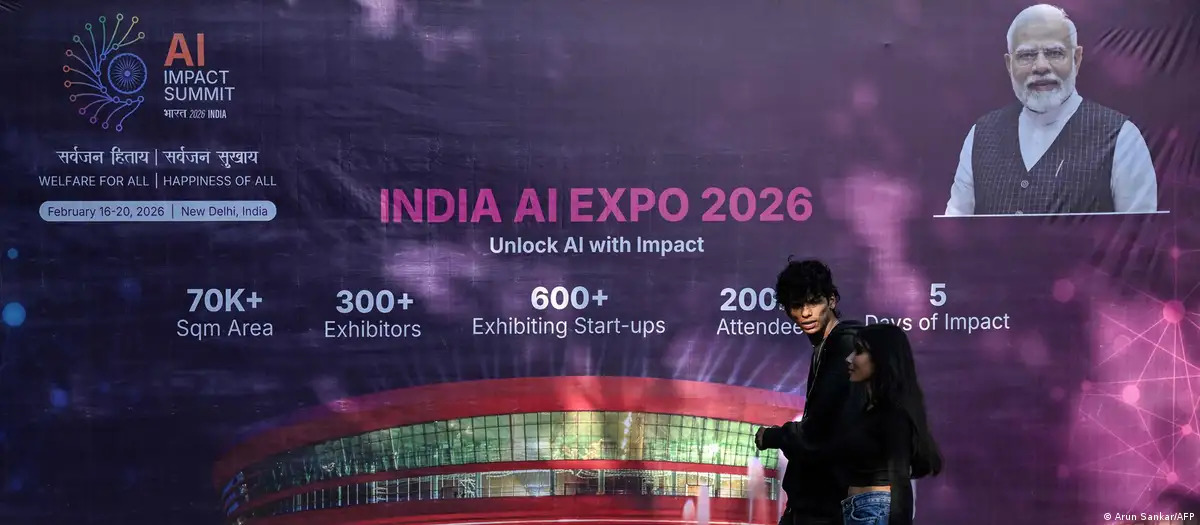
By India on Monday opened the doors to one of its most ambitious technology gatherings yet, positioning itself at the heart of the global artificial intelligence debate even as concerns around safety, misinformation and job losses loom large. The five-day AI Impact Summit 2026 in New Delhi brings together world leaders, top technology executives and thousands of innovators at a moment when AI’s promise is matched by rising public unease.
Prime Minister Narendra Modi, inaugurating the summit, framed the event as a defining opportunity for India to help shape the future rules of artificial intelligence. In a message shared at the start of the event, he described the gathering of innovators and researchers as evidence of India’s expanding technological capabilities and said the discussions would aim to create solutions with global relevance. For the government, the summit is not only a diplomatic showcase but also a statement of India’s emergence as a major AI power.
This is the fourth edition of the global summit, following earlier meetings in France, South Korea and the United Kingdom. India is the first developing nation to host the annual forum — a detail officials have highlighted as symbolic of shifting technological influence. According to global competitiveness rankings compiled by Stanford University researchers, India rose to third place in AI capacity last year, behind only the United States and China.
Yet even as delegates arrived to discuss the future of advanced algorithms, the opening day exposed the logistical strain of hosting an event expected to draw over 250,000 participants. Attendees described long queues, overcrowded halls and last-minute security clearances that temporarily disrupted access to exhibition spaces. Some journalists reported delays in receiving physical entry passes, while others struggled to find seating and work areas inside the venue.
Organisers attributed the confusion to heightened security arrangements ahead of high-profile arrivals. Among those scheduled to attend are French President Emmanuel Macron and Brazilian President Luiz Inácio Lula da Silva, alongside more than 40 ministerial delegations. The guest list from the private sector is equally prominent, featuring OpenAI CEO Sam Altman and Google CEO Sundar Pichai — figures who have come to symbolise both AI’s rapid advancement and the regulatory questions it raises.
The summit unfolds against a backdrop of intensifying global scrutiny of artificial intelligence systems. Concerns over AI-generated misinformation, deepfakes and synthetic content have grown in recent months. Controversy erupted worldwide after Elon Musk’s AI chatbot Grok was used to generate explicit and manipulated images of real individuals, including women and minors, prompting renewed calls for stronger safeguards.
India has attempted to position itself as both pro-innovation and pro-regulation. In November, the government unveiled AI Governance Guidelines anchored in principles of trust, safety, equity and innovation. Earlier this year, it tightened compliance rules for social media platforms, mandating clear labelling of synthetically generated content to curb deceptive use.
The summit’s official theme — “people, progress, planet” — signals an effort to balance economic ambition with social responsibility. Government officials say discussions will cover workforce transition, ethical AI deployment and collaborative frameworks between nations. However, sceptics question whether voluntary industry commitments will go far enough. Critics argue that previous global forums have relied heavily on self-regulatory pledges by tech companies, with limited enforcement mechanisms.
For India, the stakes are particularly high. The country’s booming startup ecosystem and digital public infrastructure have created fertile ground for AI experimentation. At the same time, millions of workers in sectors vulnerable to automation are watching closely, wary of how rapidly evolving technologies might reshape employment landscapes.
As the summit continues through the week, policymakers face a delicate balancing act: promoting India as an AI innovation hub while responding credibly to mounting calls for accountability. Whether the Delhi gathering produces binding commitments or remains largely aspirational may determine how seriously the world views this new chapter in India’s technological diplomacy.