 By
By
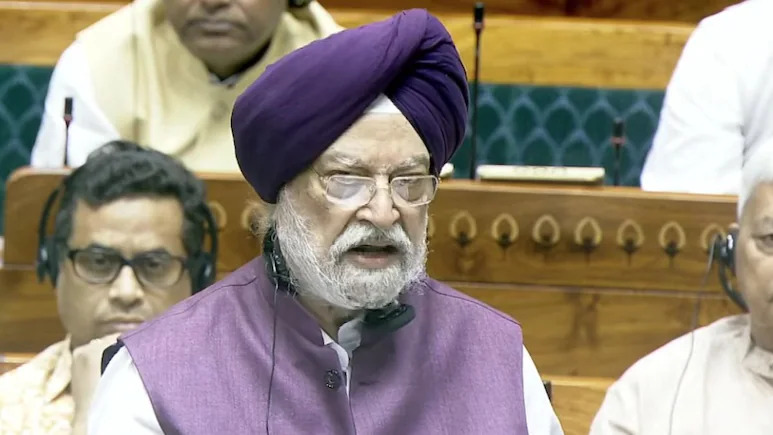
Amid growing concerns over the impact of escalating tensions in West Asia on global energy markets, Union Petroleum Minister Hardeep Singh Puri on Thursday assured Parliament that India’s crude oil supplies remain stable and sufficient to meet domestic demand. Addressing lawmakers during a discussion on the unfolding crisis, Puri said the country’s energy security framework is holding firm even as international oil markets face one of their most volatile phases in decades.
He cautioned against spreading panic or speculation about shortages, remarking that this was not the time for “rumour mongering”. According to the minister, India has already secured crude volumes that exceed what would typically arrive through the strategically important Strait of Hormuz, a key shipping route now under severe strain due to the ongoing conflict.
The global energy situation has been shaken by intensifying hostilities in the Gulf region. A confrontation involving the United States, Israel and Iran has pushed oil prices above the $100-per-barrel mark and raised fears of prolonged disruptions to supply chains. The Paris-based International Energy Agency has warned that the situation could evolve into one of the most severe supply shocks in modern oil market history.
According to the agency, the ongoing conflict has already reduced production in major Gulf producers by millions of barrels per day, while military activity around the Strait of Hormuz has complicated maritime oil transport. Nearly a fifth of the world’s crude oil normally passes through this narrow channel, making it one of the most critical energy corridors globally.
Despite these challenges, Puri emphasised that India has been steadily diversifying its energy sources over the past several years. Earlier, nearly half of India’s crude imports travelled through the Hormuz route. Today, he said, alternative sourcing strategies have significantly reduced dependence on that corridor.
The minister credited India’s diplomatic outreach and energy procurement policies for helping the country secure oil shipments from a wider range of partners. Cargoes are now arriving from countries including the United States, Canada, Norway, Algeria and Russia, reducing the risk posed by disruptions in any single region.
Puri also addressed concerns about cooking gas availability, noting that domestic LPG production has been ramped up sharply in recent days. According to him, refinery operations were instructed to increase LPG output, resulting in a roughly 28 percent jump in production over the past week. The move, he said, was aimed at ensuring uninterrupted supply to households across the country.
India currently has around 33 crore households dependent on LPG for cooking, and the government’s priority is to ensure that these families—particularly those from economically weaker sections—do not face shortages. Puri stressed that the domestic LPG delivery cycle remains unchanged and that adequate stocks are available.
Energy infrastructure across the country is also operating at high capacity. The minister said several refineries are running at or above their standard utilisation levels to keep fuel supplies steady. As a result, there is no shortage of petrol, diesel, aviation turbine fuel, kerosene or other petroleum products in the domestic market.
Another factor strengthening India’s energy resilience is the growing diversity of its import partners. The number of countries supplying crude oil to India has increased significantly over the years—from about 27 suppliers in the mid-2000s to roughly 40 today.
This expansion, Puri noted, has created multiple supply options that allow India to adjust quickly during geopolitical disruptions. The structural shift in procurement strategy, he argued, has placed the country in a stronger position compared to many other energy-importing nations now grappling with uncertainty in global markets.
While the situation in West Asia continues to evolve, government officials maintain that India’s diversified sourcing, robust refining capacity and expanding energy partnerships will help the country navigate the crisis without major disruptions to consumers or industry.