 By
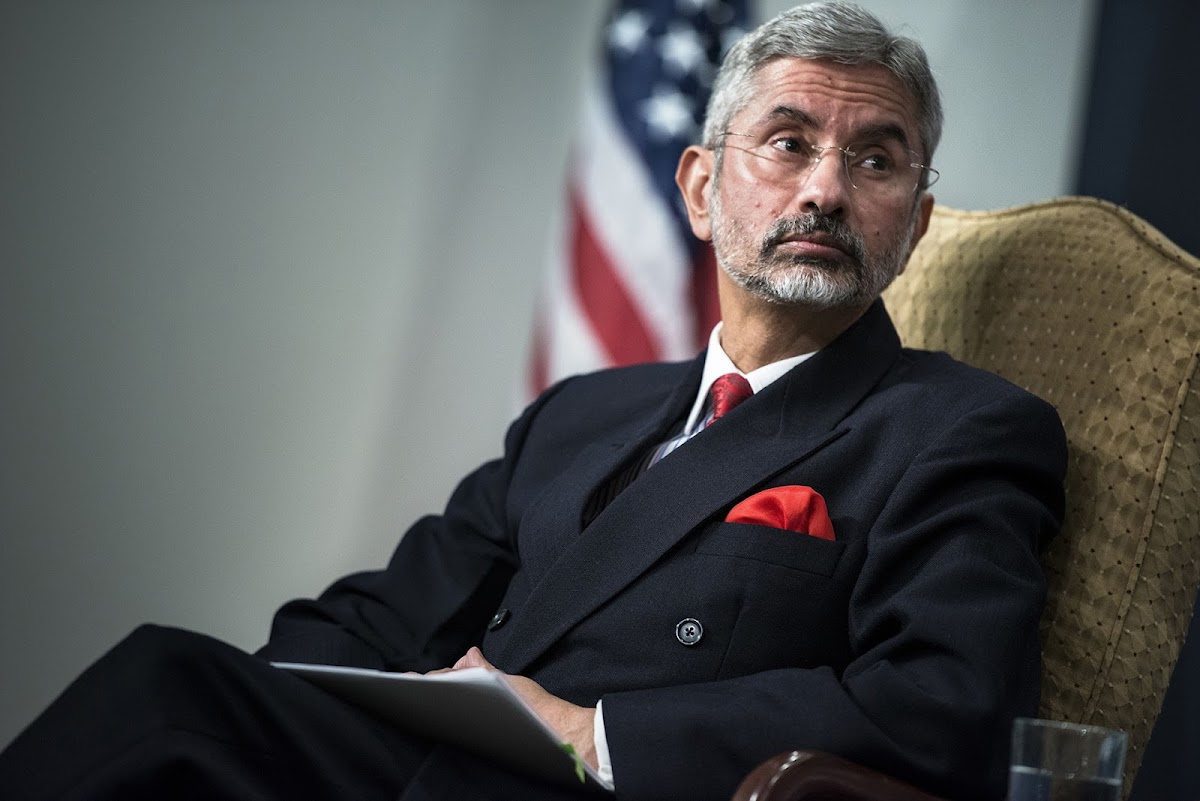
By External Affairs Minister S. Jaishankar on Saturday asserted that India’s emergence as a major global power will ultimately depend on its own capabilities and decisions, not on the policies or mistakes of other nations. His remarks came days after a senior US official suggested that Washington would avoid allowing India to become an economic rival in the way China did over the past two decades.
Speaking at the Raisina Dialogue in New Delhi, Jaishankar emphasised that India’s growth trajectory would be determined by the country’s internal strength and long-term strategic vision. “The rise of India will be determined by India,” he said. “It will be shaped by our own strength and efforts, not by the errors of others.”
The minister’s comments followed recent remarks by Christopher Landau, a senior US official and former diplomat, who said Washington had learned lessons from its economic engagement with China and would not repeat the same approach with India. Landau indicated that the United States intends to ensure that its economic ties with India remain balanced and beneficial to American interests.
“We’re not going to make the same mistakes with India that we made with China twenty years ago,” Landau said in a recent interaction, suggesting that the US would be cautious about opening markets in ways that could create future competition for American industries. He added that US policies would prioritise fairness for American citizens, noting that governments must remain accountable to their own people.
Jaishankar did not directly criticise the comments but used the opportunity to underline India’s independent path in global affairs. He stressed that India’s rise is linked to sustained economic growth, domestic reforms and expanding international partnerships.
During his address, the minister also highlighted India’s strategic role in the Indian Ocean region, describing it as central to the country’s geopolitical outlook. He said building a stronger sense of regional identity among Indian Ocean nations would require consistent effort, investment and collaborative projects.
“If we want to create an Indian Ocean identity or sentiment, it must be backed by resources, commitments and practical initiatives,” Jaishankar said. According to him, regional cooperation cannot rely solely on rhetoric but must be supported by tangible development and connectivity efforts.
Pointing to geography as a defining advantage, Jaishankar noted that India occupies a pivotal position in the region. “The Indian Ocean is the only ocean named after a country, and we are located right in the middle of it,” he said, adding that this location places India in a unique position to shape economic and security dynamics across the region.
He also argued that India’s economic expansion would generate broader opportunities for neighbouring countries and regional partners. As India grows, he said, other nations connected through trade, infrastructure and development partnerships would also benefit. “Those who collaborate with us will see greater opportunities,” he added.
Meanwhile, economic ties between India and the United States have recently drawn domestic political attention. The issue resurfaced after US Treasury Secretary Scott Bessent announced that Washington had granted a temporary 30-day waiver allowing Indian refiners to continue purchasing Russian oil.
Bessent said the decision was intended to address short-term disruptions in global oil markets. In an interview with Fox News, he claimed India had earlier reduced purchases of sanctioned Russian oil after discussions with Washington and was considering alternative supplies, including US crude.
The statement triggered criticism from India’s opposition parties, particularly the Congress, which accused the government of allowing external influence over India’s energy and foreign policy decisions.
The Indian government, however, has maintained that its energy procurement strategy is guided solely by market conditions and national energy security requirements. Officials have reiterated that India continues to diversify its sources of oil imports in response to global supply dynamics and price considerations.