 By
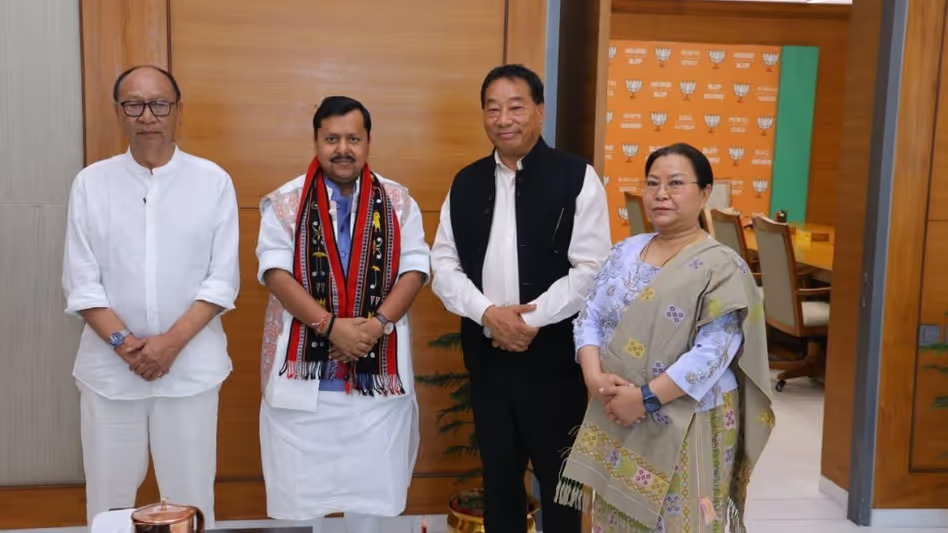
By With Manipur still grappling with the aftershocks of nearly three years of ethnic unrest, Chief Minister Yumnam Khemchand Singh on Monday held crucial talks in New Delhi with Nitin Nabin, the president of the Bharatiya Janata Party. The meeting, party sources said, centred on stabilising the BJP’s organisational structure in the State and accelerating the rehabilitation of thousands displaced by violence.
The discussions come at a sensitive time for Manipur’s political leadership. The State was placed under President’s Rule in February last year following the resignation of former Chief Minister N. Biren Singh amid mounting criticism over the handling of ethnic clashes. Khemchand Singh, a BJP legislator, was sworn in as Chief Minister earlier this month, inheriting both administrative challenges and a fractured social landscape.
According to an official statement, the Chief Minister was accompanied by Deputy Chief Ministers Losii Dikho and Nemcha Kipgen — representing the Naga People’s Front and the BJP respectively — reflecting the coalition’s attempt to present a united front. Party insiders described the meeting as part of a broader strategy to rebuild trust across communities while consolidating the BJP’s base in both valley and hill districts.
Manipur has been scarred by ethnic violence since May 2023, when tensions between the Meitei and Kuki communities erupted following a ‘Tribal Solidarity March’ in the hill districts. The march protested the Meitei community’s demand for Scheduled Tribe status, a move that tribal groups feared would dilute constitutional protections. The clashes that followed left at least 260 people dead and forced thousands into relief camps, creating one of the most prolonged internal displacement crises in the region’s recent history.
Also Read – BJP Picks Y Khemchand to Lead Manipur, Ending Year-Long Leadership Vacuum
In the meeting, Nabin is understood to have emphasised the urgency of resettling internally displaced persons (IDPs) and restoring normalcy before the next electoral cycle gathers momentum. “Speed and sensitivity must go together,” a senior party functionary familiar with the talks said, noting that rehabilitation efforts will be closely monitored by the central leadership.
Beyond humanitarian concerns, the political calculus is clear. The BJP’s standing in Manipur has been tested by the violence, and rebuilding grassroots networks is seen as critical. Party workers in several districts have reportedly struggled to operate amid continuing mistrust between communities. Strengthening the State unit, according to leaders, will require careful balancing of representation among Meitei, Kuki and Naga groups.
Khemchand Singh is believed to have sought logistical and financial backing from the central leadership to expand housing, livelihood support and security measures in vulnerable areas. The Centre’s role remains pivotal, particularly in ensuring coordinated action between civil administration and security agencies.
While no formal announcements were made after the meeting, the optics of the Chief Minister’s first high-level engagement with the BJP’s national president signal an attempt to project cohesion and resolve. For a State weary of conflict, the coming months will test whether political coordination in Delhi can translate into stability on the ground in Imphal and beyond.
As Manipur navigates recovery, the dual agenda outlined in New Delhi — organisational consolidation and humane resettlement — may well shape the trajectory of both governance and politics in the State.