 By
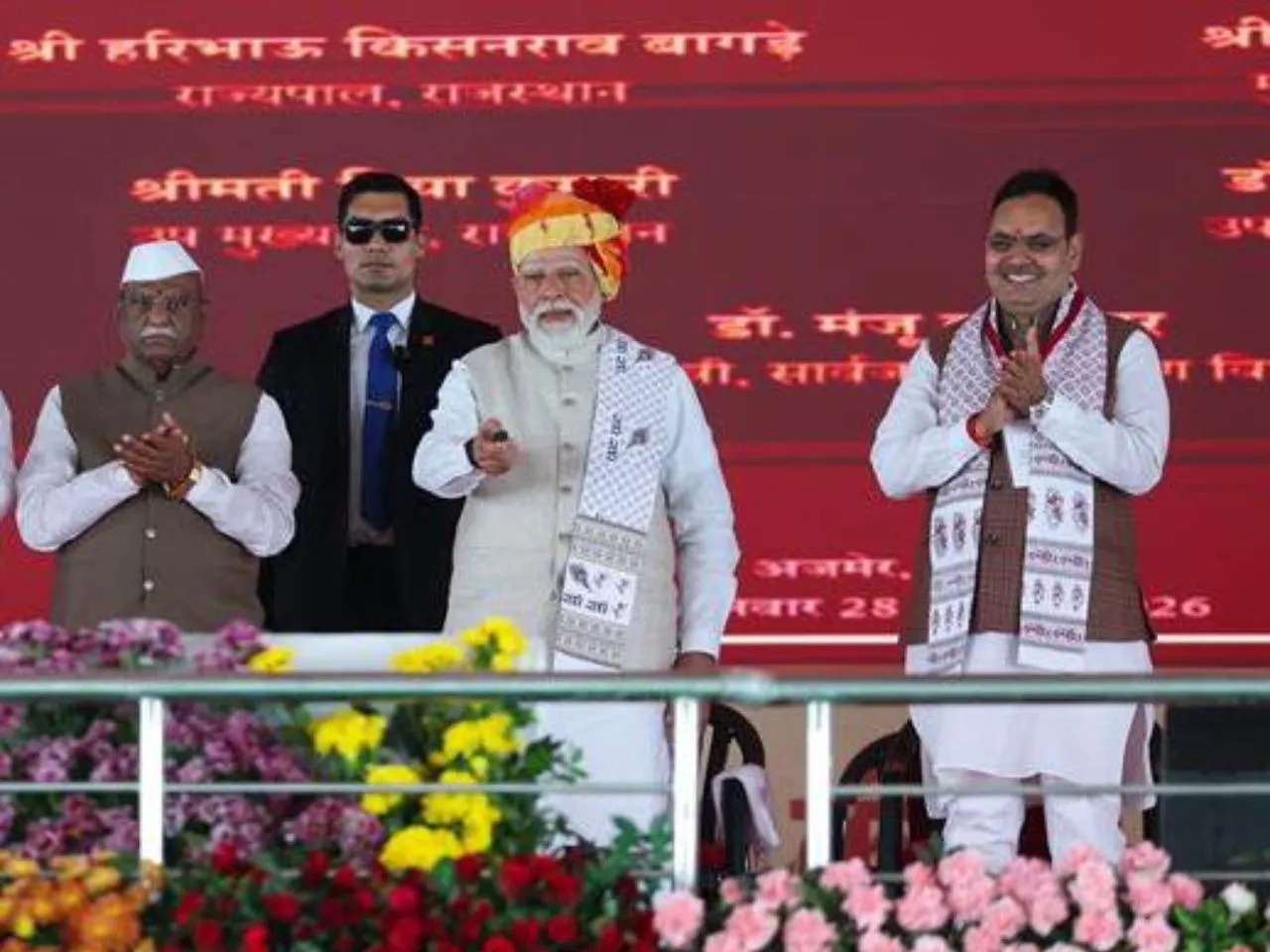
By Prime Minister Narendra Modi on Monday inaugurated two high-capacity power transmission projects in Rajasthan worth over ₹3,600 crore, marking a crucial upgrade in India’s renewable energy infrastructure. The projects, developed by Power Grid Corporation of India Limited (Powergrid), are designed to accelerate the flow of solar and wind power from western India’s generation hubs to electricity-hungry states across the country.
As India races toward its ambitious clean energy targets, the challenge is no longer just producing renewable power — it is moving that electricity efficiently across vast distances. Rajasthan, with its sprawling solar parks and wind corridors, has emerged as one of the country’s renewable powerhouses. However, without matching transmission capacity, generation risks being stranded. The newly commissioned systems aim to close that gap.
The larger of the two projects — Transmission System for Evacuation of Power from Renewable Energy Zones (REZ) Phase III Part-B1 — has been built to handle up to 20 gigawatts of renewable capacity. It includes a 765/400/220 kV Bhadla-III substation and a 765 kV double-circuit transmission line connecting Bhadla-III to Sikar-II. These ultra-high-voltage corridors are engineered for bulk power transfer, enabling electricity generated in Rajasthan’s desert solar fields to travel reliably to distant consumption centres.
The second project, part of the Transmission System Strengthening Scheme for Solar Energy Zones Phase II Part-E, adds an 8.1 GW capacity boost. It features another 765 kV double-circuit line between Bhadla-II and Sikar-II, reinforcing the existing network and reducing congestion risks during peak generation periods.
Both projects are strategically anchored around the Bhadla renewable cluster, widely recognised as one of the world’s largest solar park regions. With installed capacity exceeding 2.2 GW and further expansion underway, Bhadla has become a symbol of India’s solar ambitions. Yet rapid generation growth has placed mounting pressure on transmission infrastructure — making these upgrades critical for maintaining grid balance.
High-voltage 765 kV transmission systems are considered the backbone of India’s interstate power grid. Their ability to carry large volumes of electricity over long distances with lower technical losses ensures better integration of variable renewable sources such as solar and wind. Grid stability, particularly when renewable output fluctuates due to weather conditions, depends heavily on such robust corridors.
Officials say the strengthened network will not only enhance evacuation capacity but also improve overall grid reliability, preventing bottlenecks that can force curtailment of renewable energy. As more states ramp up green capacity, seamless inter-regional transmission is becoming central to India’s energy transition.
Powergrid, a Maharatna public sector enterprise under the Ministry of Power, currently operates 290 substations nationwide, spanning over 1.84 lakh circuit kilometres of transmission lines and more than 6,00,000 MVA of transformation capacity. The Rajasthan projects add another layer to its expanding national footprint.
With renewable capacity scaling rapidly and electricity demand rising alongside industrial growth, the focus is shifting from generation targets alone to the architecture that sustains them. Monday’s inauguration signals that transmission — often overlooked in public discourse — is now firmly at the centre of India’s clean energy strategy.