 By
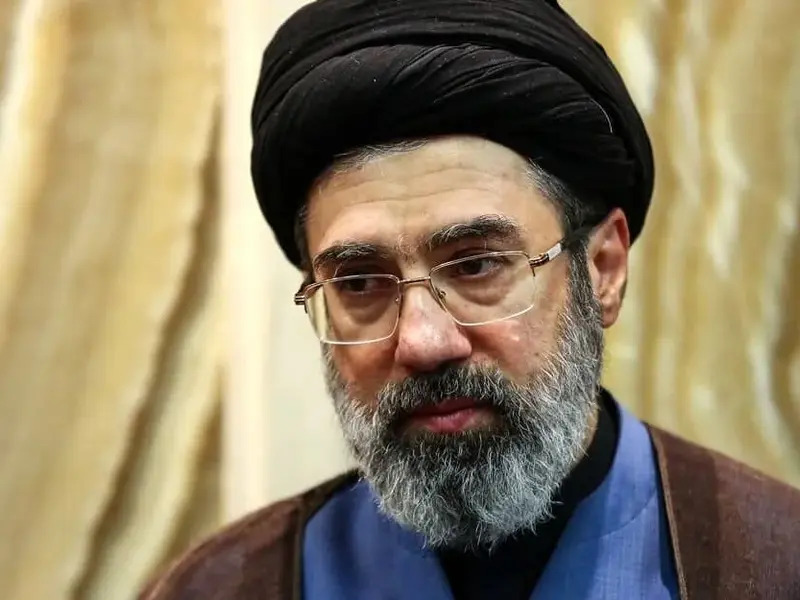
By For years, he operated in the shadows of Iran’s most powerful office. Now, following the killing of Ayatollah Ali Khamenei in joint US-Israeli strikes, Mojtaba Hosseini Khamenei is emerging from behind the curtain as the man set to inherit the Islamic Republic’s highest authority. His ascent marks not only a generational shift but also a defining moment for a political system born out of revolution and resistance to monarchy.
Unlike his father, who cultivated a public persona as both a religious authority and political strategist, Mojtaba has remained notably low-profile. Yet within Iran’s tightly woven power structure, his influence has long been an open secret. His rise suggests continuity at a time when Tehran faces external military pressure and internal uncertainty.
Born in 1969 in Mashhad, a major religious center in northeastern Iran, Mojtaba grew up during a turbulent chapter in Iranian history. His early years coincided with mounting opposition to Shah Mohammad Reza Pahlavi and culminated in the 1979 Islamic Revolution led by Ruhollah Khomeini. The revolution reshaped Iran’s political architecture and elevated the Khamenei family into its clerical elite.
Mojtaba pursued religious education in Qom, Iran’s foremost Shiite seminary hub, where he earned the rank of Hojjatoleslam. While this title places him within the recognized clerical hierarchy, it does not carry the same theological weight as senior ayatollahs traditionally associated with supreme leadership. That distinction has fueled debate among religious scholars and political observers over whether his credentials meet the historical expectations of the role.
Beyond theology, Mojtaba’s formative years included service during the Iran-Iraq War, a conflict that forged enduring bonds between the clerical establishment and Iran’s security apparatus. Over time, he developed close ties with the Islamic Revolutionary Guard Corps (IRGC), an institution central to Iran’s military strength and political influence. Analysts frequently describe him as aligned with conservative factions that prioritize regime stability and resistance to Western pressure.
Though he never held a prominent public office, Mojtaba was widely believed to exert influence within the Office of the Supreme Leader, particularly in political appointments and electoral strategy. His name often surfaced during previous succession discussions, especially as his father’s health periodically drew speculation.
Reports indicate that the Assembly of Experts — the constitutional body tasked with selecting the Supreme Leader — convened after Ali Khamenei’s death and moved swiftly to back Mojtaba. If formally confirmed, his elevation would represent only the second leadership transition since 1979.
Yet the symbolism of a father-to-son succession carries sensitivity in a republic founded on rejecting hereditary monarchy. Critics warn that such a move risks blurring ideological lines between revolutionary governance and dynastic continuity. Supporters counter that institutional stability and security alignment outweigh symbolic concerns, especially amid geopolitical strain.
Mojtaba’s personal life further embeds him within Iran’s conservative establishment. He is married to Zahra Haddad-Adel, daughter of a prominent political figure, reinforcing alliances within elite networks. Despite these connections, he has largely shielded his family from public attention.
As he prepares to step into the Islamic Republic’s most powerful office, the central question is whether Mojtaba Khamenei will merely safeguard his father’s legacy or redefine Iran’s direction. In a region already on edge, the answer will shape not only domestic governance but also Tehran’s posture toward the wider world.