 By
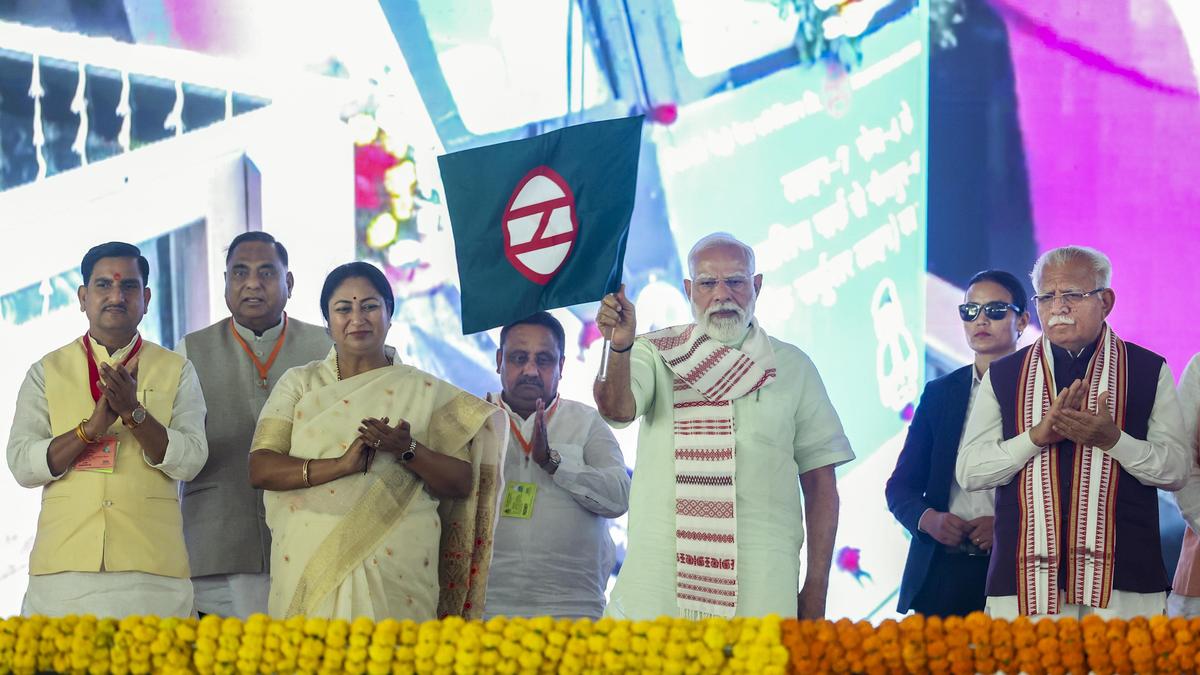
By Prime Minister Narendra Modi on Sunday emphasised the importance of transforming Delhi into a modern, well-connected global capital, saying the city’s infrastructure and urban development play a crucial role in shaping how India is perceived internationally. Speaking at a public event in Burari, the Prime Minister inaugurated two new Delhi Metro corridors and launched several major infrastructure projects aimed at expanding connectivity and improving living conditions in the national capital.
The projects form part of a broader push by the central government to upgrade Delhi’s urban systems, with investments covering transportation networks and housing infrastructure for government employees. Officials said the initiatives are designed to address long-standing urban challenges in the capital while preparing the city for future population and mobility demands.
During the event, Modi inaugurated two new Metro corridors: the Majlis Park–Maujpur Babarpur section of the Pink Line, stretching about 12.3 kilometres, and the Deepali Chowk–Majlis Park stretch of the Magenta Line, measuring nearly 9.9 kilometres. In addition, he laid the foundation stone for three more corridors under the upcoming Phase V-A expansion of the Delhi Metro network.
We are committed to building a modern and Viksit Delhi. The projects launched today will strengthen infrastructure, improve connectivity and enhance the ease of living for people of the city.
https://t.co/BrUJqDQj50— Narendra Modi (@narendramodi) March 8, 2026
The new planned lines include the R.K. Ashram Marg–Indraprastha corridor, the Aerocity–Indira Gandhi Airport Terminal-1 link, and the Tughlakabad–Kalindi Kunj route. Together, these projects will cover around 16.1 kilometres and are expected to further strengthen connectivity between key residential and commercial zones in the capital.
Alongside the metro developments, Modi also inaugurated and announced projects under the Central Government’s General Pool Residential Accommodation (GPRA) redevelopment programme. The housing initiatives aim to provide modern residential complexes for thousands of government employees working in Delhi. Officials said the projects inaugurated on Sunday are worth about ₹15,200 crore, while the combined value of all announced infrastructure initiatives stands at roughly ₹33,500 crore.
Addressing the gathering, the Prime Minister said Delhi occupies a special place in India’s identity as the centre of its democratic institutions. He argued that improving the city’s infrastructure and urban facilities would not only benefit residents but also project India’s progress and confidence to the world.
According to Modi, a modern and efficient capital city strengthens India’s image as a rising global power. Better transportation, improved urban planning, and upgraded housing facilities, he said, contribute to making Delhi more liveable and attractive for residents, businesses, and international visitors.
The Prime Minister also used the occasion to criticise the previous Aam Aadmi Party government in Delhi, claiming that several infrastructure projects had been delayed due to political priorities. He suggested that the current administration had accelerated development initiatives after taking office.
Modi highlighted several ongoing programmes aimed at improving urban life in the capital, including expanded road networks, enhanced public transport systems, and welfare schemes. He also referred to broader national initiatives such as health insurance coverage under the Ayushman programme and financial support schemes for small street vendors.
Delhi Chief Minister Rekha Gupta, who also addressed the event, said the new metro corridors would significantly improve daily commuting for thousands of residents. She noted that several neighbourhoods in the Trans-Yamuna region—including Wazirabad, Khajuri Khas, Bhajanpura, Yamuna Vihar and Karawal Nagar—would receive metro connectivity for the first time.
Gupta also outlined steps taken by the Delhi government to address persistent civic challenges such as pollution and waterlogging. She said a new drainage master plan had been prepared after nearly five decades to improve the city’s water management system and reduce flooding during heavy rains.
Officials said the metro expansion and associated infrastructure projects are expected to strengthen Delhi’s public transport network and support the city’s long-term urban growth.