

 By
The GSLV-F18 rocket lifted off from the Satish Dhawan Space Centre in Sriharikota on Friday and placed the 2,250-kg satellite into its intended Geosynchronous Transfer Orbit (GTO). From this elliptical orbit, the satellite will move towards its designated operational position.
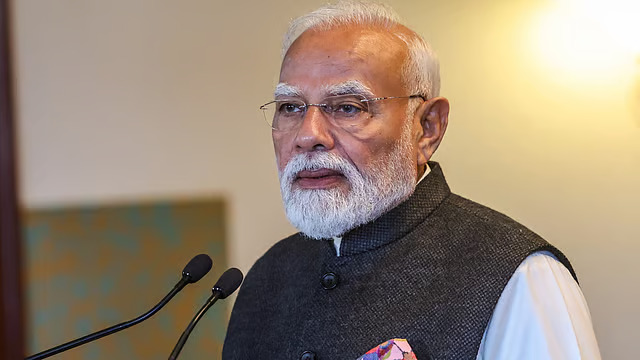
Calling the launch an important development for India’s navigation capabilities, Modi said on X that NVS-03 would strengthen NavIC and support navigation services for the public. He also highlighted the mission’s contribution to self-reliance in critical technologies.
NVS-03 to Strengthen India’s NavIC Navigation System
NVS-03 is the third satellite in ISRO’s next-generation navigation series. It has been developed to maintain and improve the services provided by the Indian Regional Navigation Satellite System, widely known as NavIC.
One of the satellite’s key features is its indigenous atomic clock, which will work alongside procured atomic clocks. These highly precise clocks are essential for satellite navigation because they provide the accurate timing signals required to calculate a user’s position.
NVS-03 also introduces an L1 navigation signal in addition to the existing L5 and S-band signals. This addition is expected to expand NavIC’s capabilities and improve the range of services it can support.
NavIC is designed to provide positioning, navigation and timing services across India and up to 1,500 kilometres beyond the country’s borders.
ISRO Says Launch Restores Minimum Operational Satellite Configuration
ISRO Chairman V. Narayanan described the mission as an important step in restoring the NavIC constellation to its minimum operational configuration of four satellites.
He said NavIC is a strategic national asset because it gives India independent access to navigation and timing services, reducing reliance on foreign satellite navigation systems.
According to Narayanan, the planned constellation envisages seven satellites to provide the intended regional coverage. The successful deployment of NVS-03 is therefore significant for maintaining the system and strengthening its operational capabilities.
Indigenous Atomic Clocks Add to India’s Space Technology Capabilities
The satellite’s atomic clock technology is another important aspect of the mission. Narayanan said two indigenous atomic clocks were already functioning in orbit, while another has now been deployed aboard NVS-03.
Accurate timing is central to satellite navigation, as even small timing errors can affect positioning calculations. The continued development and deployment of indigenous atomic clocks represents an effort to strengthen India’s capabilities in this critical area of space technology.
With NVS-03 joining the NavIC constellation, ISRO aims to improve the reliability and reach of India’s regional navigation services while advancing the country’s ability to develop and operate its own navigation infrastructure.