 By
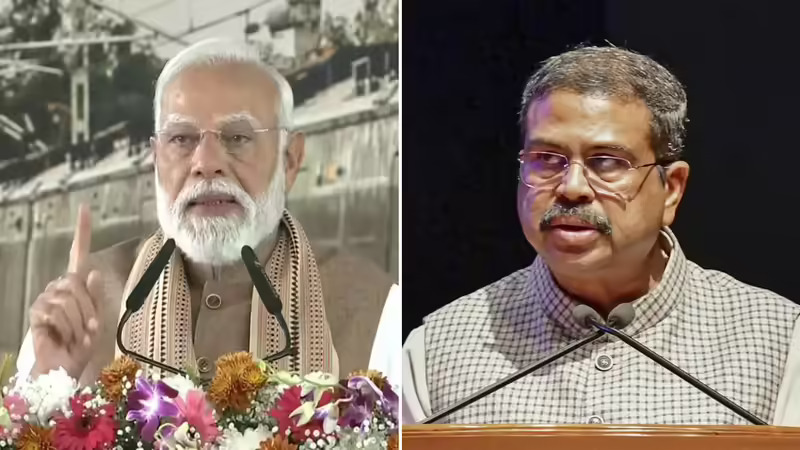
By A controversy over a Class VIII social science textbook has reached the highest levels of government, with Prime Minister Narendra Modi reportedly expressing strong displeasure over references to judicial corruption in a newly published NCERT chapter. The issue has triggered swift political and administrative action, culminating in an apology from Union Education Minister Dharmendra Pradhan and a directive to fix accountability.
According to government sources, the Prime Minister raised the matter during a recent Union Cabinet meeting, questioning the appropriateness of introducing allegations of corruption within the judiciary to middle-school students. His remarks are understood to have reflected concern over both the content and the review process that cleared the material for publication.
The controversy centres on a chapter titled “Role of the Judiciary in Our Society” in a Class VIII social science textbook published by the National Council of Educational Research and Training (NCERT). The chapter identified corruption, case backlog and shortage of judges as challenges confronting India’s judicial system. While such issues have been debated in public policy forums, their inclusion in a school textbook prompted objections at multiple levels.
The matter escalated when the Supreme Court of India took serious note of the content, observing in court that there appeared to be an attempt to cast aspersions on the integrity of the judiciary. The top court ordered a blanket halt on circulation of the book and directed that both physical and digital copies be withdrawn.
In response, NCERT removed the e-version from its website and initiated steps to recall printed copies. Officials confirmed that only 32 hard copies had been sold before distribution was suspended. According to senior council members, the books were sold through official depots and most have since been traced and retrieved.
Addressing the controversy, Pradhan offered an unconditional apology, stating that there was no intention to undermine the judiciary’s credibility. He assured that an inquiry would be conducted to determine how the chapter cleared editorial and review stages. “We respect the judiciary fully and will comply with all directions,” he said, adding that corrective mechanisms are being strengthened.
The chapter in question was part of a revised curriculum framework introduced to reflect contemporary issues in governance and civics education. However, critics argue that discussions around systemic challenges must be age-appropriate and carefully contextualised to avoid misinterpretation.
NCERT has indicated that the chapter will be rewritten in consultation with subject experts and relevant authorities before being reintroduced in the 2026–27 academic session. Officials are also reviewing internal vetting processes to prevent similar lapses.
The episode highlights the delicate balance between academic freedom and institutional sensitivity in school education. As the government moves to tighten oversight, the larger debate over how complex governance issues should be presented to young learners is likely to continue.