 By
By
PM Modi in Malaysia: Strong Terror Stand, Security and Tech Ties Deepen
Prime Minister Narendra Modi’s visit to Malaysia this weekend carried a message that went well beyond ceremonial optics and warm historical references. Against a backdrop of shifting regional security dynamics and global economic uncertainty, India used the Kuala Lumpur meetings to underline a firm, unambiguous stance on terrorism while signalling a push for deeper strategic and technological cooperation with Southeast Asia.
Standing alongside Malaysian Prime Minister Anwar Ibrahim after wide-ranging bilateral talks on Sunday, Modi made it clear that India’s approach to terrorism would not be diluted by geopolitics or selective outrage. “Our message on terrorism is clear — no double standards, no compromise,” he said, a remark that resonated strongly in the context of India’s long-standing demand for uniform global action against extremist networks.
A Relationship Rooted in History, Oriented to the Future
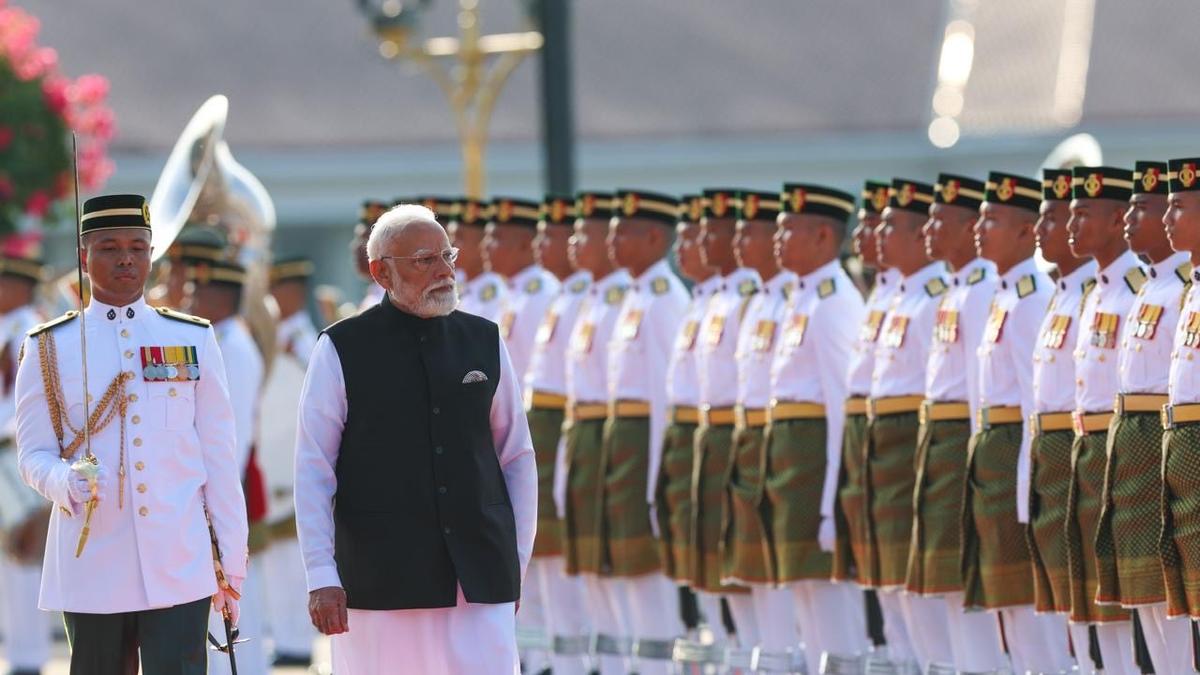
Modi’s visit began with a red-carpet welcome in Kuala Lumpur on Saturday, personally extended by Anwar Ibrahim at the airport, followed by a ceremonial reception at Perdana Putra. While the symbolism reflected the warmth of ties, the substance of the discussions focused firmly on the future.
Describing India and Malaysia as “maritime neighbours with centuries-old people-to-people ties,” Modi highlighted the Indian diaspora’s role in shaping bilateral relations. Malaysia is home to one of the world’s largest populations of Indian origin, a factor New Delhi sees as both a cultural bridge and an economic asset.
But this visit was less about nostalgia and more about recalibrating cooperation in response to present-day challenges.
Security, Defence and Counter-Terrorism at the Core
A significant portion of the talks centred on defence and security collaboration. Both sides agreed to deepen cooperation in counter-terrorism, intelligence sharing and maritime security — areas gaining urgency amid rising geopolitical tensions in the Indo-Pacific.
India also proposed expanding defence engagement beyond training and exchanges, signalling interest in more structured and comprehensive cooperation. Officials familiar with the discussions said maritime surveillance, joint exercises and coordination in sea lane security featured prominently, reflecting shared concerns over freedom of navigation and regional stability.
Modi’s strong statement on terrorism was seen as a reminder that India expects consistent global standards when dealing with extremist threats — a theme New Delhi has increasingly pushed in bilateral and multilateral forums.
Semiconductors, Digital Tech and Trade Push
Beyond security, economic cooperation emerged as a major pillar of the visit. Modi announced plans to advance partnerships in semiconductors, artificial intelligence, digital technologies, health and food security — sectors critical to both nations’ long-term growth strategies.
With global supply chains undergoing restructuring, India sees Malaysia as a key partner in building resilient semiconductor ecosystems, given the country’s established role in chip manufacturing and electronics assembly. Trade and investment flows were also reviewed, with both sides expressing confidence that bilateral commerce could expand significantly in the coming years.
Anwar Ibrahim noted India’s rapid rise on the global economic and trade front, calling it a source of opportunity for deeper Malaysian engagement with Indian markets and innovation ecosystems.
Indo-Pacific and ASEAN Focus
The talks also reflected India’s broader strategic outlook on the Indo-Pacific. Modi described the region as the “growth engine of the world” and reaffirmed India’s commitment to peace, development and stability in partnership with ASEAN countries.
Malaysia, a key ASEAN member, is seen by India as central to strengthening engagement with Southeast Asia — not just economically, but also in shaping a balanced regional order.
More Than a Diplomatic Stop
Modi’s Malaysia visit underscored how India is aligning diplomacy, security and technology partnerships under a single strategic vision. The emphasis on counter-terrorism principles, combined with forward-looking cooperation in defence and semiconductors, marked the visit as a substantive engagement rather than a symbolic one.
As India deepens its footprint in Southeast Asia, Kuala Lumpur appears set to play a more prominent role in New Delhi’s Indo-Pacific strategy.