 By
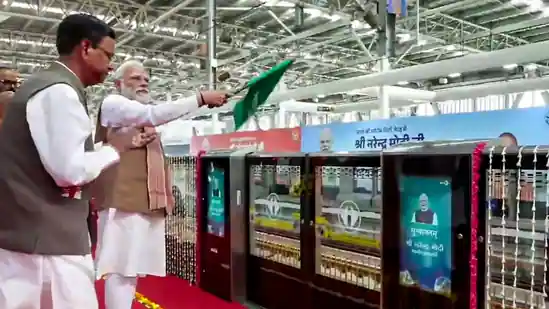
By Prime Minister Narendra Modi on Sunday inaugurated the Namo Bharat Regional Rapid Transit System (RRTS) and the Meerut Metro, marking a significant milestone in India’s push for next-generation urban transport. The launch is expected to sharply reduce travel time between Delhi and Meerut, reshaping daily commutes for thousands across western Uttar Pradesh.
The twin projects signal a shift in how satellite cities connect to the national capital — moving from congested highways to high-speed, rail-based mobility. With Uttar Pradesh Chief Minister Yogi Adityanath by his side, the Prime Minister flagged off the services from Shatabdi Nagar Namo Bharat Station amid tight security and public enthusiasm.
The Namo Bharat RRTS is designed as a semi-high-speed regional corridor aimed at cutting travel time between Delhi and Meerut to under an hour once fully operational. Officials say the system blends the speed of intercity rail with the frequency of metro services, offering air-conditioned coaches, modern signalling systems and enhanced passenger amenities.
After the formal flag-off, Modi boarded the newly launched Meerut Metro and travelled up to Meerut South Station. During the ride, he interacted with school children and project officials, discussing features of the corridor and the expected benefits for students and working professionals.
The Meerut Metro component is intended to improve intra-city mobility, integrating with the RRTS corridor to provide seamless last-mile connectivity. Urban planners view the project as part of a broader strategy to decongest Delhi by strengthening infrastructure in neighbouring districts, allowing people to live outside the capital without sacrificing access to jobs and services.
Later in the day, the Prime Minister is scheduled to inaugurate and lay the foundation stones for additional development projects worth approximately ₹12,930 crore in Meerut. These initiatives span infrastructure, urban development and public services.
With Sunday’s launch, the government positions the Delhi–Meerut corridor as a template for similar rapid transit systems planned in other high-density regions across the country, aiming to modernise regional mobility and fuel economic growth beyond metropolitan cores.