 By
By Prime Minister Narendra Modi on Sunday mounted a sharp political attack on the Congress party, accusing it of dragging domestic political battles onto an international platform after members of its youth wing staged a dramatic protest during the AI Impact Summit in New Delhi. Calling the act an example of “gandi aur nangi rajneeti” (dirty and shameless politics), Modi said such actions risk undermining India’s image before global partners.
The remarks came as the controversy surrounding the protest refused to subside, drawing criticism not only from the ruling BJP but also from sections of the Opposition. With foreign delegates and technology leaders present at Bharat Mandapam for the high-profile summit, the protest has triggered a debate over political conduct at international events hosted by India.
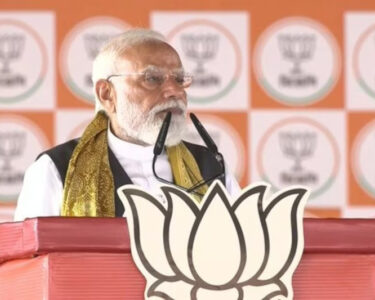
Addressing a public gathering after flagging off the Namo Bharat train, Modi directly targeted the Congress leadership. “Congress turned a global event into an arena for its ‘gandi aur nangi’ politics,” he said. Escalating his rhetoric, the Prime Minister added, “I ask Congress leaders — the nation already knows your true form. What was the need to strip further?”
The protest in question was carried out by workers of the Indian Youth Congress (IYC), who removed their shirts outside the summit venue and raised slogans criticising the government. The protesters were wearing T-shirts bearing the slogan “India-US Trade Deal Compromised,” signalling that the demonstration was aimed at drawing attention to trade-related concerns amid discussions involving international stakeholders.
Police swiftly detained several participants, and the matter soon moved to the courts. A Patiala House court remanded four IYC workers — Krishna Hari, Kundan Yadav, Ajay Kumar and Narsingh — to five days of police custody. The court rejected their bail pleas, observing that the investigation was at a crucial early stage and that granting bail could risk interference with evidence or evasion.
According to Delhi Police, the protest disrupted security arrangements at a venue hosting foreign dignitaries. Investigators told the court that the accused allegedly raised anti-national slogans and staged the demonstration in a manner designed to attract global attention. A case has been registered under charges including obstructing a public servant from performing official duty, assault on a public servant, hate speech and criminal conspiracy.
What has added a political twist to the episode is the reaction from within the Opposition camp. Samajwadi Party chief Akhilesh Yadav, considered a key ally of Congress in broader anti-BJP alignments, publicly criticised the protest. He said political parties should avoid actions that bring “shame to the country” in front of foreign representatives.
The AI Impact Summit, positioned as a platform to showcase India’s growing leadership in artificial intelligence and digital infrastructure, was attended by global policymakers, business leaders and technology experts. The government had projected the event as part of India’s effort to position itself at the forefront of emerging technologies while attracting international collaboration.
For the BJP, the incident has provided an opportunity to question the Opposition’s sense of responsibility during events of diplomatic significance. Party leaders argue that internal dissent should not spill over into forums intended to strengthen India’s global partnerships.
The Congress, however, has maintained that protest is a democratic right and that its youth wing was highlighting policy concerns. The party has not officially endorsed the method adopted but has accused the government of overreacting and stifling dissent.
As the legal proceedings continue, the episode underscores the increasingly confrontational nature of Indian politics — even at moments meant to project national unity on the world stage.