 By
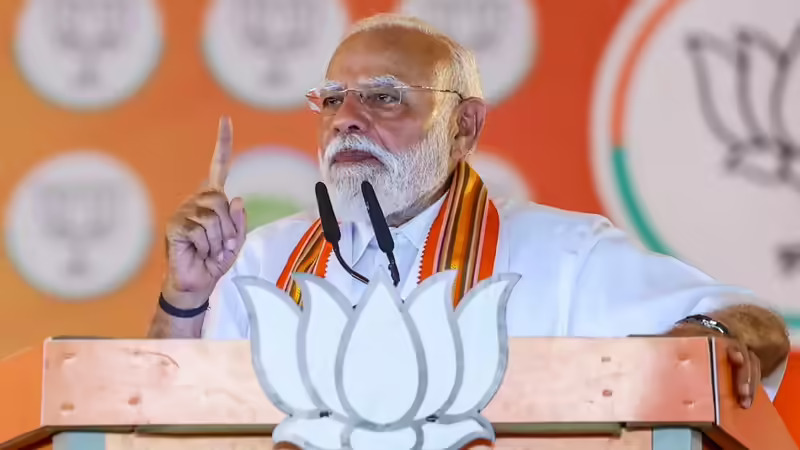
By Prime Minister Narendra Modi on Sunday sharpened his attack on the Trinamool Congress (TMC) government in West Bengal, accusing it of allowing law and order to collapse and promising that fear and political violence would be driven out of the state if the BJP comes to power. Addressing a large election rally in Cooch Behar ahead of the Assembly polls, Modi said the mood on the ground reflects growing frustration among voters and a desire for change.
In a strongly worded speech, the Prime Minister alleged that the ruling TMC was weakening democratic institutions and creating an atmosphere of intimidation, particularly during elections. He told supporters that they should trust the law and participate in voting without fear, assuring them that strict action would be taken against those involved in violence or corruption after the election results are declared. The remarks come at a time when political tensions are high and security concerns have dominated the campaign narrative in the poll-bound state.
Modi framed the election as a choice between what he described as fear under the TMC and development under the BJP. He accused the state government of encouraging corruption, illegal infiltration, and political intimidation, while presenting his party as a force that could restore stability and accelerate development. The Prime Minister said that after the results on May 4, the law would take its course and those responsible for wrongdoing would be held accountable regardless of their political influence.
Alongside the attack on the state government, Modi also highlighted the Centre’s initiatives for women’s empowerment and announced that a special session of Parliament would be held in mid-April to move forward on the implementation of the Women’s Reservation Act. He said the law, which provides 33 percent reservation for women in the Lok Sabha and state assemblies, would strengthen women’s participation in decision-making and ensure greater representation in governance from the 2029 general elections.
The Prime Minister also referred to recent law and order concerns in West Bengal, including the gherao of judicial officers in Malda during voter list revision, to underline his argument that democratic processes were under pressure in the state. He alleged that such incidents show the need for stronger governance and better coordination with constitutional institutions.
West Bengal will vote in two phases on April 23 and April 29, with counting scheduled for May 4. As campaigning intensifies, political rhetoric is becoming sharper, with both the BJP and TMC trading strong accusations, setting the stage for a high-stakes electoral battle in one of India’s most politically sensitive states.