 By
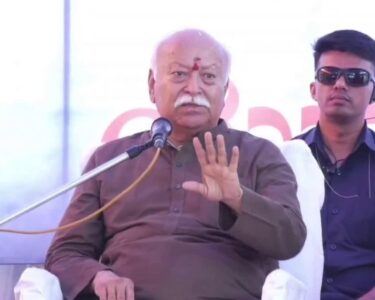
By Rashtriya Swayamsevak Sangh (RSS) chief Mohan Bhagwat on Wednesday said the organisation’s century-long journey has been shaped by the dedication of its volunteers rather than the support or favour of any individual or institution. Speaking in Nagpur, Bhagwat underlined that the RSS has grown through collective effort and discipline, stressing that its strength comes from swayamsevaks who have worked quietly over decades to build the organisation at the grassroots level.
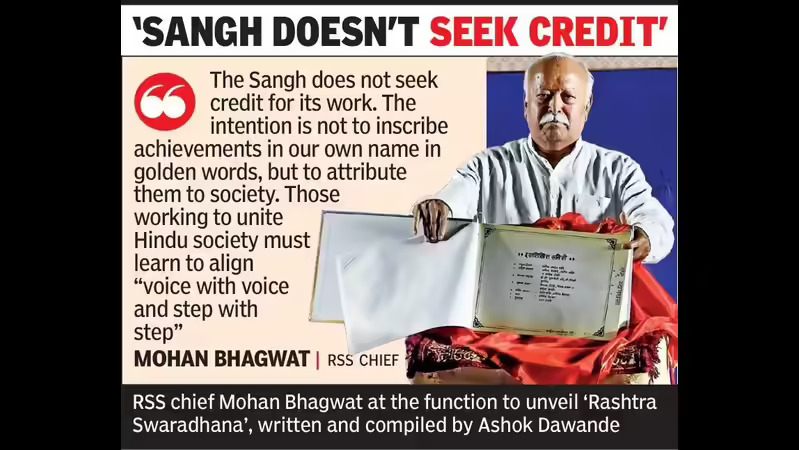
Addressing a gathering at Dr Hedgewar Smruti Mandir during the unveiling of the book Rashtra Swaradhana, Bhagwat reflected on the Sangh’s evolution and the values that have guided it since its inception. He said the RSS never sought recognition or credit for its work, and instead believed that whatever progress has been achieved should be attributed to society as a whole. According to him, the organisation’s focus has always been on unity and coordinated effort rather than personal or institutional recognition.
Bhagwat noted that the RSS has completed nearly a century of work, describing its journey as both inspiring and instructive for future generations. He said swayamsevaks have collectively invested their energy to create an organisation that today plays a significant role in shaping social and national discourse. Emphasising the need for unity, he called for volunteers and society at large to work together in harmony, aligning their efforts and moving forward with a shared sense of purpose.
The RSS chief also spoke about the importance of ghosh, the Sangh’s musical wing, which was the subject of the newly released book. He explained that different organisational divisions within the RSS are designed to instill discipline, values, and coordination among volunteers. The ghosh tradition, he said, not only adds aesthetic appeal to public programmes but also strengthens teamwork, precision, and cultural expression during physical and training activities.
Highlighting the broader role of training, Bhagwat said physical exercises and group activities help shape both the mind and character of swayamsevaks. He pointed out that such programmes build coordination and discipline naturally, while also promoting a sense of responsibility toward society. At the same time, he clarified that the RSS does not aim to produce professional athletes or performers, but rather well-rounded individuals with strong values and a spirit of service.
Calling the centenary period an opportunity for introspection, Bhagwat urged volunteers to evaluate whether their present efforts match the dedication of earlier generations. He said the milestone should not be seen merely as a celebration but as a chance to expand the organisation’s outreach and deepen its contribution to society in the years ahead.