 By
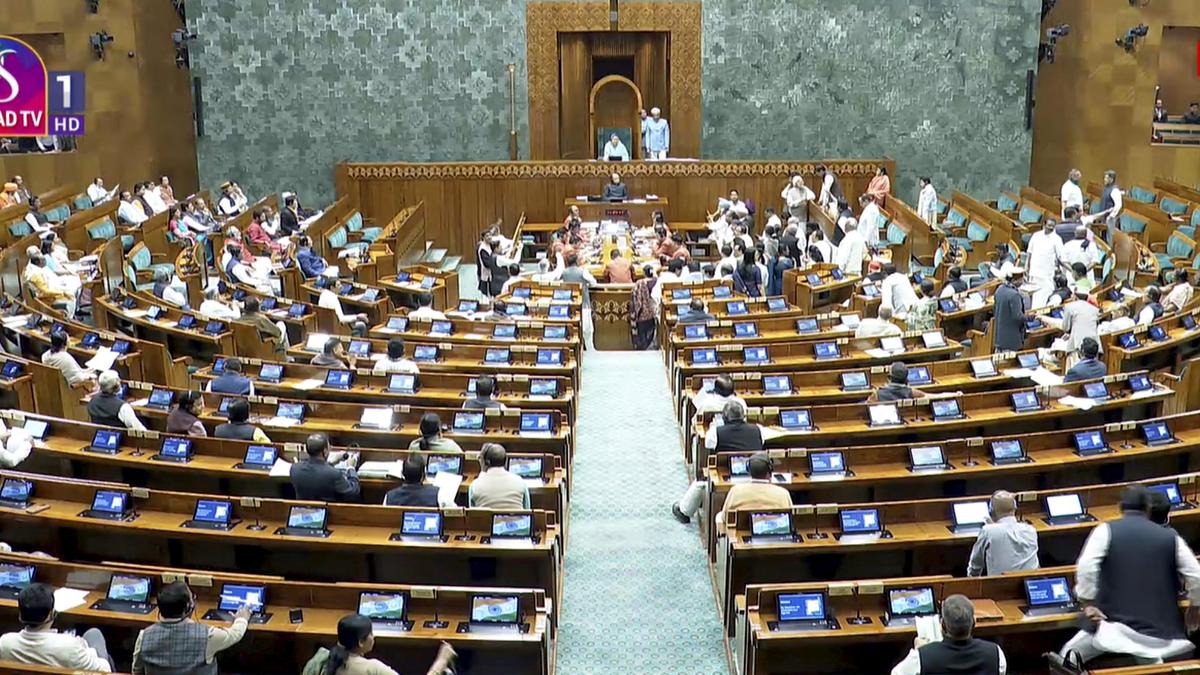
By After weeks marked by sharp confrontations, slogan-shouting and repeated adjournments, the first leg of Parliament’s Budget session drew to a close on Friday, setting the stage for a three-week recess before proceedings resume on March 9. What began with the customary Presidential address evolved into one of the most contentious sittings in recent years, dominated by disputes over foreign policy, parliamentary privilege and the conduct of members inside the House.
The session exposed deep fault lines between the government and the Opposition, with debates on the India–U.S. interim trade agreement and references to the unpublished memoir of former Army Chief M.M. Naravane triggering escalating tensions. While legislative business moved forward in parts, much of the spotlight remained fixed on procedural clashes and political brinkmanship.
The Lok Sabha, which first convened on January 28 following President Droupadi Murmu’s address to a joint sitting, experienced multiple disruptions from early February onward. Matters intensified when the Chair disallowed Leader of the Opposition Rahul Gandhi from quoting excerpts from Gen. Naravane’s memoir related to the 2020 India–China border conflict. The ruling led to loud protests, adjournments and eventually the suspension of seven Congress MPs and one CPI(M) member for the remainder of the session’s first phase.
Scenes inside the House grew increasingly dramatic, with members accused of climbing onto officials’ tables and tearing papers in protest. Speaker Om Birla later informed the House that more than 19 hours of scheduled business had been lost to disruptions. At one point, amid concerns of further escalation, he requested Prime Minister Narendra Modi to refrain from attending the Lok Sabha when he was slated to reply to the Motion of Thanks debate. The Prime Minister instead delivered his response in the Rajya Sabha.
Tensions further rose when Opposition parties submitted a notice seeking a resolution to remove the Speaker. Citing moral considerations, Birla stepped back from presiding over proceedings until the issue is formally addressed, a development that is likely to resurface when the House reconvenes.
Beyond the procedural battles, policy disagreements also shaped the session’s tone. Rahul Gandhi criticised the government’s handling of the interim trade agreement with the United States, alleging that national interests had not been adequately safeguarded. Finance Minister Nirmala Sitharaman rejected the charge, countering that earlier trade decisions under previous governments had compromised India’s position in global forums such as the WTO.
Despite the turbulence, Parliament did pass a key amendment to the Industrial Relations Code, aimed at clarifying the legal continuity of laws subsumed under the 2020 legislation. It was the only Bill introduced and cleared during the first leg of the session.
With both Houses now in recess, departmental standing committees will examine the Union Budget allocations for various ministries — a quieter but crucial stage of parliamentary scrutiny. The full session is scheduled to conclude on April 2, but whether the second leg proceeds more smoothly may depend on how unresolved political flashpoints are handled in the weeks ahead.