 By
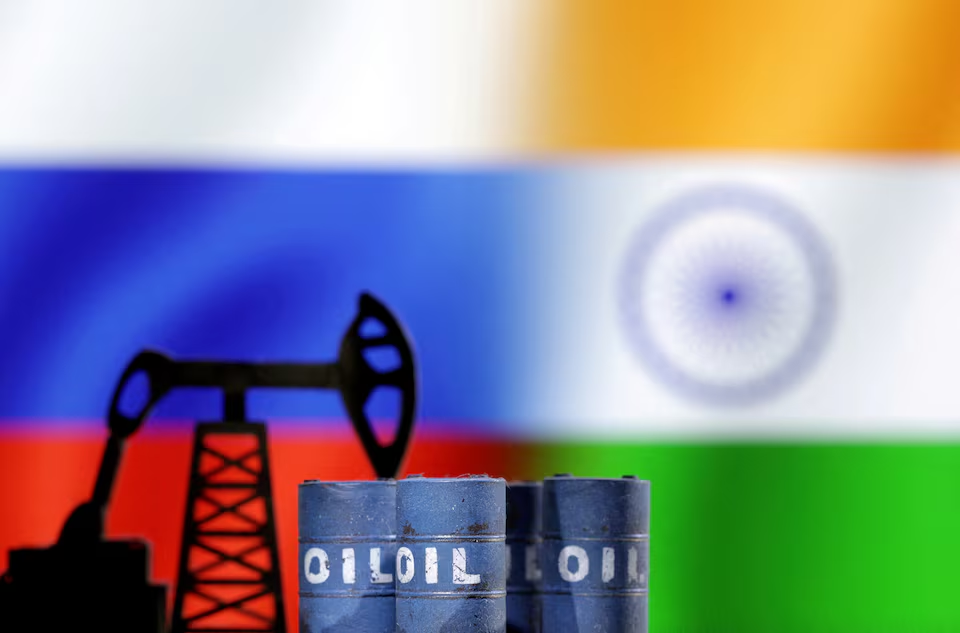
By The United States may impose higher tariffs on India if New Delhi fails to reduce its purchases of Russian oil, Donald Trump warned on Sunday, intensifying pressure on the South Asian nation as bilateral trade negotiations remain stalled.
Speaking to reporters aboard Air Force One, Trump said Indian Prime Minister Narendra Modi was aware of Washington’s displeasure over India’s continued energy ties with Russia. “Modi is a good guy. He knew I was not happy, and it was important to make me happy,” Trump said.
Responding to questions on India’s Russian oil imports, Trump added, “They do trade, and we can raise tariffs on them very quickly.” India’s commerce ministry did not immediately respond to requests for comment.
Trade tensions hit Indian markets
Trump’s remarks come after months of negotiations, following Washington’s decision last year to double import tariffs on Indian goods to 50%, citing India’s large-scale purchases of Russian crude. Indian financial markets reacted sharply on Monday, with the NIFTY IT index falling around 2.5% to its lowest level in over a month, amid concerns that strained trade ties could further delay a U.S.–India trade agreement.
US lawmakers push tougher action
Republican Senator Lindsey Graham, a close Trump ally who was travelling with the president, said U.S. sanctions on Russian oil companies and higher tariffs on India had already contributed to a reduction in Indian imports.
Graham is backing proposed legislation that could impose tariffs of up to 500% on countries, including India, that continue to buy Russian oil. “If you are buying cheap Russian oil, you keep Putin’s war machine going,” he said, adding that tariffs were intended to force countries into making “a hard choice.”
According to Graham, Trump’s actions were the primary reason India was now buying “substantially less Russian oil.”
Experts warn of growing risks for India
Trade analysts, however, caution that India’s cautious approach may weaken its negotiating position. Ajay Srivastava, founder of the Global Trade Research Initiative, noted that Indian exports already face a 50% U.S. tariff, with half of that linked directly to Russian crude purchases.
While Indian refiners have reduced imports following sanctions, Srivastava said buying has not stopped entirely, placing India in a “strategic grey zone.” “Ambiguity no longer works,” he said, urging New Delhi to clearly articulate its policy on Russian oil. He warned that even a complete halt might not end U.S. pressure, which could shift to other trade demands, potentially deepening export losses.
Diplomatic balancing act continues
Separately, India adopted a cautious diplomatic tone after the United States captured Venezuela’s President Nicolás Maduro on Saturday, calling for dialogue without explicitly naming Washington.
Despite elevated tariffs, India’s exports to the U.S. rose sharply in November, although shipments declined by more than 20% between May and November 2025. As New Delhi seeks to revive trade talks, the government has reportedly asked oil refiners to submit weekly disclosures of Russian and U.S. oil purchases to address American concerns.
Prime Minister Modi has spoken with Trump at least three times since the tariffs were imposed, and India’s commerce secretary met U.S. trade officials last month. However, a breakthrough trade deal between the two countries remains elusive.