
 By
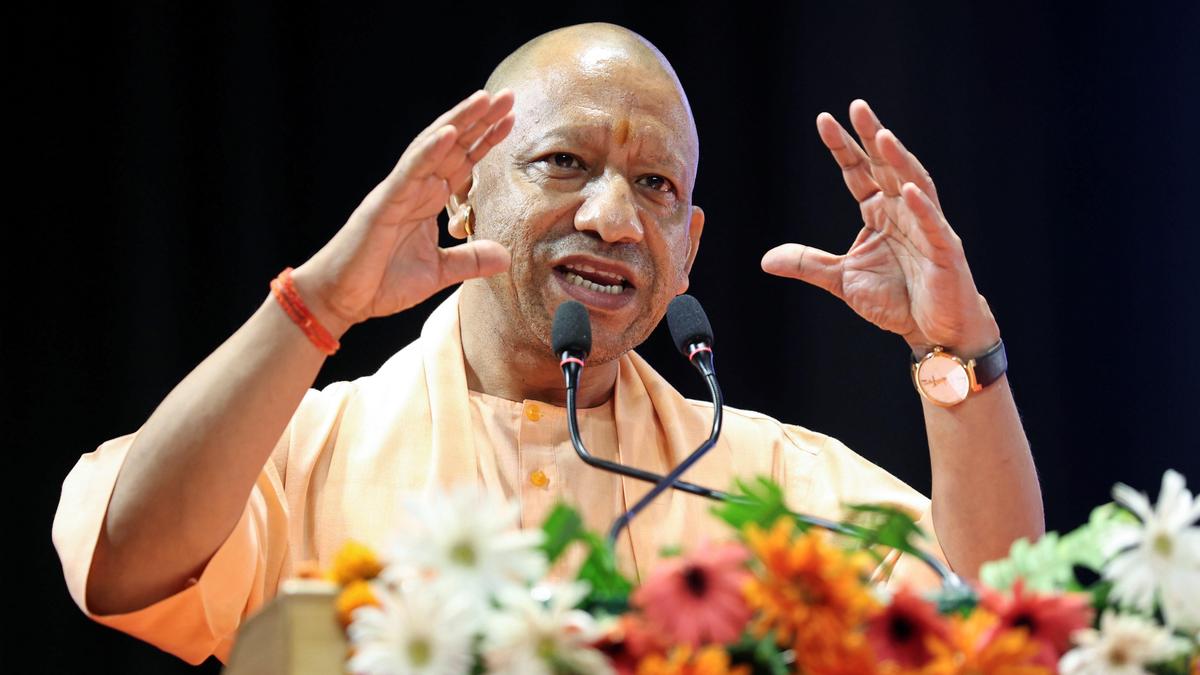
By With the 2027 Uttar Pradesh Assembly elections approaching, the BJP is increasingly focused on maintaining a favourable political narrative in the state while addressing concerns around jobs, youth dissatisfaction and caste dynamics. At the centre of that effort is Chief Minister Yogi Adityanath, who has stepped up his public outreach and development messaging across different regions of Uttar Pradesh.
After nearly a decade in office, Adityanath continues to be viewed within the BJP as one of the party’s strongest political assets in the state. At the same time, party leaders acknowledge that the government faces a more complicated electoral environment, with questions over employment, education-related grievances and renewed caste mobilisation creating challenges that the BJP will need to manage ahead of the polls.
Yogi government turns focus to jobs and youth
The Adityanath government has recently placed greater emphasis on employment and opportunities for young people. One of the latest initiatives is the Uttar Pradesh Corporation for Outsourcing Services (UPCOS), launched with the stated objective of protecting the interests of around 3.5 lakh outsourced employees and their families.
The Chief Minister has also announced plans to distribute appointment letters to one lakh young people over a six-month period. He has claimed that more than 9.3 lakh jobs have been provided during his government’s nine-and-a-half-year tenure.
The government has simultaneously accelerated recruitment in sectors such as policing and education. Other initiatives include the Mukhyamantri Yuva Udyami Vikas Abhiyan, which aims to encourage entrepreneurship, and stipend-supported internships for students in corporate and technical institutions.
Another initiative is the use of centralised family cards to identify households in which no member is employed in either the government or private sector. The objective is to build a clearer picture of employment needs and help target government interventions.
Employment remains a sensitive political issue
Despite these measures, employment continues to be an important concern in the political debate. A section of BJP leaders privately acknowledges that the issue is not limited to unemployment alone.
Under-employment—where people with higher educational qualifications work in positions that do not match their skills—is also contributing to dissatisfaction among sections of young voters, according to one party leader.
Education and recruitment-related controversies have added another layer to the problem. Concerns over alleged irregularities in examinations and recruitment processes have contributed to frustration among some young voters, particularly those who have spent years preparing for competitive examinations.
For the BJP, addressing these concerns before the election will be important because youth aspirations increasingly intersect with the party’s broader development narrative.
Caste equations present another challenge
Alongside youth-related concerns, caste politics is emerging as another key issue in Uttar Pradesh.
A state BJP leader said perceptions among some OBC groups that the party favours upper castes were becoming more pronounced. The leader also pointed to divisions within the upper-caste vote, including differences between Thakur and Brahmin groups.
Such concerns are significant for the BJP because its electoral success in Uttar Pradesh has depended heavily on maintaining a broad social coalition that extends beyond its traditional upper-caste support base.
The debate has also been influenced by the controversy surrounding UGC equity regulations, which were intended to strengthen safeguards against caste discrimination in higher educational institutions but were stayed by the Supreme Court earlier this year. The issue, according to party sources, has generated concern among sections of upper-caste voters.
Law and order remains Yogi’s key political strength
Despite these challenges, BJP leaders continue to point to Yogi Adityanath’s record on law and order as one of his major political advantages.
Women voters are another constituency the BJP believes remains important to its electoral strategy. A senior party leader said both Prime Minister Narendra Modi and Chief Minister Yogi Adityanath retain significant support among women and indicated that additional welfare measures aimed at women could be announced ahead of the election.
The BJP is therefore expected to combine its law-and-order narrative with welfare and women-focused initiatives as it works to consolidate its support base.
Opposition seeks to expand its social coalition
The BJP’s challenges are also linked to the strategy being pursued by the Opposition. The Samajwadi Party, led by Akhilesh Yadav, is seeking to consolidate its PDA—Pichda, Dalit and Alpsankhyak—social coalition, while the Congress is attempting to strengthen its appeal among minorities and young voters under Rahul Gandhi.
For the two parties, however, converting their combined support into an effective electoral alliance could prove difficult.
The SP emerged as the largest party from Uttar Pradesh in the 2024 Lok Sabha elections, winning 37 seats compared with the BJP’s 33. That result has given the Samajwadi Party greater confidence in negotiations over the Opposition’s electoral strategy.
Yet differences over seat sharing, campaign priorities and organisational roles remain potential obstacles for the two INDIA bloc partners.
Rahul Gandhi’s caste census push adds pressure
Rahul Gandhi’s renewed focus on a caste census and his demand to reconsider the 50% ceiling on reservations have added another dimension to the BJP’s challenge.
His slogan of “jitni abadi, utna haq” has placed representation and caste-based entitlement at the centre of the political conversation. With OBC communities accounting for more than 40% of Uttar Pradesh’s population, the issue has particular electoral significance.
The BJP is consequently looking to preserve its OBC support while responding to competing demands from different social groups.
The Opposition has also accused government selection committees of using the “Not Found Suitable” category to deny reserved vacancies to SC, ST and OBC candidates. Such allegations have added to the broader debate around representation and recruitment.
BJP faces pressure from both sides of its social coalition
A Brahmin BJP leader quoted in the discussion said dissatisfaction exists among sections of both upper-caste and OBC voters. The leader argued that some Brahmin voters increasingly want to know what they see as the BJP’s specific gains for their community compared with the social coalitions associated with the SP and BSP.
At the same time, the BJP cannot afford to weaken its OBC base, which has played a significant role in its electoral performance in Uttar Pradesh.
That balancing act is likely to be one of the central challenges for the party as the election approaches.
SP-Congress alliance remains crucial
The Opposition’s prospects will depend partly on whether the SP and Congress can convert their respective strengths into a coordinated campaign.
The Congress has sought to build on Rahul Gandhi’s appeal among minorities and youth, while the SP remains better positioned to navigate Uttar Pradesh’s complex OBC politics and its established organisational network.
That creates a degree of mutual dependence. The Congress may seek a larger share of seats based on its minority and youth outreach, while the SP has its own reasons to ensure that the alliance does not weaken its position among OBC voters.
For the BJP, meanwhile, the strategy is increasingly centred on keeping its social coalition intact while presenting Yogi Adityanath’s governance record as the main alternative to the Opposition’s caste and welfare-based political pitch.
As the 2027 contest takes shape, the Chief Minister’s popularity, the government’s employment and welfare initiatives, the law-and-order narrative and the BJP’s ability to manage caste-related tensions are likely to remain closely connected. The party’s challenge will be to ensure that its established strengths continue to outweigh the grievances emerging among sections of young and socially diverse voters.