
 By
By Uttar Pradesh Chief Minister Yogi Adityanath on Saturday said the state has moved beyond its long-standing “Bimaru” tag and now has a more positive image because of improvements in healthcare, infrastructure, education and law and order. Speaking in Deoria, he also claimed that the government had succeeded in controlling organised crime and tackling encephalitis.
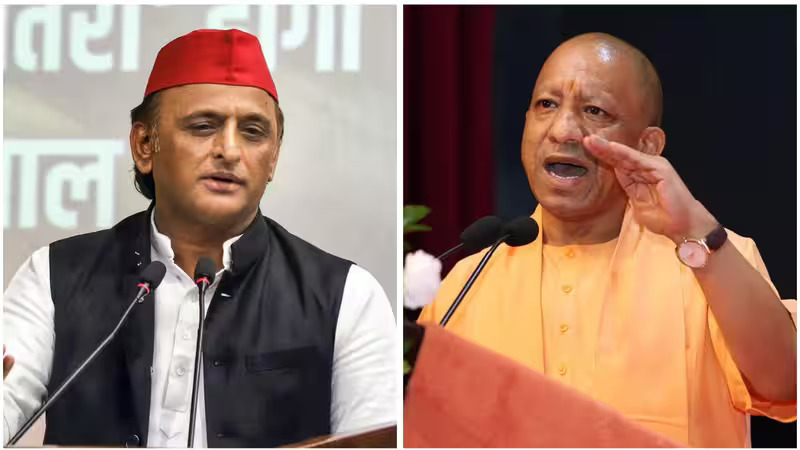
Yogi’s remarks came during a development programme in Deoria, where he inaugurated and laid the foundation stones for 80 projects worth ₹305 crore. At the same time, Samajwadi Party chief Akhilesh Yadav criticised the state government’s healthcare record, alleging shortages of doctors, nurses and paramedical staff. The contrasting claims have put healthcare and development back at the centre of the political debate in Uttar Pradesh.
Yogi attacks previous governments over encephalitis
Addressing the gathering, Adityanath criticised previous Congress and Samajwadi Party governments over deaths caused by encephalitis in eastern Uttar Pradesh.
He described the disease as more than a medical problem, arguing that the failure to adequately address it reflected the priorities of governments in the past. According to the Chief Minister, more than 50,000 people lost their lives to encephalitis over four decades.
He also alleged that successive governments had failed to give sufficient attention to the problem or regularly visit the affected region to assess the situation.
Adityanath said his government had since focused on strengthening healthcare infrastructure and claimed that encephalitis had been eradicated.
‘One district, one medical college’ approach
The Chief Minister contrasted the government’s present development model with what he described as the criminal influence that existed in Uttar Pradesh earlier.
He said the state had moved from a situation he characterised as “one district, one mafia” to “one district, one medical college.” He pointed to medical colleges in Deoria and Kushinagar as examples of the expansion of healthcare infrastructure in the region.
The government, he said, is seeking to ensure that better medical facilities are available closer to people’s homes rather than forcing patients to travel long distances for treatment.
Yogi highlights roads, schools and connectivity
The Chief Minister also highlighted infrastructure work underway in Deoria, including bypasses, flyovers and road upgrades.
He said several single-lane roads were being widened to two lanes, while existing two-lane roads were being upgraded to four lanes and four-lane routes to six lanes where required.
On education, Adityanath pointed to composite schools, the expansion of Kasturba Gandhi schools and the Chief Minister Abhyudaya Scheme, which provides coaching support for students preparing for competitive examinations.
He also highlighted Operation Kayakalp, under which basic education schools are being upgraded with better facilities.
Yogi says mafia influence has been crushed
The Chief Minister also used the occasion to highlight his government’s law-and-order record.
He claimed that the influence of organised criminal networks had been eliminated and said people involved in threatening traders or women would face strict action.
Adityanath argued that the change in law and order, combined with improvements in roads, healthcare and education, had helped Uttar Pradesh overcome its earlier reputation as a backward state.
He said the state now commands greater respect and that the “Bimaru” label no longer reflects Uttar Pradesh’s position.
Akhilesh Yadav questions healthcare preparedness
While Yogi Adityanath highlighted healthcare expansion, Akhilesh Yadav separately raised questions about the availability of medical staff and facilities in the state.
The Samajwadi Party chief alleged that Uttar Pradesh has one doctor for around every 16,000 people and claimed that about 41% of sanctioned posts in government hospitals are vacant.
Yadav further alleged that more than 24,000 nursing and paramedical positions were vacant. He also pointed to vacancies at AIIMS Gorakhpur and AIIMS Rae Bareli, claiming that 604 and 579 posts respectively were unfilled.
The former Chief Minister also alleged that the number of primary health centres had fallen in some districts, including Gorakhpur, and questioned the government’s overall healthcare capacity.
SP promises free treatment and medicines
Yadav said the Samajwadi Party, if voted back to power, would make healthcare free for poor patients without requiring them to produce a particular card.
He said the proposed policy would cover both routine and serious illnesses, including cancer, with treatment and medicines provided free of cost. The proposal, he added, would be incorporated into the party’s election manifesto.
The competing claims underline one of the key issues likely to shape the political conversation in Uttar Pradesh: while the BJP government is presenting infrastructure and healthcare expansion as evidence of a transformed state, the opposition is focusing on staffing gaps, access to treatment and the functioning of existing health facilities.