

 By
By ‘Bomb on Board’ Alert Forces IndiGo Flight to Divert to Lucknow, Tissue-Paper Message Triggers Major Security Scare
A routine domestic flight turned into a high-alert security operation on Sunday morning after a handwritten note claiming the presence of a bomb was discovered onboard an IndiGo aircraft flying from Delhi to Bagdogra. The incident led to the emergency diversion of the flight to Lucknow, setting off a multi-agency response and reviving concerns over aviation security threats that originate from hoax messages but still demand full-scale action.
While all passengers and crew were evacuated safely, the episode underlined how even a scribbled message on tissue paper can disrupt air travel, trigger panic, and mobilise elite security forces within minutes. Authorities are now investigating the origin and intent behind the threat, even as airport operations at Lucknow remained under heightened vigilance for several hours.
What happened mid-air
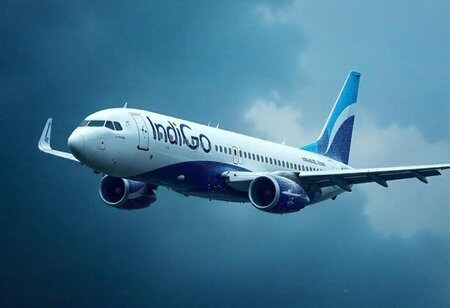
The IndiGo flight, operating as 6E-6650, departed from Delhi early Sunday and was en route to Bagdogra in north Bengal when the cockpit crew alerted Air Traffic Control about a possible security threat. According to officials, ATC received the message at around 8:46 am, following which standard emergency protocols were activated.
The aircraft was instructed to divert immediately to Chaudhary Charan Singh International Airport, Lucknow, where it made a controlled emergency landing at 9:17 am. Upon landing, the plane was guided away from the terminal and parked at a designated isolation bay, away from passenger movement and airport infrastructure.
Also Read – IndiGo disruptions persist as 450 flights are cancelled, with no clear timeline for normal operations.
Tissue-paper note sparks alarm
Preliminary checks revealed that the alert was triggered after a handwritten note was found inside the rear lavatory of the aircraft. The message, written on a tissue paper, simply read: “Bomb on the plane.”
Though brief and unsigned, the note was enough to escalate the situation. Aviation security officials say that any such message—regardless of how informal or suspicious it appears—must be treated as a credible threat until proven otherwise.
Complicating the assessment was the confirmation that the aircraft was carrying radioactive material in packed condition, specifically cancer medicines cleared with a valid No Objection Certificate (NOC). Officials clarified that the material was securely stored in the cargo hold and posed no danger, but its presence necessitated even stricter scrutiny during checks.
Full-scale security response
Soon after landing, the Bomb Threat Assessment Committee (BTAC) was convened to evaluate the seriousness of the threat. Quick Reaction Teams (QRT), bomb disposal squads, airport security personnel, and local police cordoned off the aircraft.
Sniffer dogs were deployed, and specialised teams began a meticulous sweep of the cabin, cockpit, lavatories, overhead bins, and luggage hold. Each passenger bag was re-screened, and the aircraft remained sealed off from regular airport operations.
“All standard operating procedures were followed without exception,” a senior airport official said. “In cases like this, the priority is to eliminate even the remotest possibility of risk.”
Passengers evacuated safely
The flight was carrying 222 passengers, eight infants, two pilots, and five cabin crew members. All were safely evacuated after landing and escorted to a secure area of the airport.
While some passengers reported anxiety and confusion during the evacuation, there were no injuries or medical emergencies. Airport authorities arranged refreshments and basic assistance as security checks continued.
Several passengers later said they were informed calmly by the crew about the diversion but only realised the seriousness of the situation after landing. “We were told there was a security issue, but no one panicked. The crew handled it professionally,” one passenger said.
IndiGo issues statement
IndiGo confirmed the incident in an official statement, emphasising that the airline acted strictly in line with safety protocols.
“A security threat was noticed onboard IndiGo flight 6E 6650 operating from Delhi to Bagdogra on 18 January 2026, due to which the aircraft was diverted to Lucknow. Following the established protocol, we informed the relevant authorities immediately and are fully cooperating with them in carrying out the necessary security checks,” the spokesperson said.
The airline added that efforts were made to minimise inconvenience to passengers by providing refreshments and regular updates, reiterating that passenger and crew safety remained its top priority.
Hoax or real threat? Probe underway
While initial indicators suggest the message could be a hoax, authorities are cautious about drawing conclusions prematurely. Investigators are examining CCTV footage, passenger manifests, and handwriting samples to identify who may have placed the note inside the lavatory.
Making a false bomb threat is a serious criminal offence under Indian law, punishable with imprisonment and heavy fines. Aviation security officials say that such hoaxes not only disrupt travel plans but also divert critical security resources.
“This is not a prank,” a security official said. “Every threat, real or fake, carries consequences.”
Aviation security under focus again
The incident comes at a time when Indian airports and airlines are already on high alert following a rise in hoax threats globally. Experts say the Lucknow diversion highlights both the vulnerability of aviation to minor triggers and the robustness of existing safety systems.
“The good news is that protocols worked exactly as designed,” said an aviation safety analyst. “The concern is why individuals still attempt such acts despite knowing the consequences.”
As investigations continue, flight operations at Lucknow returned to normal later in the day. Passengers were either accommodated on alternate flights or provided further assistance by the airline.
For now, the episode serves as a stark reminder that in aviation, even a few words on a piece of tissue paper can ground an aircraft—and activate the highest levels of security response.