

 By
By India’s next decennial Census has formally taken shape with the Centre notifying a detailed questionnaire for the first phase of Census 2027, marking a significant shift in how population and housing data will be collected across the country. The notification, issued by the Registrar General and Census Commissioner of India (RG&CCI), confirms that residents will be required to answer 33 questions during the Houselisting and Housing Census phase, scheduled between April 1 and September 30, 2027.
Beyond the number of questions, what sets Census 2027 apart is its ambition. For the first time since the exercise began in 1872, the Census will be conducted in a fully digital format, with citizens also being offered the option of self-enumeration through an online portal. Officials describe the move as a major reform aimed at improving accuracy, speed, and transparency in one of the world’s largest administrative exercises.
What Has Changed Since the Last Census Plan
The last notified Census questionnaire, issued in January 2020 for Census 2021, contained 31 questions. That exercise was postponed indefinitely due to the COVID-19 pandemic. In the revised framework for 2027, the government has expanded the scope slightly, introducing two additional questions and restructuring certain categories to capture more granular housing data.
One key change is the breakup of a single question on housing material into three separate questions — covering the predominant material used for the floor, wall, and roof of a Census house. Officials say this refinement will allow for more precise assessment of housing quality and infrastructure development, especially in rural and semi-urban areas.
Notification of questionnaire of Phase I of Census of India 2027 – Houselisting & Housing Census has been issued. The questionnaire for Phase II i.e. Population Enumeration will be notified in due course.
भारत की जनगणना 2027 के प्रथम चरण – मकानसूचीकरण और मकानों की गणना हेतु… pic.twitter.com/1BHbxmA8fN
— Census India 2027 (@CensusIndia2027) January 22, 2026
What the First Phase Will Cover
Phase I of Census 2027 focuses on Houselisting and Housing Census, a foundational exercise that maps households, amenities, and living conditions before population details are collected. The 33 questions span a wide range of indicators, including ownership status, access to drinking water and sanitation, cooking fuel, electricity, digital connectivity, and household assets.
The questionnaire also records information such as the number of people normally residing in a household, the gender and social category of the household head, availability of toilets and kitchens, and modes of transport owned by the family. Notably, households will be asked to provide a mobile number, strictly for Census-related communication, signalling a push toward real-time updates and verification.
Caste Count to Follow in Phase II
While the first phase lays the groundwork, the most politically sensitive aspect of Census 2027 — caste enumeration — will take place during Population Enumeration (Phase II) in February 2027. The government has clarified that questions related to caste and individual demographic details will be notified separately at a later stage.
“This notification pertains only to Phase I. The questionnaire for Population Enumeration will be issued in due course,” Census authorities said in an official update shared on social media.
Massive Administrative Exercise Ahead
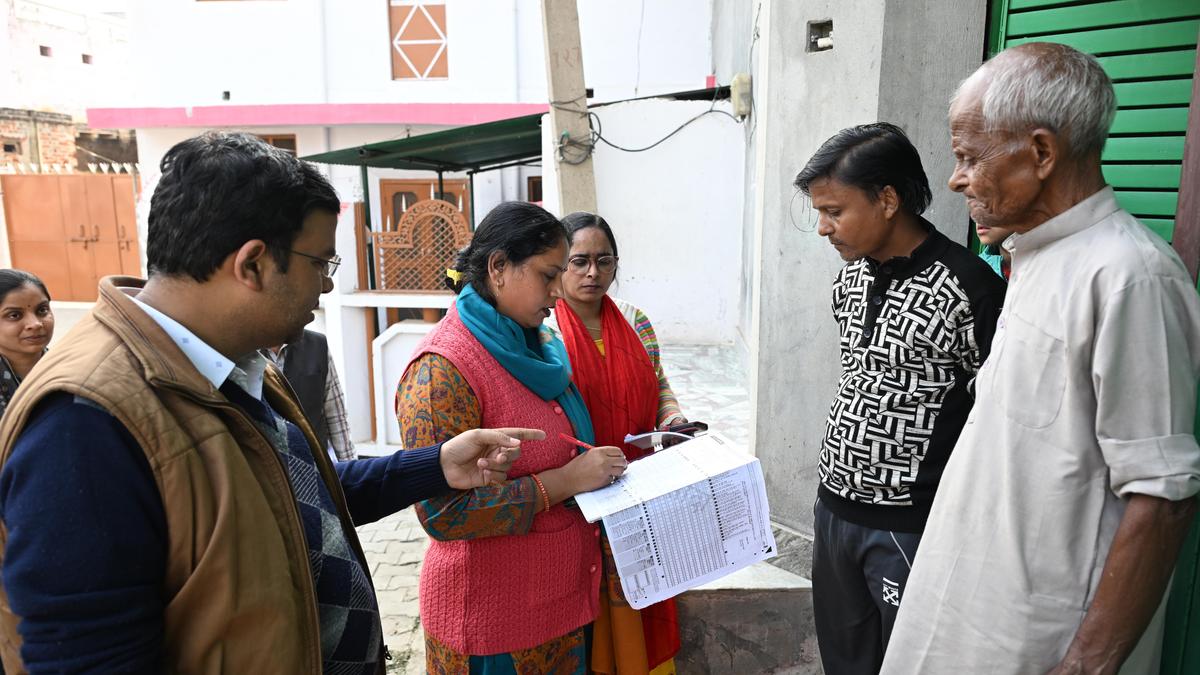
The scale of the operation remains staggering. Around 30 lakh field functionaries, including enumerators, supervisors, and census officers, will be deployed nationwide. Unlike earlier Censuses, data collection will be carried out using mobile devices, with enumerators uploading information directly to central servers.
Officials said all Census workers will receive honorariums, as the work will be conducted alongside their regular government duties. A nationwide pre-test exercise conducted between November 10 and 30, 2025, helped fine-tune the questionnaire and digital systems, with trial questions extending up to 35 items.
Why Census 2027 Matters
Experts point out that Census 2027 will be critical for policy planning, welfare delivery, delimitation exercises, and resource allocation in the coming decade. With India’s population dynamics changing rapidly — from urbanisation to digital access — the updated questionnaire reflects evolving governance priorities.
As preparations move forward, the government faces the dual challenge of ensuring data security in a digital-first Census while maintaining public trust and participation. If successful, Census 2027 could redefine how large-scale data collection is conducted in India.