
 By
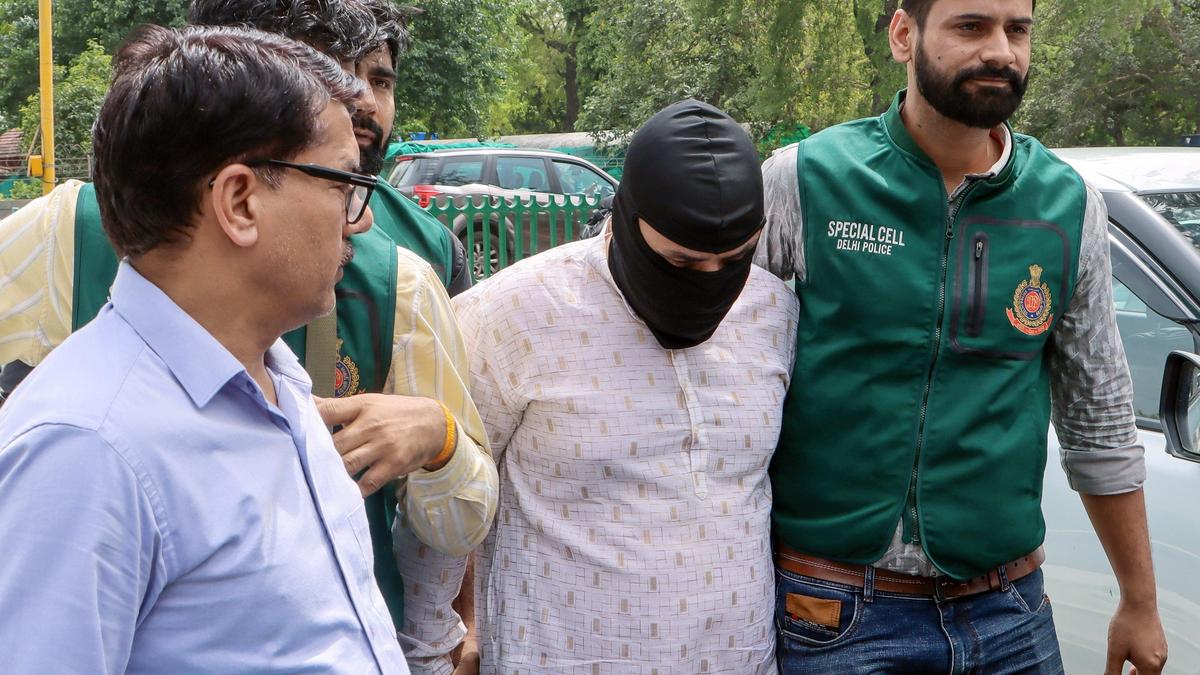
By In a major counter-terrorism operation, the Special Cell of Delhi Police has arrested a suspected operative linked to Lashkar-e-Taiba from the Ghazipur area of the national capital. Officials said the arrest of Shabir Ahmed Lone is a significant breakthrough in the investigation into the anti-India poster campaign that surfaced in several Delhi Metro stations earlier this year, raising serious security concerns.
According to investigators, Lone had been under surveillance for weeks after intelligence inputs suggested his involvement in coordinating activities linked to anti-national propaganda and sleeper cell operations. The February 22 incident, in which provocative posters appeared at multiple metro stations and locations in Delhi and Kolkata, had prompted a multi-agency probe, eventually leading police to Lone’s alleged network and operational trail.
Officials described Lone as a highly trained operative who had established links with handlers operating on behalf of Pakistan’s Inter-Services Intelligence. During the arrest, police reportedly recovered foreign currency from multiple countries along with a Nepalese SIM card and other suspicious materials, indicating possible cross-border communication and funding channels. Investigators believe these recoveries point to an organised network that may have been coordinating activities across different regions.
Police sources said Lone had a long history of involvement in terror-related activities and had previously been arrested in 2007 and again in 2015 in separate cases. He is believed to have undergone advanced terror training in camps located in Pakistan-occupied Kashmir and later moved to Bangladesh, where he allegedly rebuilt contacts with militant handlers and worked on reactivating networks targeting India. Authorities suspect that Bangladesh was used as a logistical base to facilitate communication, infiltration, and recruitment of new operatives.
The investigation has also revealed that the accused allegedly set up a base in Kolkata, from where reconnaissance of sensitive locations, including religious sites and crowded public areas, was conducted. Police claim that videos and operational updates were regularly shared with handlers abroad, suggesting that the metro poster incident may have been a test run to gauge security response and coordination among agencies.
Officials say Lone is currently being interrogated to identify other members of the network, funding sources, and potential targets. The probe is also focusing on possible hawala channels and financial links connected to the foreign currency recovered during the operation. Authorities believe further arrests may follow as the investigation progresses, while security agencies continue to monitor any possible threats linked to the dismantled module.